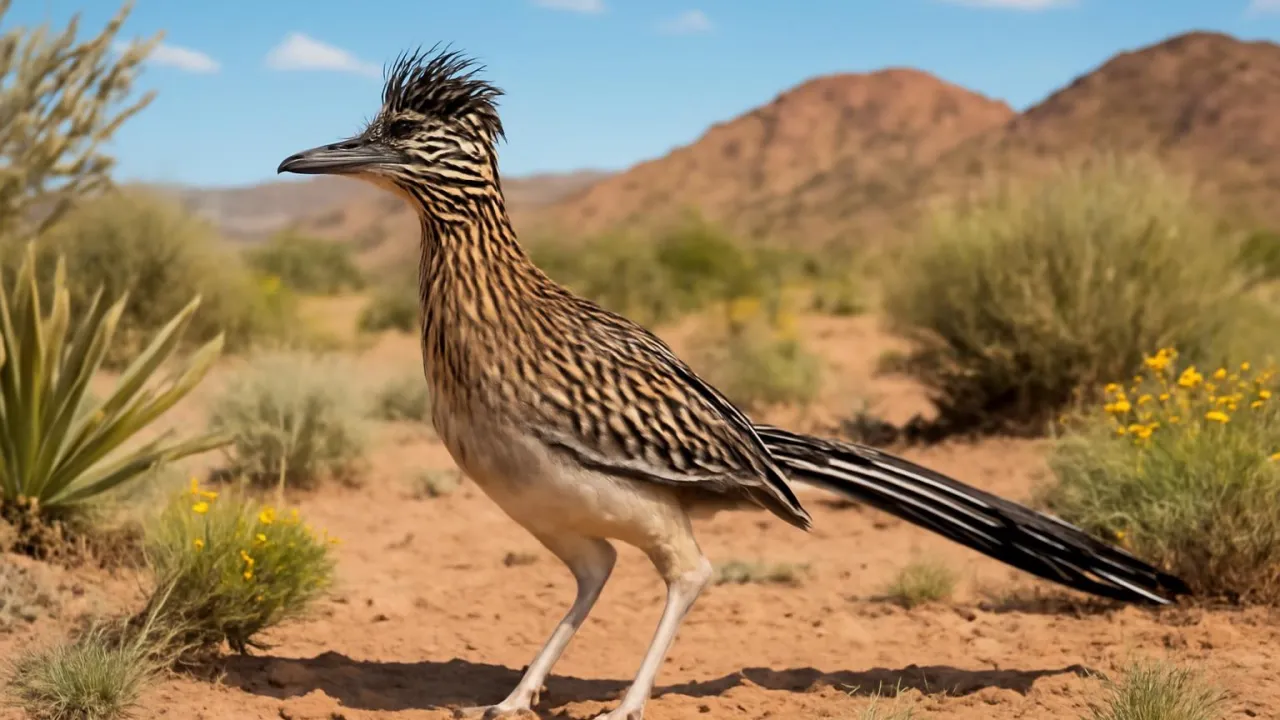
Greater roadrunners can run faster than a car driving in a school zone!
✨ Word Sparks (Grade 2 Glossary)
Tap 🔊 to hear
prey
Animals that are hunted and eaten by others
scrubland
A dry place with small bushes and plants
adapted
Changed to live well in a certain place
🪝
Have you ever seen a bird that runs faster than you can walk?
1
Speedy Ground Bird
The greater roadrunner runs very fast on the ground and can reach speeds up to 20 miles per hour. It uses its long legs to move quickly and catch . Its feathers are brown with white streaks that help it blend into the desert.
2
Desert Home
This bird lives in hot deserts and where it hides under bushes during the heat of the day. It builds nests in low trees or shrubs to keep its eggs safe from predators. The roadrunner is well to dry, hot climates with little water.
3
Eating Habits
Roadrunners eat insects, small reptiles like lizards, and sometimes fruits. They catch their food with a sharp beak and use quick movements to surprise their . This diet helps them get the energy they need to run fast.
Greater roadrunners can run faster than a cheetah can sprint over short distances!
✨ Word Sparks (Grade 3 Glossary)
Tap 🔊 to hear
camouflage
Colors that help hide animals in their homes
thermoregulation
How animals keep their body temperature steady
opportunistic
Eating whatever food is easy to find
🪝
Did you know the greater roadrunner uses camouflage to stay safe from predators?
1
Camouflage and Speed
The greater roadrunner has brown and white feathers that provide in the desert environment. This helps it hide from predators like hawks and coyotes. It can run up to 20 miles per hour to escape danger quickly. Its long legs and tail help it balance while running fast.
2
Desert Habitat
Roadrunners live in deserts and scrublands where water is scarce and temperatures are high. They find shelter under bushes and in low trees to avoid the hot sun. Their ability to survive with little water is an important adaptation for desert life. They also use their strong feet to dig for food or create nests.
3
Diet and Hunting
This bird is an predator that eats insects, small reptiles, and even small mammals. It uses quick movements and sharp eyesight to catch prey. Roadrunners help control insect and lizard populations in their ecosystem. Their diet provides the nutrients needed for energy and survival.
4
Survival Adaptations
Roadrunners have a special adaptation called that helps control their body temperature. They can raise their feathers to cool down or sunbathe to warm up. This helps them survive the desert’s extreme heat and cold nights. Their behavior and body features make them well suited for harsh environments.
Greater roadrunners can sprint nearly as fast as some small mammals in their desert homes!
✨ Word Sparks (Grade 4 Glossary)
Tap 🔊 to hear
symbiosis
When two living things help each other survive
ecosystem
A community of plants and animals living together
thermoregulation
How animals keep their body temperature steady
🪝
How does the greater roadrunner’s speed help it survive in the desert ecosystem?
1
Speed and Survival
The greater roadrunner’s ability to run at speeds up to 20 miles per hour allows it to escape predators like hawks, snakes, and coyotes effectively. This speed also helps it catch fast-moving prey such as lizards and insects, which are essential parts of its diet. Because it cannot fly long distances, running is its main defense and hunting strategy. Its long legs and tail provide balance and agility on rough desert terrain.
2
Role in the Desert Food Web
As both predator and prey, the roadrunner plays an important role in the desert food web by controlling insect and reptile populations. It helps keep balanced by eating small animals that could otherwise overpopulate. In turn, roadrunners provide food for larger predators, creating a natural cycle of energy transfer. Their nests also offer shelter for some smaller desert creatures, showing within their habitat.
3
Adaptations to Hot Climates
The roadrunner’s adaptations allow it to survive extreme desert temperatures by sunbathing to warm up in the morning and raising feathers to cool down during the heat of the day. It obtains water mainly from the food it eats, reducing dependence on scarce water sources. These adaptations are crucial for survival in deserts where temperatures can vary widely between day and night.
4
Geographic Distribution
Greater roadrunners are found across the southwestern United States and northern Mexico, thriving in deserts, scrublands, and arid open woodlands. Their habitat range includes the Sonoran and Mojave deserts, where they are well adapted to the dry environment. Human activities like urban development can affect their habitats, but roadrunners often adapt to some changes by living near farms or roads.
1. Why is running speed important for the roadrunner?
2. Where do greater roadrunners live?
🤯 Mind-Blowing Fact • Grade 5
Greater roadrunners can run twice as fast as the fastest human sprinters over short distances!
✨ Word Sparks (Grade 5 Glossary)
Tap 🔊 to hear
thermoregulation
How animals control their body temperature
opportunistic
Eating whatever food is easiest to find
ecosystem
A community of living things and their environment
🪝
What unique adaptations allow the greater roadrunner to thrive in harsh desert environments?
1
Scientific Classification and Habitat
The greater roadrunner, Geococcyx californianus, belongs to the cuckoo family and inhabits arid deserts and scrublands in the southwestern United States and northern Mexico. It occupies such as the Sonoran and Mojave deserts, where it has adapted to extreme heat and scarce water availability. This bird typically measures about 20 inches tall and weighs approximately 8 to 15 ounces, making it one of the largest ground-dwelling cuckoos.
2
Physiological Adaptations and Mechanics
Greater roadrunners have powerful legs that enable them to run at speeds up to 20 miles per hour, which is essential for escaping predators and hunting agile prey like lizards and insects. Their long tail provides balance during rapid acceleration and sharp turns on uneven desert terrain. Additionally, they employ by adjusting feather position to manage body temperature, conserving water by obtaining moisture from their prey instead of drinking frequently.
3
Behavior, Diet, and Ecological Role
This species is an predator, feeding on insects, small reptiles, rodents, and occasionally fruits, which contributes to controlling prey populations and maintaining balance. Roadrunners exhibit unique hunting behaviors, such as ambushing prey and using quick bursts of speed. Their role as both predator and prey integrates them into complex food webs, supporting biodiversity in desert environments.
4
Conservation and Human Impact
Although greater roadrunners are not currently endangered, habitat loss due to urban expansion and agriculture poses risks to local populations. They can sometimes adapt to human presence by nesting near farms and roads, but increased disturbance and pollution may affect their survival. Conservation efforts focus on preserving desert habitats and educating the public about the importance of these birds in health.
5
Quantitative Comparisons and Records
Greater roadrunners can reach running speeds of up to 20 miles per hour, which is faster than the average human running speed of about 8 miles per hour. They weigh between 8 and 15 ounces, comparable to a small paperback book. Their body length of 20 inches makes them one of the largest ground cuckoos, and they can survive in temperatures ranging from near freezing at night to over 100 degrees Fahrenheit during the day.