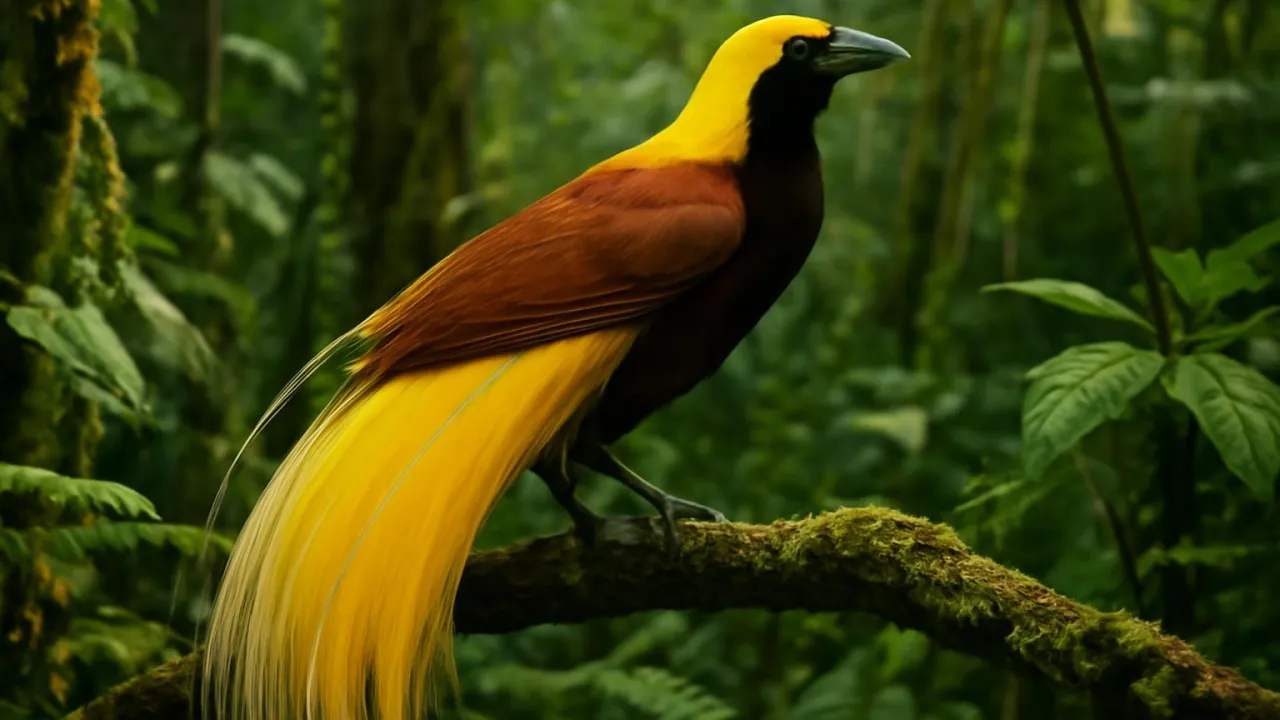
Male Greater Birds-of-Paradise have the brightest feathers and dance moves to attract mates!
✨ Word Sparks (Grade 2 Glossary)
Tap 🔊 to hear
rainforest
A wet forest with many tall trees
predator
An animal that hunts other animals
nest
A bird’s home made of sticks and leaves
🪝
Can you imagine a bird that shows off by dancing and flashing colors?
1
Bright and Beautiful Feathers
The Greater Bird-of-Paradise has bright yellow and green feathers that shine in sunlight. Males use these colors to attract females during their dances. Their feathers are soft but very colorful and easy to see.
2
Home in the Rainforest
This bird lives deep in the of New Guinea where tall trees grow. It builds high up in the trees to keep safe from . The forest is full of fruits and insects for the bird to eat.
3
A Special Dance
Male birds perform a special dance to show off their feathers and win a mate. They spread their wings and move in a circle to catch the female’s attention. This dance helps them find a partner to raise young birds.
Greater Birds-of-Paradise use both color and dance as survival tools in their rainforest home.
✨ Word Sparks (Grade 3 Glossary)
Tap 🔊 to hear
camouflage
Colors that help animals hide in nature
adaptation
A change that helps animals survive better
ecosystem
All living things and their homes together
🪝
Have you ever seen a bird that dances with bright feathers to survive?
1
Amazing Color and Camouflage
The Greater Bird-of-Paradise has brilliant yellow and green feathers that shine brightly. These colors help males stand out during mating dances but also blend with leaves to hide from predators. This type of helps keep the bird safe in dense forests.
2
Rainforest Habitat and Diet
This bird lives in the tropical rainforests of New Guinea, where it finds fruits and insects to eat. The dense canopy provides shelter and many food sources. The bird’s diet gives it the nutrients needed to keep its feathers bright and healthy.
3
Courtship Dance and Adaptation
Male birds perform an elaborate dance to attract females, using their colorful feathers as a display. This behavior is an that increases their chances of mating. The dance includes spreading wings and moving in circles to catch the female’s eye.
4
Role in the Ecosystem
The Greater Bird-of-Paradise helps pollinate some plants by moving from flower to flower. It also spreads seeds when it eats fruit, helping new plants grow. This bird is an important part of the rainforest food web and balance.
The bird’s dance is a key survival skill that helps it reproduce and keep its species alive.
✨ Word Sparks (Grade 4 Glossary)
Tap 🔊 to hear
natural selection
Nature’s way to choose the best traits
deforestation
Cutting down many trees in forests
predator
An animal that hunts other animals
🪝
Why does the Greater Bird-of-Paradise dance so beautifully in the New Guinea rainforest?
1
Bright Feathers and Survival
The male Greater Bird-of-Paradise’s bright yellow and green feathers serve as both a warning and a camouflage in the dense rainforest. These feathers reflect sunlight to attract females but also blend with the green leaves to avoid . This balance between visibility and hiding is crucial for survival.
2
Ecosystem Role and Food Web
This bird plays an important role in the rainforest ecosystem by eating fruits and insects, which helps control insect populations and spread seeds. Its feeding habits support plant growth and maintain the balance of the food web. such as snakes and large birds hunt it, showing its place in the chain.
3
Courtship Dance and Mating Success
During mating season, the male performs a complex dance that includes spreading wings and shaking feathers to impress females. This behavior increases his chances of reproducing and passing on his genes. Females choose mates based on the quality of these displays, showing at work.
4
Geographic Distribution and Habitat
The Greater Bird-of-Paradise is native to the rainforests of New Guinea and nearby islands. It prefers lowland and hill forests where fruit is abundant. Human activities like threaten its habitat, making conservation efforts important to protect this species.
The Greater Bird-of-Paradise’s ultraviolet feather reflections and complex dances show nature’s evolutionary artistry.
✨ Word Sparks (Grade 5 Glossary)
Tap 🔊 to hear
plumage
The bird’s feathers and their colors
mutualism
A helpful relationship between two species
ultraviolet
Light humans cannot see but birds can
🪝
How do the Greater Bird-of-Paradise’s feathers and dances demonstrate evolution and ecological balance?
1
Taxonomy and Scientific Classification
The Greater Bird-of-Paradise, scientifically named Paradisaea apoda, belongs to the family Paradisaeidae. This family includes several species known for their elaborate and complex mating behaviors. The species name 'apoda' means 'without feet,' a historical misnomer from early specimens without feet. This bird is a prime example of sexual selection in nature.
2
Physiological Mechanics of Display
Males possess elongated flank feathers that they can fan out dramatically during courtship displays. These feathers reflect light, invisible to humans but highly attractive to females. The bird’s muscular control allows precise movements to perform intricate dances that signal health and genetic fitness. These displays can last several minutes and involve rapid wing beats.
3
Conservation and Habitat Challenges
Greater Birds-of-Paradise inhabit the lowland and hill rainforests of New Guinea, but ongoing deforestation threatens their habitat. Conservation programs focus on protecting forest areas and educating local communities about the bird’s ecological importance. Habitat loss reduces breeding sites and food availability, impacting population numbers. Protecting these birds helps preserve rainforest biodiversity.
4
Ecological Role and Mutualism
This species contributes to seed dispersal by consuming various fruits and excreting seeds away from parent plants. It also participates in mutualistic relationships by pollinating certain flowers during feeding. These interactions maintain forest biodiversity and ecosystem resilience. The bird’s role supports the health of its rainforest environment.
5
Quantitative Comparisons and Adaptations
The Greater Bird-of-Paradise measures about 15 inches (38 centimeters) in length, with males weighing approximately 230 grams. Their courtship dances can last several minutes and involve rapid wing movements up to 10 times per second. These adaptations enhance reproductive success in dense rainforest environments. Their feathers’ reflections are a unique evolutionary trait.