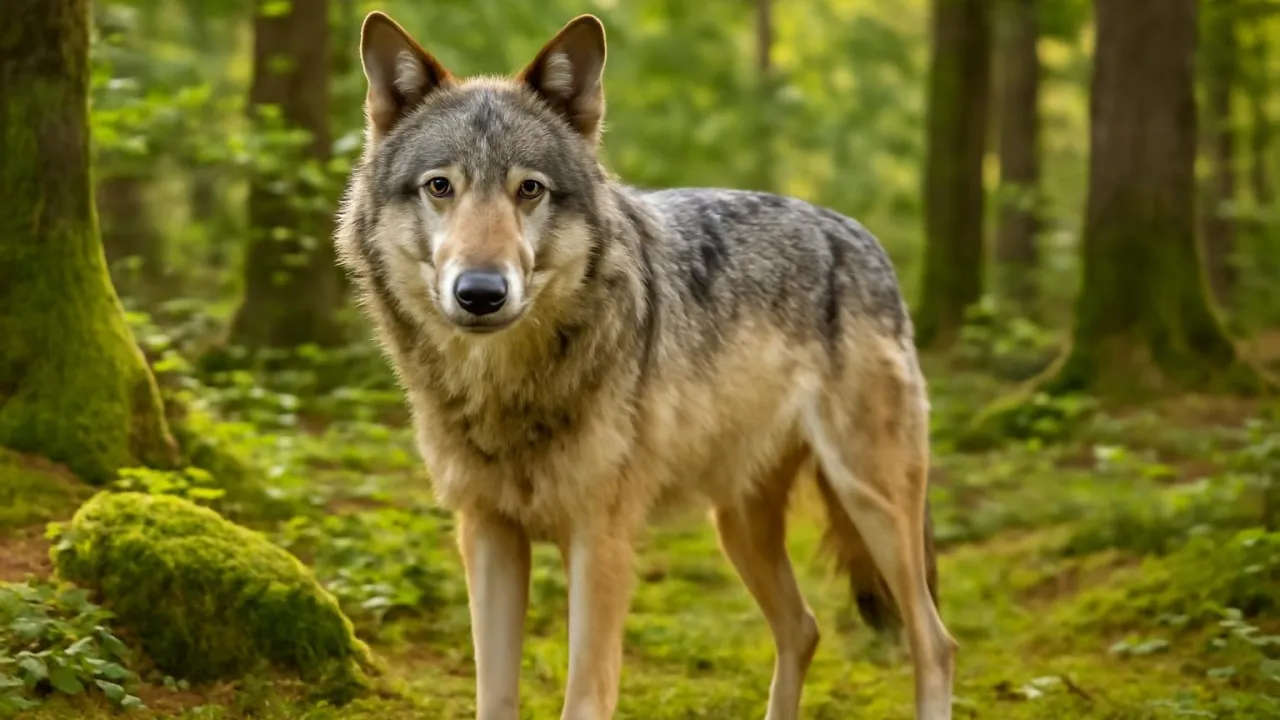
Wolves can travel over 30 miles in one night while hunting with their pack.
✨ Word Sparks (Grade 2 Glossary)
Tap 🔊 to hear
prey
An animal that wolves hunt for food
alpha
The leader wolf in a pack
carnivore
An animal that eats only meat
🪝
Have you ever heard a wolf’s loud howl in the wild?
1
Gray Wolves Are Strong and Fast
Gray wolves have thick fur that keeps them warm in cold weather. They can run very fast to catch their . Wolves have sharp teeth and strong jaws to tear meat. Their long legs help them travel many miles each day.
2
Wolves Live in Packs Together
Wolves live in groups called packs that help them hunt and protect each other. Each pack has leaders called wolves who guide the group. Wolves use howling to talk and find each other in the forest. Packs work as a team to catch big animals like deer or elk.
3
Wolves Eat Meat to Survive
Wolves are , which means they eat meat from other animals. They hunt animals like deer, rabbits, and sometimes fish. Wolves need a lot of food to have energy and stay healthy. Their strong teeth help them chew meat and bones easily.
A wolf’s howl can travel over six miles through forests and mountains.
✨ Word Sparks (Grade 3 Glossary)
Tap 🔊 to hear
camouflage
Colors that help animals hide in nature
predator
An animal that hunts other animals for food
ecosystem
A community of living things and their environment
🪝
Did you know gray wolves use howling to communicate across long distances?
1
Gray Wolves’ Body Helps Them Survive
Gray wolves have thick fur that them in snowy forests and tundras. Their sharp teeth and powerful jaws allow them to catch and eat prey efficiently. Wolves’ strong legs help them run fast and travel long distances to find food. Their keen sense of smell helps track animals hiding far away.
2
Wolves Live in Packs for Protection
Wolves live in social groups called packs that provide safety and teamwork during hunts. The alpha wolf leads the pack and makes important decisions for survival. Pack members communicate through howling, body language, and scent marking to stay connected. This adaptation helps them avoid and catch prey more successfully.
3
Hunting and Eating Habits
Wolves hunt animals such as deer, elk, and smaller mammals by working together as a team. Their hunting strategy uses speed and endurance to chase prey until it tires. Wolves are carnivores, so they depend on meat for nutrients and energy. Their digestive system is adapted to handle raw meat and bones.
4
Wolves’ Role in the Ecosystem
Gray wolves help keep balanced by controlling populations of large herbivores like deer. This -prey relationship prevents overgrazing and supports plant growth. Wolves also help scavengers by leaving leftovers that feed other animals. Their presence shows a healthy, functioning ecosystem.
Gray wolves can travel up to 50 miles in a single day while searching for food.
✨ Word Sparks (Grade 4 Glossary)
Tap 🔊 to hear
hierarchy
A system where some members lead others
apex predator
Top hunter with no natural enemies
biodiversity
Many different plants and animals living together
🪝
How does the gray wolf’s howl affect its pack and ecosystem?
1
Physical Adaptations and Survival
Gray wolves have thick fur that insulates them from freezing temperatures and helps camouflage them in snowy environments. Their powerful jaws and sharp teeth enable them to capture and kill large prey like elk efficiently. Wolves’ long legs and padded paws allow silent movement and long-distance travel during hunts. These adaptations increase their survival chances in harsh habitats.
2
Social Structure and Communication
Wolves live in complex social packs with a clear led by alpha males and females who coordinate hunting and territory defense. Howling serves as a vital communication tool to assemble the pack, mark territory, and strengthen social bonds. Body language and scent marking also play important roles in pack coordination and conflict resolution. This social structure improves hunting success and survival rates.
3
Ecological Role and Food Web Impact
As , gray wolves regulate populations of large herbivores such as deer and elk, preventing overgrazing and promoting . Their predation indirectly supports plant growth and maintains balanced ecosystems. Wolves’ leftovers provide food for scavengers like birds and smaller mammals, contributing to nutrient cycling. Human activities such as habitat loss have impacted wolf populations in many regions.
4
Geographic Range and Conservation
Gray wolves are native to North America, Europe, and Asia, occupying forests, tundras, and mountainous areas with cold climates. Conservation efforts have helped some wolf populations recover from near extinction due to hunting and habitat destruction. Protected areas and wildlife corridors support their natural behaviors and genetic diversity. Ongoing challenges include human-wildlife conflicts and habitat fragmentation.
Gray wolves’ bite force can exceed 1,500 pounds per square inch, one of the strongest among mammals.
✨ Word Sparks (Grade 5 Glossary)
Tap 🔊 to hear
cardiovascular
Relates to heart and blood vessels
dominance hierarchy
Ranking order in animal groups
territoriality
Defending an area from others
🪝
What scientific secrets help gray wolves thrive as apex predators across diverse habitats?
1
Taxonomy and Scientific Classification
The gray wolf, scientifically named Canis lupus, belongs to the Canidae family, which includes dogs, foxes, and coyotes. This species is divided into numerous subspecies adapted to different geographic regions and climates. Genetic studies reveal gray wolves share a close evolutionary relationship with domestic dogs. Understanding their taxonomy helps scientists track population health and biodiversity.
2
Physiological Adaptations and Mechanics
Gray wolves possess a highly efficient system that supports long-distance running at speeds up to 40 miles per hour. Their large lungs and strong heart enable sustained endurance during hunts lasting several miles. Wolves’ muscular jaws exert bite forces exceeding 1,500 pounds per square inch, allowing them to crush bones. Their dense double-layered fur insulates against temperatures as low as -40 degrees Fahrenheit.
3
Behavioral Ecology and Social Dynamics
Wolves exhibit complex social behaviors within packs structured by dominance hierarchies led by alpha pairs. Vocal communication, including howling, plays a crucial role in coordinating hunts and maintaining pack cohesion over large territories. Cooperative hunting strategies increase success rates when pursuing large prey like moose or bison. and scent marking reduce conflicts with neighboring packs.
4
Conservation History and Challenges
Historically, gray wolves faced widespread persecution and habitat loss, leading to population declines and local extinctions. Conservation programs, legal protections, and reintroduction efforts have restored populations in parts of North America and Europe. However, ongoing challenges include human-wildlife conflicts, habitat fragmentation, and climate change impacts. Effective conservation requires balancing ecological needs with human interests.
5
Quantitative Comparisons and Ecological Impact
Gray wolves can travel over 50 miles in a day while hunting, covering territories up to 1,000 square miles. Adult wolves weigh between 50 and 110 pounds, roughly the size of a large dog breed like a German Shepherd. Their bite force surpasses many carnivores, enabling them to consume large ungulates efficiently. Wolves’ predation maintains ecosystem balance by controlling herbivore populations and promoting biodiversity.