1. What acts like an instruction recipe book inside every cell of your body?
2. How does a genetic counselor help families at a clinic?
🤯 Mind-Blowing Fact • Grade 2
If you uncoiled all the microscopic DNA strands inside just one single cell of your body, they would stretch about six feet long!
✨ Word Sparks (Grade 2 Glossary)
Tap 🔊 to hear
Gene
One specific DNA instruction for the body
Inherited
Passed down from parents to their children
Cell
Tiny building block of all living things
🪝
Why does a genetic counselor draw circles and squares on a family tree?
1
Mapping Traits Across Generations
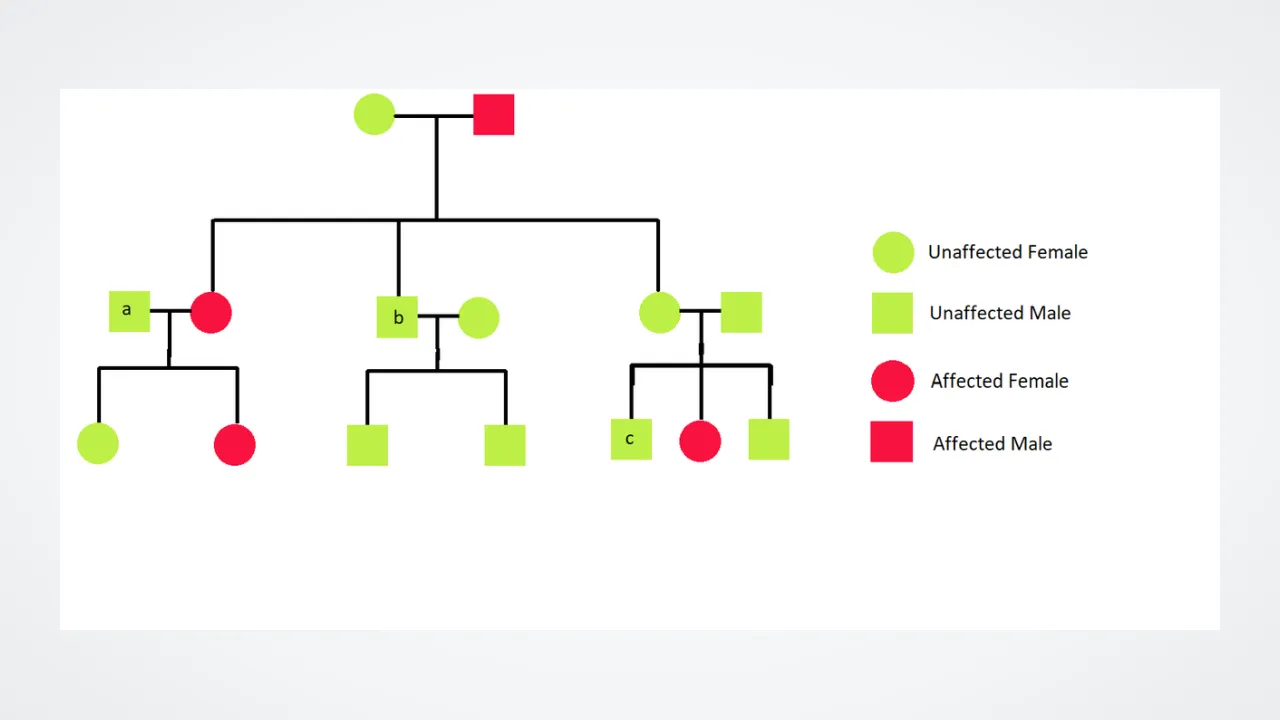
Pick up a pen and sketch circles, squares, and connecting lines! When families visit a genetic counselor, the conversation often starts by drawing a health family tree. Tracing grandparents, aunts, uncles, and cousins shows how certain traits travel through a family.
2
Twisted Ladder Models
DNA looks like a tiny twisted ladder inside our , and its rungs hold instructions called . Sometimes a small spelling change in one gene makes a child's body work differently.
3
Helping Doctors Pick the Right Care
If a family chooses a gentle cheek swab or blood test, the genetic counselor explains the lab results clearly so doctors can plan the best care early!
1. What shape does a molecule of DNA look like on a genetic counselor's desk model?
2. Why do genetic counselors ask about the health of grandparents, aunts, and uncles?
🤯 Mind-Blowing Fact • Grade 3
Your entire human genome uses just four chemical letters—A, T, C, and G—repeated in three billion pairs, enough to fill two hundred thick telephone books!
✨ Word Sparks (Grade 3 Glossary)
Tap 🔊 to hear
Pedigree
Chart tracking inherited traits across family generations
Genome
Complete set of DNA in an organism
Variant
Small spelling difference in a DNA sequence
🪝
How can a four-letter alphabet write the three-billion-letter instruction book for a human being?
1
Half Scientist, Half Translator
Open a lab report from a genetics sequencer, and you might see strings of letters—A, T, C, and G—plus long medical terms! Genetic counselors bridge two worlds: they master deep human genetics while listening with empathy to families' questions.
2
Drawing a Medical Pedigree
During an appointment, a genetic counselor sketches a three-generation chart called a . Standard symbols track health history across relatives, helping spot whether a rare condition might run in the family.
3
Solving Rare Medical Mysteries
In children's hospitals, some kids visit doctor after doctor without knowing why their muscles tire easily or why certain foods make them sick. Genetic counselors select targeted DNA tests that pinpoint exact gene , ending years of guesswork.
4
Respecting Family Choices
Genetic counselors never boss families around; instead, they explain test options, privacy protections, and support groups so families make informed decisions.
1. What four letters make up the chemical alphabet of DNA?
2. What do genetic counselors call the standardized three-generation family chart they draw?
🤯 Mind-Blowing Fact • Grade 4
The profession's very name—'genetic counseling'—was coined in 1947, and the first specialized master's training program launched at Sarah Lawrence College in 1969!
✨ Word Sparks (Grade 4 Glossary)
Tap 🔊 to hear
Chromosome
Tightly coiled package of DNA inside cells
Recessive
Trait appearing only when two copies match
Metabolic
Related to how cells turn food into energy
🪝
Why are millions of DNA 'typos' completely harmless while one specific letter change can alter how the heart or blood works?
1
Sorting Harmless Differences From Real Clues
Every human carries roughly twenty thousand protein-coding genes packed onto twenty-three pairs of —one set inherited from each parent. When high-speed DNA sequencers scan a patient's sample, thousands of tiny spelling differences pop up! Most are harmless variations that simply give us freckles, curly hair, or blood type. Certified Genetic Counselors sift through scientific databases to distinguish benign traits from clinically important gene changes.
2
Newborn Screening Lifesavers
Within days of birth in Virginia and every U.S. state, a tiny heel-prick blood spot screens newborns for dozens of rare and genetic conditions, such as phenylketonuria (PKU), cystic fibrosis, and sickle cell disease. When a screen flags a possible condition, genetic counselors meet promptly with parents to explain confirmatory tests and simple early treatments—like special diets—that keep babies thriving.
3
Probability and Inheritance Patterns
Using principles first discovered by Gregor Mendel in pea plants, genetic counselors explain dominant, , and X-linked inheritance. For instance, two completely healthy parents who each carry one silent recessive gene copy have a twenty-five percent chance with each pregnancy of passing both copies to a child.
4
Heart Health, Prevention, and Research
Adult clinics also rely on genetic counselors to spot inherited heart-rhythm or cancer-predisposition genes early, empowering doctors to schedule preventive checkups years ahead of time.
1. How many pairs of chromosomes carry the DNA inside almost every human body cell?
2. Why is newborn blood-spot screening paired with genetic counseling right after birth so valuable?
🤯 Mind-Blowing Fact • Grade 5
While sequencing the first human genome took 13 years ending in 2003, rapid hospital neonatal genome sequencing guided by genetic counselors can now diagnose critically ill newborns in under 24 hours!
✨ Word Sparks (Grade 5 Glossary)
Tap 🔊 to hear
Exome
All protein-building gene sections of the genome
Pharmacogenomics
Studying how genes affect medicine responses
Pathogenic
Capable of causing a medical health condition
🪝
After the Human Genome Project mapped three billion DNA base pairs, who stepped forward to help everyday patients make sense of precision medicine?
1
From the Human Genome Project to the Clinic
Sequencing the first complete human genome took international laboratories thirteen years and nearly three billion dollars, finishing in 2003. Today, Next-Generation Sequencing (NGS) laboratories decode an entire human —all twenty thousand protein-coding genes—in days for a fraction of that cost! Yet raw gigabytes of nucleotide code cannot heal anyone without interpretation. Board-certified Genetic Counselors (CGC), holding master's degrees in medical genetics and psychosocial counseling, turn genomic data into compassionate clinical care.
2
Variant Classification and Protein Translation
Inside cells, DNA transcribes into messenger RNA, which ribosomes read in three-letter codons to assemble amino-acid chains into folded proteins. When a sequencing lab flags a rare 'Variant of Uncertain Significance,' lab and clinical genetic counselors evaluate evolutionary conservation, population databases, and protein modeling to classify variants along a five-tier scale from benign to .
3
Bayesian Risk Modeling and Pharmacogenomics
Combining classical Mendelian inheritance with quantitative Bayesian probability—factoring in three-generation family history, age of onset, and incomplete penetrance—counselors calculate precise carrier or recurrence probabilities. They also guide clinical , identifying cytochrome P450 liver-enzyme gene variants that explain why standard pediatric or cardiology medication doses work smoothly in one patient yet metabolize dangerously fast or slowly in another.
4
Bioethics, Privacy, and Non-Directive Empathy
Because inherited DNA sequences reveal shared health clues across entire biological families, genetic counselors uphold rigorous clinical bioethics, informed consent, and federal legal protections under the Genetic Information Nondiscrimination Act (GINA) of 2008. Rather than prescribing personal choices, they practice non-directive, culturally responsive counseling that empowers families with clear probabilities, community support networks, and actionable medical surveillance plans.
5
Partnering on Precision Gene Therapies
As FDA-approved CRISPR gene-editing treatments and adeno-associated viral-vector therapies transform care for sickle cell disease, spinal muscular atrophy, and inherited retinal blindness, genetic counselors guide families safely across the frontier of genomic medicine.