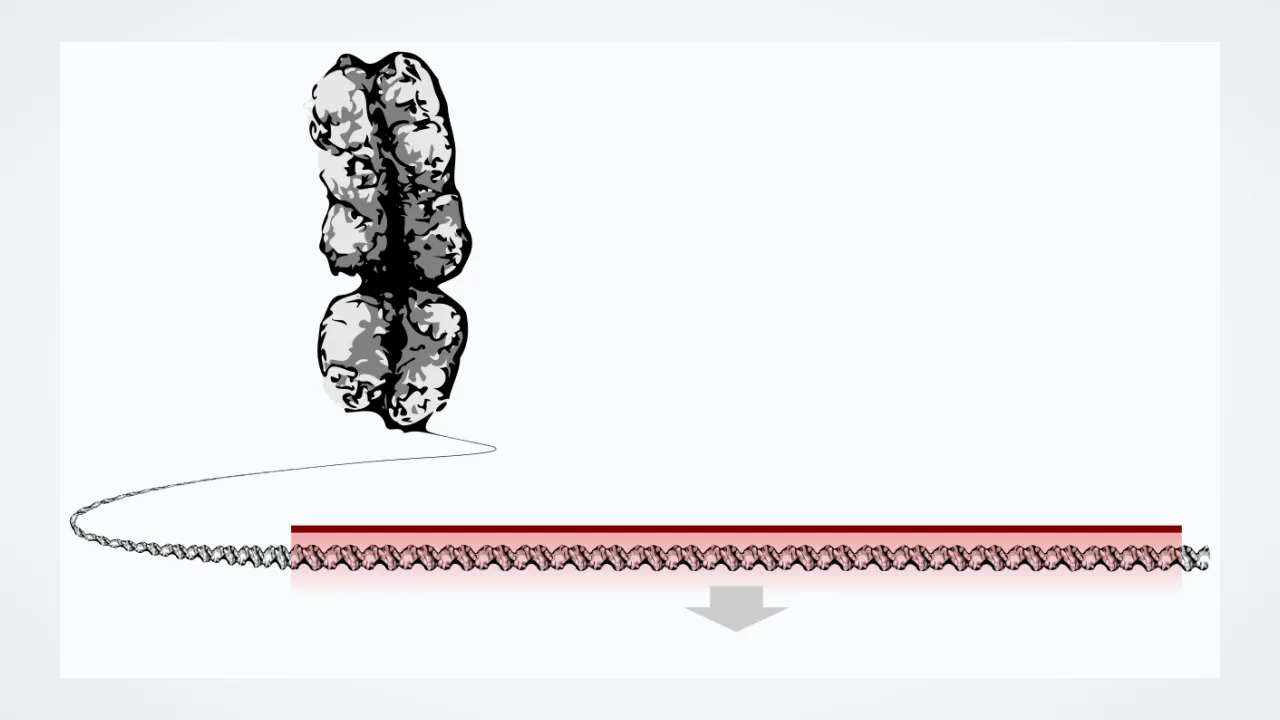
2. What is passing traits from parents to kids called?
🤯 Mind-Blowing Fact • Grade 2
Humans even share about sixty percent of their core working genes with ordinary yellow bananas!
✨ Word Sparks (Grade 2 Glossary)
Tap 🔊 to hear
DNA
The long twisted molecule that holds your genes
Inherit
To receive traits from parents before birth
Freckles
Small tan spots on skin guided by genes
🪝
How does a tiny cell know whether to give you freckles or dimples?
1
A Secret Recipe Book
Imagine baking a cake using a family cookbook. Deep inside your cells sits a real instruction book made of ! Each single recipe in that book is a gene, and it tells your body how to grow.
2
Half and Half
Heredity happens when parents pass genes to their children. You receive one set of genes from your mother and another set from your father. Sometimes you get dad's nose and mom's wavy hair!
3
More Than Looks
Genes decide much more than hair color or . Some genes decide if cilantro tastes yummy or soapy to your tongue! Others guide how your heart, bones, and muscles work every day.
1. What acts like a recipe inside your DNA instruction book?
2. How many sets of genes does a child receive?
🤯 Mind-Blowing Fact • Grade 3
In the 1860s, a monk named Gregor Mendel discovered the rules of heredity by counting nearly thirty thousand garden pea plants!
✨ Word Sparks (Grade 3 Glossary)
Tap 🔊 to hear
Chromosome
A thread-like bundle of DNA inside a cell
Dominant
A gene version that shows up right away
Recessive
A gene version needing two copies to appear
🪝
Why can two brown-eyed parents sometimes have a bright blue-eyed baby?
1
Packed Inside Chromosomes
Zoom inside the nucleus of almost any cell in your body. There you will spot forty-six thread-like bundles called . Stretched along those chromosomes are roughly twenty thousand genes made of twisted DNA.
2
Matching Gene Pairs
Because come in twenty-three pairs, your genes come in pairs too. One copy comes from your mother, and the matching copy comes from your father. Scientists call different versions of the same gene alleles.
3
Dominant and Recessive
When two different alleles meet, one often speaks louder! A allele shows its trait even with just one copy, like dark hair. A allele stays hidden unless a child inherits two copies, one from each parent.
4
Nature Meets Everyday Life
Heredity sets up your starting blueprint, from earlobes to blood type. Still, healthy food, sleep, and practice shape how you grow too. Your genes and your daily habits work together as lifelong teammates!
1. How many chromosomes are packed inside a typical human body cell?
2. When does a recessive trait show up in a child?
🤯 Mind-Blowing Fact • Grade 4
With twenty-three chromosome pairs shuffling independently, two parents could theoretically produce over seventy trillion genetically distinct combinations!
✨ Word Sparks (Grade 4 Glossary)
Tap 🔊 to hear
Allele
One specific version of a paired gene
Polygenic
Controlled by many different genes working together
Genome
The complete set of DNA in an organism
🪝
How can a four-letter chemical alphabet write the instructions for everything from dimples to red blood cells?
1
A Four-Letter Code
Picture writing an encyclopedia using only four letters: A, T, C, and G. Inside every cell nucleus, twisted ladders of DNA use those four chemical bases to spell out instructions. Specific segments of this DNA ladder form genes, and each gene instructs the cell how to assemble a particular protein that builds tissues or runs chemical reactions.
2
Shuffling the Genetic Deck
Heredity ensures family resemblance, yet brothers and sisters rarely look identical. Before parents pass chromosomes to offspring, reproductive cells shuffle gene combinations like a deck of cards. Each parent contributes twenty-three chromosomes, creating trillions of possible combinations so every child receives a fresh genetic mix.
3
Dominant, Recessive, and Polygenic Traits
Some human traits follow simple rules where a dominant masks a recessive allele, such as whether earwax is wet or dry. However, most traits—including height, skin tone, and eye shade—are . That means dozens or even hundreds of genes work together, blending their signals like colors on an artist's palette.
4
Genes Plus Environment
Even identical twins who share the exact same develop small differences over time. Sunlight, nutrition, exercise, and learning influence which genes switch on or quiet down. Heredity writes your biological starting code, while your environment helps shape the finished story.
1. What do most protein-coding genes instruct a cell to build?
2. Why are traits like human height and skin tone called polygenic?
🤯 Mind-Blowing Fact • Grade 5
Protein-coding genes make up less than two percent of your total DNA, while vast non-coding regions act like traffic controllers regulating when genes switch on!
✨ Word Sparks (Grade 5 Glossary)
Tap 🔊 to hear
Meiosis
Cell division that creates shuffled reproductive cells
Codominance
When two different gene versions both show equally
Epigenetics
Chemical tags turning genes up or down
🪝
Why did scientists spend thirteen years mapping three billion DNA letters, and what surprised them most when they finished?
1
Blueprints Woven in Double Helices
Unspool the microscopic nucleus of a single human somatic cell, and you would stretch out roughly two meters of deoxyribonucleic acid, or DNA. Organized across twenty-three homologous pairs of chromosomes, this molecule contains approximately three billion base pairs of adenine, thymine, cytosine, and guanine. Embedded along those strands are roughly twenty thousand protein-coding genes—specific sequences that cells transcribe into RNA and translate into structural proteins, hormones, and enzymes.
2
Mendel's Peas and Meiotic Shuffling
Long before anyone photographed DNA, Austrian monk Gregor Mendel uncovered the mathematical laws of heredity between 1856 and 1863 by cross-pollinating pea plants. Mendel realized traits travel as discrete units rather than blending irreversibly like paint. Today we know that during —the specialized cell division producing eggs and sperm—chromosomes swap segments through crossing-over and sort independently, guaranteeing remarkable genetic diversity among siblings.
3
Beyond Simple Dominance
Classic Mendelian inheritance explains single-gene traits where a dominant allele overrides a recessive counterpart, or where alleles like A and B blood types express equally. Yet modern genomics reveals that most human characteristics are polygenic. Height alone is influenced by thousands of subtle genetic variants called single-nucleotide polymorphisms, each nudging growth by a tiny fraction of a millimeter.
4
Epigenetics: Molecular Dimmer Switches
Astonishingly, protein-coding genes account for less than two percent of the human genome. Much of the remaining DNA acts as regulatory switches determining when, where, and how strongly genes activate. Through , chemical tags attach to DNA or its spool-like histone proteins in response to diet, sleep, and stress, adjusting gene activity without altering the underlying code.
5
The Human Genome Project Legacy
Completed in 2003, the international Human Genome Project sequenced our entire genetic library for the first time, surprising researchers who expected over one hundred thousand human genes. Today, understanding heredity empowers doctors to pinpoint inherited conditions early and design precision medicines tailored to a patient's unique genetic profile.