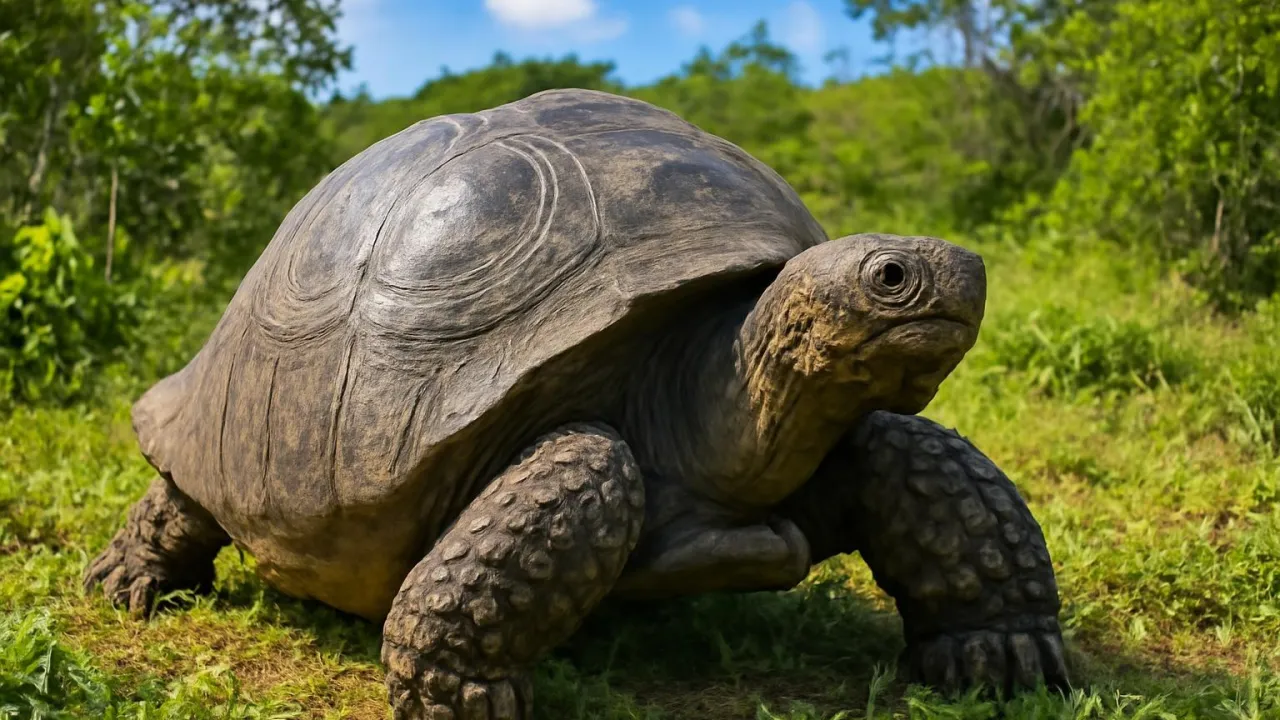
Galapagos Giant Tortoises can weigh more than 500 pounds and live over a century in the wild!
✨ Word Sparks (Grade 3 Glossary)
Tap 🔊 to hear
camouflage
How animals blend into their surroundings
herbivore
An animal that eats only plants
adaptation
A special trait that helps survival
🪝
Did you know the Galapagos Giant Tortoise has special features to survive for over 100 years?
1
Slow and Steady Giants
The Galapagos Giant Tortoise moves slowly but steadily across its island habitat. Its large, dome-shaped shell provides excellent protection from predators. This slow movement helps conserve energy in the hot sun. The tortoise’s strong legs support its heavy body as it walks.
2
Eating Plants for Nutrition
These tortoises are and eat grasses, leaves, and cacti to get nutrients. Their strong jaws help them chew tough plants easily. Eating plants also helps them stay hydrated in dry environments. This diet supports their long lifespan and slow metabolism.
3
Living in Island Habitats
They live only on the Galapagos Islands, where the climate is warm and dry. The islands’ unique ecosystem provides food and shelter for these tortoises. Their shells help them blend in with the rocky terrain, a form of against predators. This helps them survive in their environment.
4
Amazing Lifespan and Adaptations
Galapagos Giant Tortoises can live over 100 years, making them one of the longest-living reptiles. Their slow movement and low energy needs help them survive long periods without food. They also store water in their bodies to stay hydrated. These make them true island survivors.
1. What helps the tortoise blend into its environment?
2. Why do tortoises eat plants?
🤯 Mind-Blowing Fact • Grade 4
Galapagos Giant Tortoises help spread seeds, supporting island plant life and ecosystems.
✨ Word Sparks (Grade 4 Glossary)
Tap 🔊 to hear
ecosystem
All living things and their home together
pollination
How plants make seeds with help from animals
metabolism
How the body uses energy to live
🪝
How do Galapagos Giant Tortoises play an important role in their island ecosystem?
1
Slow Movers with Strong Shells
Galapagos Giant Tortoises move slowly but their large, dome-shaped shells protect them from predators and harsh weather. Their slow pace helps them conserve energy in the hot island sun, which is important for survival. Because they are so large, few animals can threaten them directly. This protection allows them to live long lives in a challenging environment.
2
Herbivores That Shape Their Habitat
These tortoises eat a variety of plants, including grasses, leaves, and cacti, which helps control plant growth on the islands. By feeding on plants, they help spread seeds through their droppings, aiding plant and growth. Their role in the food web supports many other species indirectly. Human farming and introduced animals have changed their habitats, sometimes harming tortoise populations.
3
Island Ecosystem and Geographic Range
Galapagos Giant Tortoises are found only on the Galapagos Islands, a volcanic archipelago in the Pacific Ocean. Each island has slightly different tortoise subspecies adapted to local conditions. Their limited geographic range makes them vulnerable to environmental changes and human impact. Conservation efforts focus on protecting their habitats and controlling invasive species.
4
Long Life and Survival Adaptations
These tortoises can live over 100 years due to their slow and energy-saving behaviors. They store water in their bodies to survive dry seasons and have strong legs to move over rough terrain. Their shells provide camouflage by blending with rocks and soil, helping avoid predators. These adaptations are key to their survival in a unique .
1. How do tortoises help plants grow on the islands?
2. Why is the tortoise’s shell important?
🤯 Mind-Blowing Fact • Grade 5
Some Galapagos Giant Tortoises have lived over 150 years, making them among the longest-living vertebrates!
✨ Word Sparks (Grade 5 Glossary)
Tap 🔊 to hear
metabolism
How an animal’s body uses energy to live
subspecies
Groups of animals with small differences in one species
conservation
Protecting animals and plants to keep them safe
🪝
What makes the Galapagos Giant Tortoise a remarkable survivor in its unique island environment?
1
Scientific Classification and Origins
The Galapagos Giant Tortoise, scientifically named Chelonoidis nigra, belongs to the Testudinidae family of reptiles. These tortoises evolved uniquely on the volcanic Galapagos Islands, isolated in the Pacific Ocean. Their evolution led to several adapted to different islands’ environments. This scientific context helps explain their diverse shell shapes and sizes.
2
Physiological Adaptations for Longevity
These tortoises have a slow which conserves energy and allows them to survive long periods without food or water. Their large, dome-shaped shells protect vital organs and provide camouflage against rocky terrain. They can store water in their bladders to endure dry seasons, an essential survival mechanism. Their strong, columnar legs support their heavy bodies and enable slow but steady movement.
3
Ecological Role and Conservation History
Galapagos Giant Tortoises play a crucial role in their ecosystem by dispersing seeds and maintaining plant diversity. Historically, they faced threats from hunting and introduced species like goats and rats, which damaged their habitat. programs have helped increase their populations through breeding and habitat protection. Today, they symbolize successful wildlife preservation efforts.
4
Quantitative Comparisons and Records
Adult tortoises can weigh up to 550 pounds (250 kilograms) and measure 5 feet (1.5 meters) in length. They can live over 100 years, with some individuals reaching 150 years in captivity. Their walking speed is about 0.3 miles per hour (0.5 kilometers per hour), reflecting their slow but energy-efficient lifestyle. These measurements highlight their status as one of the largest and longest-living reptiles.
5
Unique Survival Strategies
Their ability to store water and survive long dry periods is vital for island life. The tortoises’ slow growth and delayed reproduction contribute to their longevity. Their shells vary in shape, such as saddle-backed or domed, depending on food availability and island terrain. These survival strategies demonstrate their remarkable adaptation to the Galapagos environment.