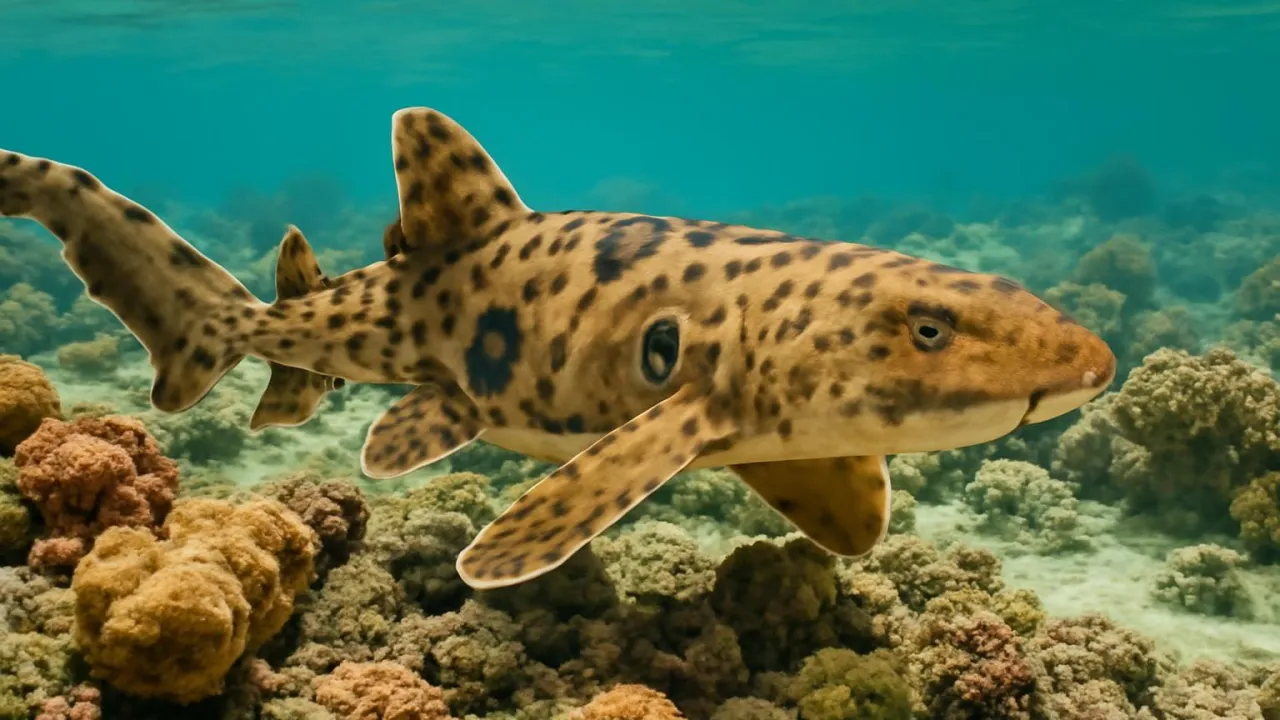
Epaulette sharks can survive without water for a short time by walking on land!
✨ Word Sparks (Grade 2 Glossary)
Tap 🔊 to hear
crevices
Small cracks or holes where animals hide.
predators
Animals that hunt and eat other animals.
coral reefs
Underwater homes made of tiny sea animals.
🪝
Have you ever heard of a shark that can walk on rocks?
1
Walking Shark
The epaulette shark can walk on its fins over rocks and coral. It moves slowly but surely to find food. Its walking helps it survive in shallow reefs. This shark uses its fins like legs to explore.
2
Home in Shallow Water
This shark lives in warm, shallow near Australia and New Guinea. It hides in small during the day. At night, it hunts for shrimp and small fish. The reef gives it shelter and food.
3
Special Spot Markings
The epaulette shark has a dark spot near its gills that looks like a shoulder patch. This spot helps scare away bigger . It also helps the shark blend into coral. This is a clever way to stay safe.
Epaulette sharks can survive without oxygen longer than most sharks by slowing their heart rate!
✨ Word Sparks (Grade 3 Glossary)
Tap 🔊 to hear
adaptation
A body change that helps survival.
camouflage
Colors or shapes that hide animals.
predator
An animal that hunts others for food.
🪝
How does a shark walk on land without legs?
1
Unique Walking Ability
The epaulette shark uses its pectoral fins to walk slowly on coral reefs. This helps it survive low tides when water is scarce. Walking allows it to reach small pools where it finds food. This movement is rare among sharks.
2
Habitat and Survival
This shark lives in shallow tropical waters of Australia and New Guinea. It hides in coral crevices to avoid during the day. At night, it hunts shrimp and small fish using its keen sense of smell. Its habitat provides nutrients and shelter.
3
Camouflage and Defense
The epaulette shark has a large dark spot behind its gills resembling an epaulette badge. This confuses by mimicking a bigger animal’s eye. This increases its chances of survival. It blends well with the coral environment.
4
Life Cycle and Growth
Epaulette sharks lay eggs that hatch after several months in reef crevices. The young sharks resemble adults but are smaller and must avoid . As they grow, they develop stronger fins to walk better. This life cycle ensures their survival in reefs.
1. Why does the epaulette shark walk on coral reefs?
2. What does the dark spot behind the gills do?
🤯 Mind-Blowing Fact • Grade 4
Epaulette sharks can survive in low-oxygen water by slowing their heart rate dramatically during low tide.
✨ Word Sparks (Grade 4 Glossary)
Tap 🔊 to hear
ecosystem
A community of living things and their home.
predator
An animal that hunts other animals for food.
adaptation
A change that helps animals survive better.
🪝
What causes the epaulette shark to walk on land instead of swimming?
1
Adaptation to Tidal Changes
The epaulette shark walks on its pectoral and pelvic fins when tides are low, allowing it to move between isolated pools. This behavior helps it survive in shallow reef where water levels change daily. Walking reduces the risk of drying out and escaping . It is a unique to its environment.
2
Role in the Reef Ecosystem
As a of small fish and crustaceans, the epaulette shark helps control prey populations in coral reefs. Its hunting supports the balance of the food web by preventing overpopulation. Additionally, by moving between pools, it aids in nutrient cycling within the reef. This species contributes to reef health and biodiversity.
3
Geographic Distribution and Habitat
This shark is found mainly in the shallow, warm waters of northern Australia and southern New Guinea. It prefers coral reef flats and lagoons where oxygen levels can fluctuate. Its ability to tolerate low oxygen and walk allows it to exploit habitats other sharks cannot. This distribution reflects its specialized .
4
Human Impact and Conservation
Although not currently endangered, the epaulette shark faces threats from habitat destruction and pollution. Coral reef damage reduces its shelter and hunting grounds. Conservation efforts focus on protecting reef habitats and monitoring populations to ensure sustainability. Educating people about this unique shark helps promote reef preservation.
1. Why does the epaulette shark walk on land during low tide?
2. How does the epaulette shark help coral reefs?
🤯 Mind-Blowing Fact • Grade 5
Epaulette sharks can reduce their heart rate by two-thirds to survive oxygen-poor tide pools for hours.
✨ Word Sparks (Grade 5 Glossary)
Tap 🔊 to hear
hypoxia
When there is very little oxygen in water.
mesopredator
A medium-sized animal that hunts smaller animals.
benthic
Living on the bottom of the sea or reef.
🪝
How does the epaulette shark’s unique physiology allow it to thrive in fluctuating reef environments?
1
Taxonomy and Scientific Classification
The epaulette shark, Hemiscyllium ocellatum, belongs to the family Hemiscylliidae within the order Orectolobiformes. This species is a type of bamboo shark known for its distinctive epaulette-like spots near the pectoral fins. Its classification reflects evolutionary adaptations to shallow reef habitats. Hemiscylliidae sharks are notable for their walking abilities.
2
Physiological Mechanics of Walking and Respiration
Epaulette sharks use their muscular pectoral and pelvic fins to 'walk' along reef surfaces in low water conditions. They can survive hypoxic (low oxygen) environments by drastically reducing their heart rate to about 30% of normal. This physiological adaptation allows them to endure periods of low tide when pools become isolated. Their ability to extract oxygen efficiently supports their survival outside deep water.
3
Conservation Status and Human Impact
Currently listed as Least Concern by the IUCN, the epaulette shark faces habitat threats from coral reef degradation and pollution. Coastal development and climate change contribute to reef loss, impacting shark populations. Conservation efforts focus on reef habitat protection and sustainable tourism. Increased awareness helps reduce human-induced pressures on this unique species.
4
Ecological Role and Behavioral Adaptations
As a , the epaulette shark regulates populations of small fish and invertebrates, maintaining reef ecosystem balance. Its nocturnal hunting behavior reduces competition with diurnal predators. The epaulette spot serves as both camouflage and a predator deterrent. Its walking ability enables access to isolated tide pools inaccessible to other sharks.
5
Quantitative Comparisons and Environmental Limits
Epaulette sharks grow up to 85 centimeters (33 inches) and can survive oxygen levels as low as 10% saturation during low tide. Their heart rate can slow from 30 beats per minute to 10 beats per minute under . They inhabit water temperatures ranging from 24 to 30 degrees Celsius (75 to 86 degrees Fahrenheit). These physiological limits define their specialized niche in coral reef ecosystems.