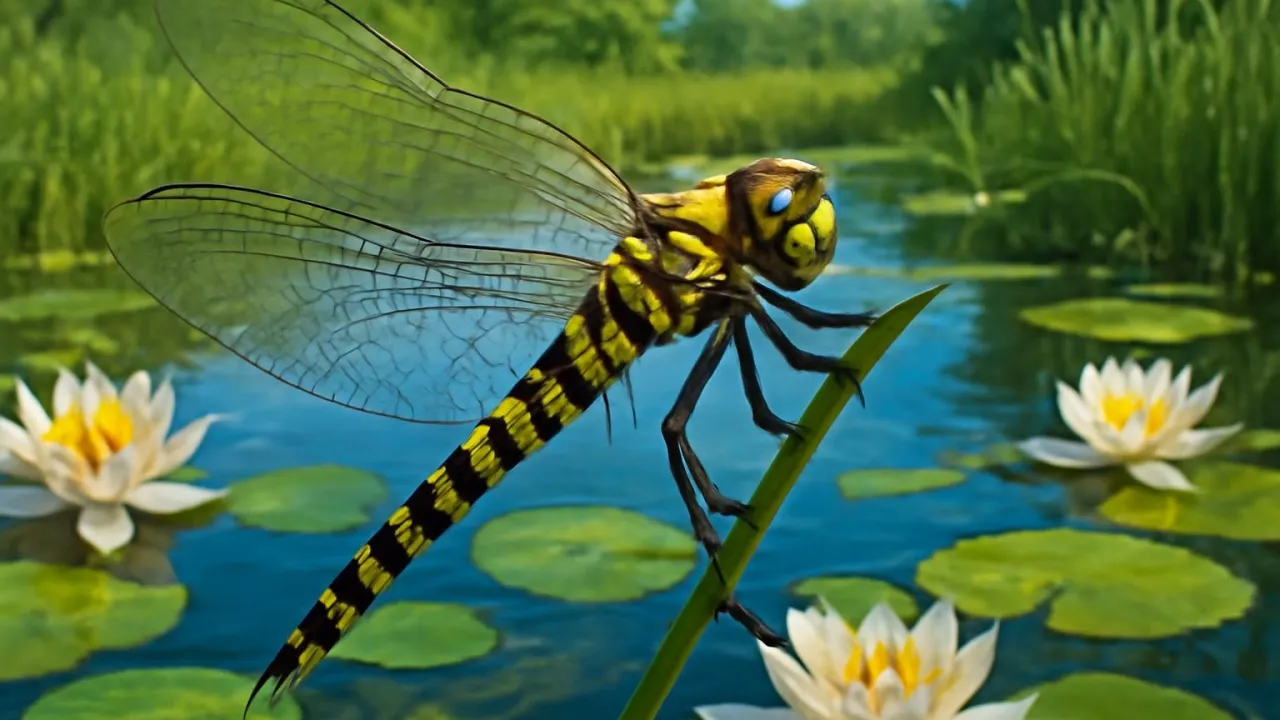
Dragonflies can fly up to 30 miles per hour and change direction instantly!
✨ Word Sparks (Grade 2 Glossary)
Tap 🔊 to hear
nymph
Young insect that lives underwater
predator
An animal that hunts other animals
hover
To stay still in the air while flying
🪝
Have you ever seen a dragonfly zoom fast and stop in midair?
1
Amazing Wings
Dragonflies have two pairs of wings that move independently and help them fly fast. Their wings shine brightly in the sunlight and make them easy to spot. They can , fly backward, and even change direction quickly. This helps them catch their prey in the air.
2
Home Near Water
Dragonflies live near ponds, lakes, and wetlands where they lay eggs in the water. Their young, called , grow underwater before becoming adults. Water is very important for their life cycle and helps them stay safe from . They need clean water to survive well.
3
Hungry Hunters
Dragonflies eat many insects like mosquitoes and flies that bother people. They catch food while flying using their strong jaws. Their sharp eyes help them spot prey from far away. This makes dragonflies helpful in controlling insect populations.
Dragonflies can see ultraviolet light, which helps them find mates and food.
✨ Word Sparks (Grade 3 Glossary)
Tap 🔊 to hear
metamorphosis
Change from young insect to adult form
mandibles
Strong jaws used to catch and eat prey
camouflage
Colors that help animals blend into places
🪝
Did you know dragonflies have nearly 360-degree vision to spot prey easily?
1
Flight and Vision
Dragonflies have two pairs of wings that move independently, allowing them to hover and dart quickly. Their large compound eyes give them almost 360-degree vision, which helps them detect predators and prey from all directions. This excellent eyesight is a key adaptation for survival. Their flying skills let them catch insects midair with great precision.
2
Life Cycle in Water
Dragonflies start life as nymphs living underwater where they breathe through gills. The nymph stage can last several months to years depending on species. When ready, they crawl out of water and molt to become adults with wings. This transformation is called and helps them move from water to air habitats.
3
Camouflage and Hunting
Dragonflies often have colors that blend with plants and water, helping them from predators. Their sharp allow them to catch and eat mosquitoes, flies, and other small insects. They use their legs like a basket to scoop prey during flight. This hunting method keeps insect populations balanced in their ecosystem.
4
Ecosystem Role
Dragonflies are important predators in both aquatic and terrestrial food webs. They help control populations of mosquitoes and other insects that can spread diseases. Their presence indicates healthy water ecosystems because they need clean water to reproduce. Humans benefit from dragonflies by having fewer biting insects around.
1. What helps dragonflies catch insects while flying?
2. Why do dragonflies need clean water?
🤯 Mind-Blowing Fact • Grade 4
Dragonflies’ wings can beat up to 30 times per second, allowing incredible flight control.
✨ Word Sparks (Grade 4 Glossary)
Tap 🔊 to hear
bioindicator
Animal showing how healthy an environment is
metamorphosis
Big change from young to adult insect
symbiosis
Close relationship between two living things
🪝
How do dragonflies’ amazing flying skills and eyesight help them survive and thrive?
1
Flight Mechanics and Vision
Dragonflies have two pairs of wings that can beat independently, enabling them to hover, fly backward, and change direction rapidly to catch prey. Their large compound eyes contain thousands of lenses, giving them nearly 360-degree vision to spot predators and prey from all angles. This combination of flight agility and visual acuity makes them expert hunters in their habitats. Their wing muscles work efficiently to sustain fast, precise flight maneuvers.
2
Life Cycle and Habitat
Dragonflies begin their life cycle as aquatic nymphs living in freshwater ponds, lakes, and wetlands. Nymphs breathe through gills and undergo several molts over months or years before emerging as winged adults. This allows them to transition from underwater environments to aerial habitats. Clean, unpolluted water is essential for their survival, and habitat loss threatens many dragonfly populations worldwide.
3
Ecological Roles and Symbiosis
As predators, dragonflies help control insect populations, especially mosquitoes, which benefits human health by reducing disease spread. They also serve as food for birds, fish, and amphibians, linking aquatic and terrestrial food webs. Some dragonflies engage in symbiotic relationships with wetland plants by resting on them and aiding in insect balance. Their presence is a of healthy ecosystems, reflecting water quality and biodiversity.
4
Geographic Distribution and Human Impact
Dragonflies are found on every continent except Antarctica, thriving in diverse freshwater habitats worldwide. However, pollution, habitat destruction, and climate change threaten their populations by degrading water quality and breeding sites. Conservation efforts focus on protecting wetlands and reducing pesticide use to preserve dragonfly diversity. Educating people about their ecological importance helps promote coexistence and habitat restoration.
Dragonflies’ flight muscles can beat their wings independently up to 30 times per second for unmatched agility.
✨ Word Sparks (Grade 5 Glossary)
Tap 🔊 to hear
Odonata
The insect order that includes dragonflies and damselflies
ommatidia
Tiny lenses in compound eyes for wide vision
bioindicator
Species that shows how healthy an environment is
🪝
What makes dragonflies one of the most efficient aerial predators in the insect world?
1
Taxonomy and Scientific Context
Dragonflies belong to the order and suborder Anisoptera, characterized by large multifaceted eyes and two pairs of strong, transparent wings. Their evolutionary lineage dates back over 300 million years, making them one of the oldest flying insect groups. The name Anisoptera means 'unequal wings,' referring to their forewings and hindwings differing in shape and size, enhancing flight capabilities. Scientific studies focus on their sensory systems and flight mechanics for biomimicry applications.
2
Physiological Mechanics of Flight
Dragonfly wings operate independently with direct flight muscles attached to the wing bases, allowing precise control and rapid wingbeats up to 30 times per second. This enables hovering, gliding, and sudden directional changes with minimal energy expenditure. Their compound eyes contain up to 30,000 , providing nearly panoramic vision and detecting ultraviolet light, which aids in navigation and mate selection. The combination of advanced vision and wing control makes them formidable aerial hunters.
3
Life Cycle, Metamorphosis, and Habitat Needs
Dragonflies undergo incomplete metamorphosis, with aquatic nymphs living in freshwater for months to years before emerging as winged adults. Nymphs possess extendable jaws for capturing prey underwater and breathe through gills, requiring clean, oxygen-rich water. Adult dragonflies depend on aquatic habitats for reproduction and hunting, making wetland conservation critical for their survival. Environmental changes such as pollution and habitat fragmentation significantly impact their populations.
4
Conservation and Botanical History
Dragonflies serve as for freshwater ecosystem health, with many species threatened by habitat loss and water pollution worldwide. Conservation programs emphasize wetland restoration and pesticide reduction to safeguard dragonfly diversity. Historically, dragonflies have inspired cultural symbolism representing agility and transformation across many societies. Scientific interest in their flight has influenced robotics and aerodynamics research, highlighting their importance beyond ecological roles.
5
Quantitative Comparisons and Ecological Impact
Dragonflies can reach flight speeds up to 30 miles per hour and have wingspans ranging from 2 to 5 inches (5 to 12 centimeters). Their nymphs can live underwater for several years, growing through multiple molts before metamorphosis. By consuming thousands of mosquitoes daily, dragonflies significantly reduce disease vectors in their habitats. Their presence correlates with water quality indices, making them essential for monitoring environmental changes and supporting biodiversity.