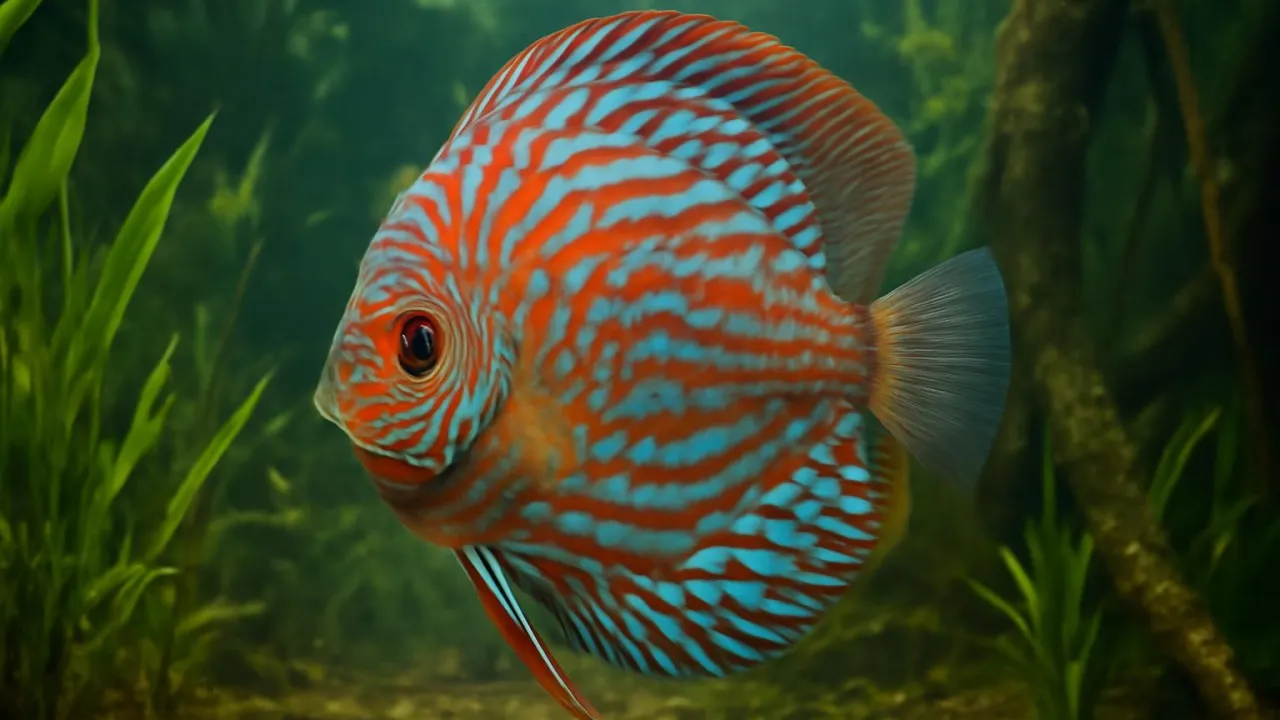
Discus fish parents protect their eggs by fanning water to keep them clean and safe!
✨ Word Sparks (Grade 3 Glossary)
Tap 🔊 to hear
adaptation
A body change to help survive better
camouflage
Colors that help animals hide
nutrients
Food parts that help animals grow
🪝
Did you know discus fish can change their colors to avoid predators?
1
Shape and Colors
Discus fish have a round, flat body that helps them swim easily through plants. Their bright blue, red, and green colors act as in their watery habitat. Changing colors is an that helps them survive. This color change can also show their mood or health.
2
Living in the Amazon
Discus fish live in the slow-moving waters of the Amazon River Basin. They hide among plants and roots to escape predators. This habitat provides and shelter. The warm water temperature is perfect for their survival and growth.
3
Eating and Growing
These fish eat small insects, larvae, and plant material. Their diet gives them the needed for growth and bright colors. Young discus fish hatch from eggs and grow quickly in safe environments. Parents often protect their young from predators.
4
Survival Skills
Discus fish use their body shape and color to avoid predators. Their flat shape helps them move quietly through plants. helps them blend into their surroundings. These increase their chances to live and reproduce.
Discus fish can recognize their owners and show different colors when happy or stressed!
✨ Word Sparks (Grade 4 Glossary)
Tap 🔊 to hear
ecosystem
All living things and their environment
adaptation
A special body feature for survival
biodiversity
Many different kinds of living things
🪝
How does the discus fish’s unique shape help it survive in the Amazon River?
1
Body Shape and Movement
The discus fish’s round, flat body allows it to glide gracefully through dense underwater plants, avoiding predators easily. This shape reduces water resistance, helping it move quietly and quickly in its habitat. Its fins help it steer precisely among roots and branches. These physical features are perfect for the Amazon’s slow-moving waters.
2
Role in the Ecosystem
Discus fish play an important role by eating small insects and algae, helping control populations and keep the balanced. They also serve as prey for larger fish and birds, linking food webs. Their presence supports and healthy river habitats. Humans impact their environment through pollution and aquarium trade, which can threaten wild populations.
3
Geographic Distribution and Habitat
Native to the Amazon River Basin, discus fish thrive in warm, soft, and acidic waters with plenty of submerged plants. They prefer slow-moving water where they can hide and feed safely. Seasonal flooding changes their habitat, creating new feeding areas and shelter. These fish are sensitive to water quality, making clean rivers essential for their survival.
4
Survival Adaptations
Discus fish use color changes as camouflage to blend into their environment and avoid predators. Their flat bodies help them slip through narrow spaces quickly. They also communicate with color shifts during mating or stress. These improve their chances to reproduce and survive in a competitive .
2. What role do discus fish play in their ecosystem?
🤯 Mind-Blowing Fact • Grade 5
Discus fish parents feed their young special mucus, a rare and unique form of parental care!
✨ Word Sparks (Grade 5 Glossary)
Tap 🔊 to hear
chromatophores
Cells that change color in animals
parental care
When parents protect and feed babies
ecosystem
All living things and their environment
🪝
What makes the discus fish a fascinating example of adaptation in tropical freshwater ecosystems?
1
Scientific Classification and Habitat
Discus fish belong to the family Cichlidae and genus Symphysodon, native to the Amazon River Basin in South America. They inhabit slow-moving, warm, acidic waters rich in submerged vegetation and leaf litter. These environmental conditions provide shelter, breeding sites, and abundant food resources essential for their survival. Their distribution is limited to specific river systems with stable water chemistry.
2
Physiological Adaptations and Coloration
The discus fish’s flattened, disc-shaped body reduces water resistance, enabling precise maneuvering through dense aquatic plants. Their vibrant coloration varies from blues to reds and greens, functioning in camouflage, social signaling, and mate selection. Color changes result from specialized that respond to environmental cues and emotional states. These physiological traits enhance survival and reproductive success.
3
Reproductive Behavior and Parental Care
Discus fish exhibit unique by both parents cleaning and fanning eggs to ensure oxygen supply and prevent fungal growth. Fry feed on mucus secreted by parents’ skin during early development, a rare behavior among fish. This intensive care increases offspring survival rates in predator-rich habitats. Breeding pairs form strong bonds and defend territories aggressively.
4
Conservation Status and Human Impact
While not currently endangered, discus fish populations face threats from habitat destruction, pollution, and overcollection for the aquarium trade. Conservation efforts focus on habitat preservation and sustainable breeding programs. Maintaining water quality and natural vegetation is critical for their long-term survival. Educating aquarium enthusiasts helps reduce wild-caught demand.
5
Quantitative Comparisons and Ecological Role
Adult discus fish typically reach lengths of 6 to 8 inches (15 to 20 centimeters) and weigh approximately 300 to 400 grams. They swim at moderate speeds around 1 to 2 miles per hour, navigating complex underwater environments. As mid-level consumers, they regulate insect populations and provide prey for larger predators, contributing to Amazonian food webs. Their sensitivity to water temperature and chemistry makes them indicators of health.