Cliffs of Moher
Where Wild Waves Meet Towering Stone Walls
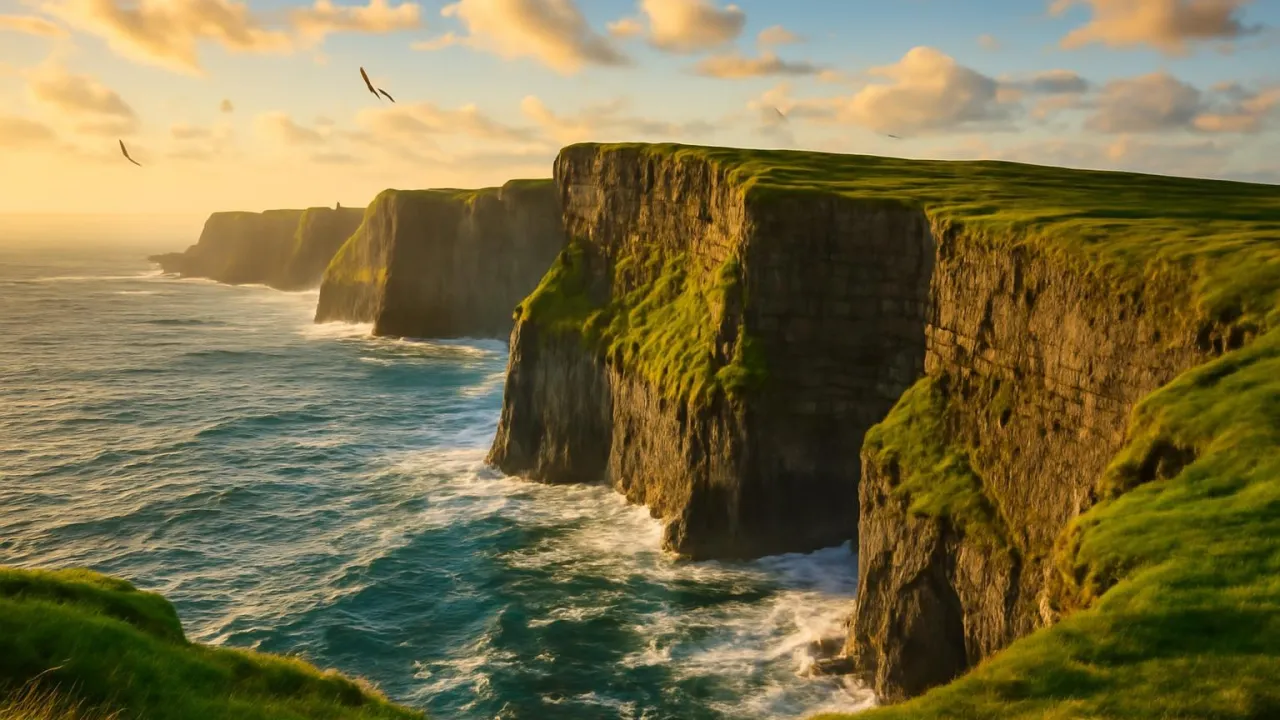
The Cliffs of Moher’s rock layers preserve fossilized worm burrows and sea creatures from over 300 million years ago.
1 A Geological Masterpiece on Ireland’s Coast
The Cliffs of Moher rise dramatically from the Atlantic Ocean, stretching for eight kilometers along County Clare’s coastline. Their highest point, near O’Brien’s Tower, reaches an impressive 214 meters (702 feet) above sea level. These cliffs are composed mainly of shale and sandstone, sedimentary rocks deposited during the Carboniferous period roughly 320 million years ago. Over time, tectonic forces uplifted these layers, exposing them to the erosive power of wind, rain, and waves. The cliffs’ appearance reveals distinct bands of rock, each representing ancient environmental conditions.
2 Erosion: Nature’s Sculptor
Erosion is a powerful natural process that continuously shapes the Cliffs of Moher. The relentless action of Atlantic waves undercuts the base, causing rockfalls and forming sea caves and arches. Wind-driven rain and salt spray accelerate the breakdown of softer shale layers, while the harder sandstone resists erosion, creating dramatic overhangs. This ongoing interplay between rock strength and environmental forces results in the cliffs’ jagged, ever-changing profile. Geologists study these processes to understand coastal landform evolution and sediment transport.
3 A Haven for Biodiversity
The cliffs are a designated Special Protection Area, supporting over 30,000 breeding seabirds from more than 20 species. Puffins, razorbills, guillemots, and kittiwakes nest in the cliffs’ crevices, relying on the inaccessibility for safety from terrestrial predators. The updrafts created by the cliffs’ height provide ideal conditions for soaring and hunting. Unique wildflowers and rare ferns grow in the thin soils on the cliff tops, contributing to the area’s rich . efforts focus on protecting these habitats from human disturbance and invasive species.
4 Cultural and Scientific Significance
For centuries, the Cliffs of Moher have inspired Irish folklore, poetry, and art, symbolizing the wild beauty of Ireland’s west coast. O’Brien’s Tower, constructed in 1835 as a viewing point, remains a popular destination for tourists seeking panoramic views of the Aran Islands and Galway Bay. The cliffs’ geological layers contain fossils of marine creatures that lived before the age of dinosaurs, providing valuable scientific insights into Earth’s ancient history. In 2011, the Cliffs of Moher were designated a UNESCO Global Geopark, recognizing their outstanding geological and cultural value.
5 Visiting and Protecting the Cliffs
More than 1.5 million people visit the Cliffs of Moher each year, following carefully maintained trails and viewing platforms to minimize environmental impact. Interpretive centers educate visitors about the cliffs’ geology, ecology, and cultural heritage, fostering appreciation and responsible tourism. The unpredictable weather, with sudden fogs and strong winds, adds to the site’s mystique and requires careful safety measures. Ongoing projects monitor erosion rates, protect nesting birds, and restore native plant communities. The Cliffs of Moher remain a living laboratory where science, history, and natural wonder meet.
1. How does erosion shape the Cliffs of Moher over time?
2. Why are the Cliffs of Moher important for scientists and conservationists?