Cliffs of Moher
Where Wild Waves Meet Towering Stone Walls
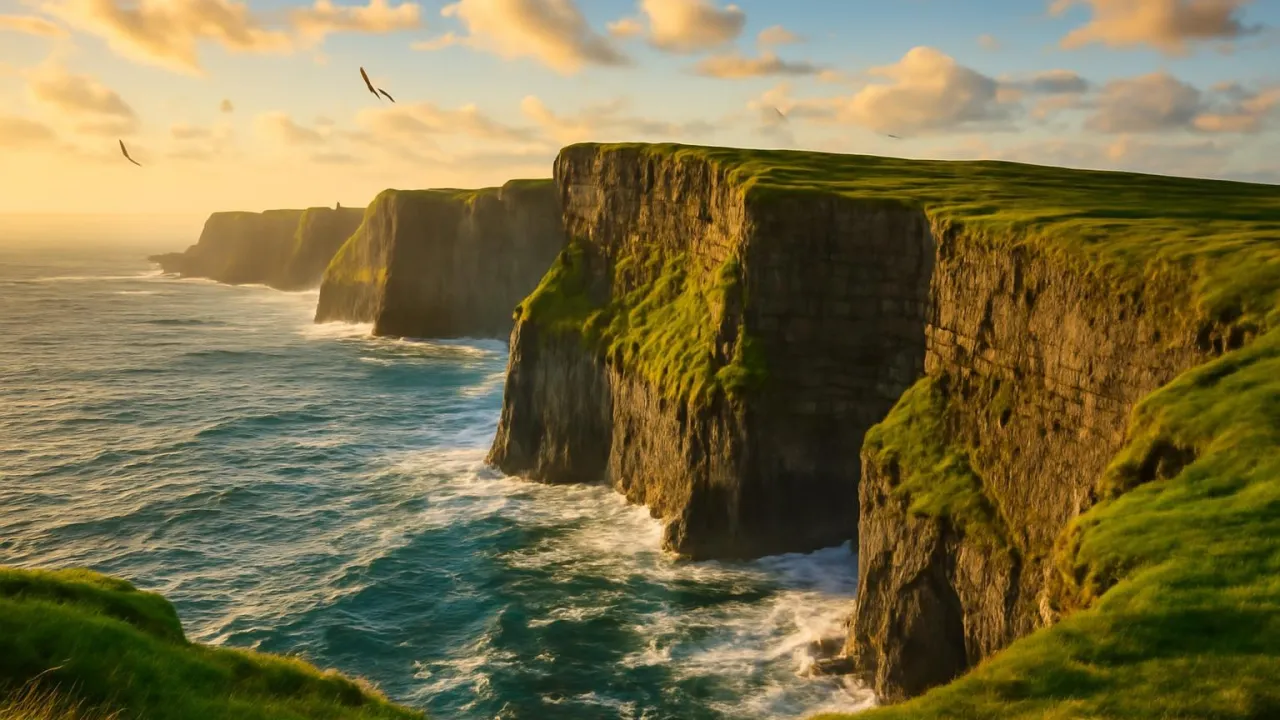
Some fossils found in the cliffs are from sea creatures that lived before the dinosaurs!
1 A Dramatic Coastal Wonder
The Cliffs of Moher tower above the Atlantic Ocean, stretching for five miles along Ireland’s rugged western coast. Their highest point rises 702 feet, offering breathtaking views of the swirling sea below. These cliffs are made of layers of shale and sandstone, which formed during the Carboniferous period over 320 million years ago. Erosion from relentless wind and waves continues to shape their steep, jagged edges.
2 A Sanctuary for Wildlife
Thousands of seabirds, including puffins, guillemots, and kittiwakes, nest in the cliffs’ narrow crevices. The cliffs’ height and isolation protect these birds from land predators, creating a thriving . During spring and summer, visitors see flocks of birds soaring and hear their calls echoing off the stone. The area is also home to rare plants that cling to the rocky ledges.
3 Geology and Erosion at Work
The cliffs’ dramatic appearance is the result of geological forces acting over millions of years. Layers of mud and sand settled under an ancient sea, compressing into rocks like shale. The Atlantic’s powerful waves and strong winds cause erosion, breaking pieces of rock away and creating new shapes. This ongoing process reveals the cliffs’ colorful bands and -rich layers.
4 A Place of History and Wonder
The Cliffs of Moher have inspired Irish legends and artists for centuries, drawing over a million visitors each year. O’Brien’s Tower, built in 1835, stands as a lookout on the highest point. On clear days, visitors can see the Aran Islands and Galway Bay in the distance. The cliffs are now part of a UNESCO Global Geopark, protected for their natural beauty and scientific importance.
1. Why do seabirds nest in the cliffs?
2. What does erosion do to the cliffs?