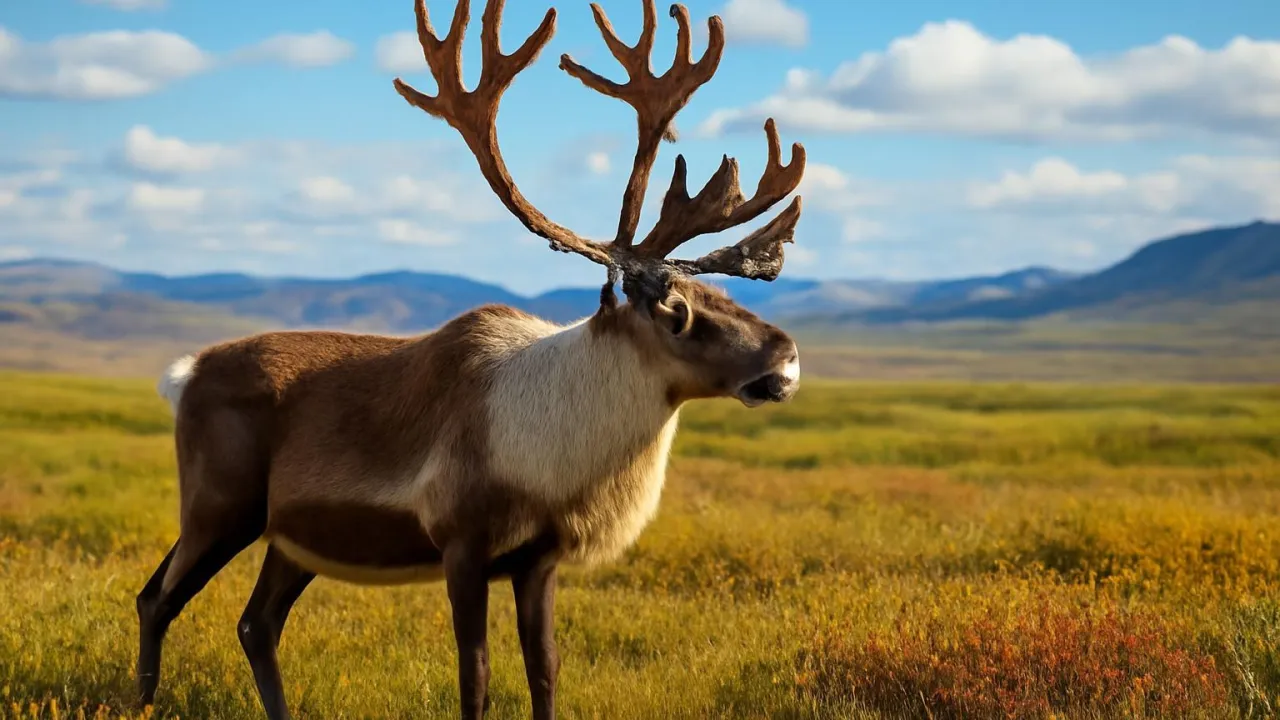
Caribou can travel farther than any other land animal every year!
✨ Word Sparks (Grade 2 Glossary)
Tap 🔊 to hear
migration
A long trip animals take to find food or safety
herd
A group of animals that live and travel together
lichens
Plants that grow on rocks and trees in cold places
🪝
Have you ever wondered how caribou survive freezing cold winters?
1
Caribou’s Appearance and Antlers
Caribou have thick fur that keeps them warm in cold weather. Their antlers grow large and help them fight. Both males and females grow antlers each year. Their legs are strong for running and walking on snow.
2
Where Caribou Live and Travel
Caribou live in the Arctic tundra and boreal forests. They migrate long distances to find food and shelter. These can cover thousands of miles every year. They travel in large groups called .
3
What Caribou Eat and Need
Caribou eat plants like grasses, shrubs, and . Lichens are special plants that grow on rocks and trees. They need cold weather to find their food under the snow. Water comes from melted snow and ice during warmer months.
Caribou’s migration can cover over 3,000 miles, longer than any other land animal.
✨ Word Sparks (Grade 3 Glossary)
Tap 🔊 to hear
adaptation
A body change that helps animals survive
predator
An animal that hunts other animals for food
ecosystem
A place where plants and animals live together
🪝
How do caribou’s special features help them survive cold Arctic lands?
1
Caribou’s Adaptations for Cold
Caribou have thick fur that traps warm air close to their bodies. Their large hooves act like snowshoes to walk on soft snow. Antlers help them dig through snow to find food. These protect caribou from freezing temperatures.
2
Migration and Herd Behavior
Caribou migrate thousands of miles each year to find fresh plants. They travel in large herds to protect themselves from . This migration is one of the longest land animal journeys in the world. Herds also help caribou find mates during breeding season.
3
Caribou’s Role in the Ecosystem
Caribou help spread seeds and nutrients through their droppings. They are prey for wolves and bears, so they fit into the food web. Their grazing controls plant growth and keeps the tundra healthy. This balance helps many other animals survive.
4
Interesting Physical Features
Both male and female caribou grow antlers, which is rare among deer species. Their noses warm cold air before it reaches their lungs. Caribou’s eyes change color to adjust to different light levels. These features help them live in harsh Arctic environments.
Caribou migration is one of the longest yearly animal journeys on Earth, covering thousands of miles.
✨ Word Sparks (Grade 4 Glossary)
Tap 🔊 to hear
symbiosis
A close relationship where both species benefit
herbivore
An animal that eats only plants
insulate
To keep warm by trapping heat
🪝
What causes caribou to migrate thousands of miles across the Arctic each year?
1
Why Caribou Migrate
Caribou migrate because food becomes scarce during Arctic winters, so they travel to find fresh plants. Their long migrations allow them to survive harsh weather and avoid deep snow. This movement connects different ecosystems across the tundra and boreal forests. Migration also helps caribou find safe breeding grounds.
2
Caribou’s Role in Food Webs
As , caribou eat lichens, shrubs, and grasses, influencing plant communities. They are a vital food source for predators like wolves and bears, maintaining balance in the ecosystem. Their droppings return nutrients to the soil, supporting plant growth. This symbiotic relationship helps sustain the Arctic environment.
3
Physical Adaptations for Survival
Caribou have large, wide hooves that act like snowshoes, distributing their weight on soft snow. Their thick fur against freezing temperatures, while their noses warm cold air before it reaches their lungs. Both males and females grow antlers, which they use for defense and digging through snow. These adaptations increase their chances of survival.
4
Where Caribou Live
Caribou inhabit Arctic tundra and northern boreal forests across North America, Europe, and Asia. Their range covers vast, cold regions with seasonal changes. Human activities like mining and roads can disrupt their migration routes. Conservation efforts aim to protect these habitats and maintain healthy caribou populations.
Caribou migration covers more miles than any other land mammal, traveling over 3,000 miles yearly.
✨ Word Sparks (Grade 5 Glossary)
Tap 🔊 to hear
taxonomy
How scientists group and name living things
metabolism
How the body uses energy to live
migration
A long journey animals take to survive
🪝
How do caribou’s unique biology and behaviors enable survival in extreme Arctic environments?
1
Taxonomy and Scientific Classification
Caribou belong to the Cervidae family and are scientifically named Rangifer tarandus. They are closely related to reindeer found in Eurasia but have distinct subspecies. Their classification helps scientists understand evolutionary adaptations to cold climates. This knowledge supports conservation strategies across their range.
2
Physiological Adaptations for Cold Survival
Caribou have hollow fur fibers that trap insulating air, reducing heat loss in freezing temperatures. Their large, concave hooves act like snowshoes, distributing weight and aiding in swimming across icy waters. Specialized nasal passages warm cold air before it reaches lungs, preventing heat loss. Seasonal changes in help them conserve energy during scarce winter months.
3
Migration Patterns and Ecological Impact
Caribou undertake one of the longest terrestrial , traveling up to 3,000 miles annually between winter and summer ranges. This migration connects diverse ecosystems, influencing plant growth and predator-prey dynamics. Large herds impact tundra vegetation through grazing, which maintains ecological balance. Disruptions to migration routes from human development threaten these natural processes.
4
Conservation and Human Interaction
Caribou populations face threats from habitat loss, climate change, and industrial activities like mining and road construction. Conservation programs focus on protecting corridors and preserving tundra habitats. Indigenous peoples rely on caribou for cultural and subsistence needs, highlighting the importance of sustainable management. Research continues to monitor population trends and ecosystem health.
5
Quantitative Comparisons and Records
Adult caribou typically weigh between 240 and 400 pounds and stand about 4 to 5 feet tall. They can run up to 50 miles per hour in short bursts to escape predators. Their distance surpasses that of any other land mammal, exceeding 3,000 miles annually. Caribou survive in temperatures as low as -40 degrees Fahrenheit, showcasing remarkable cold tolerance.