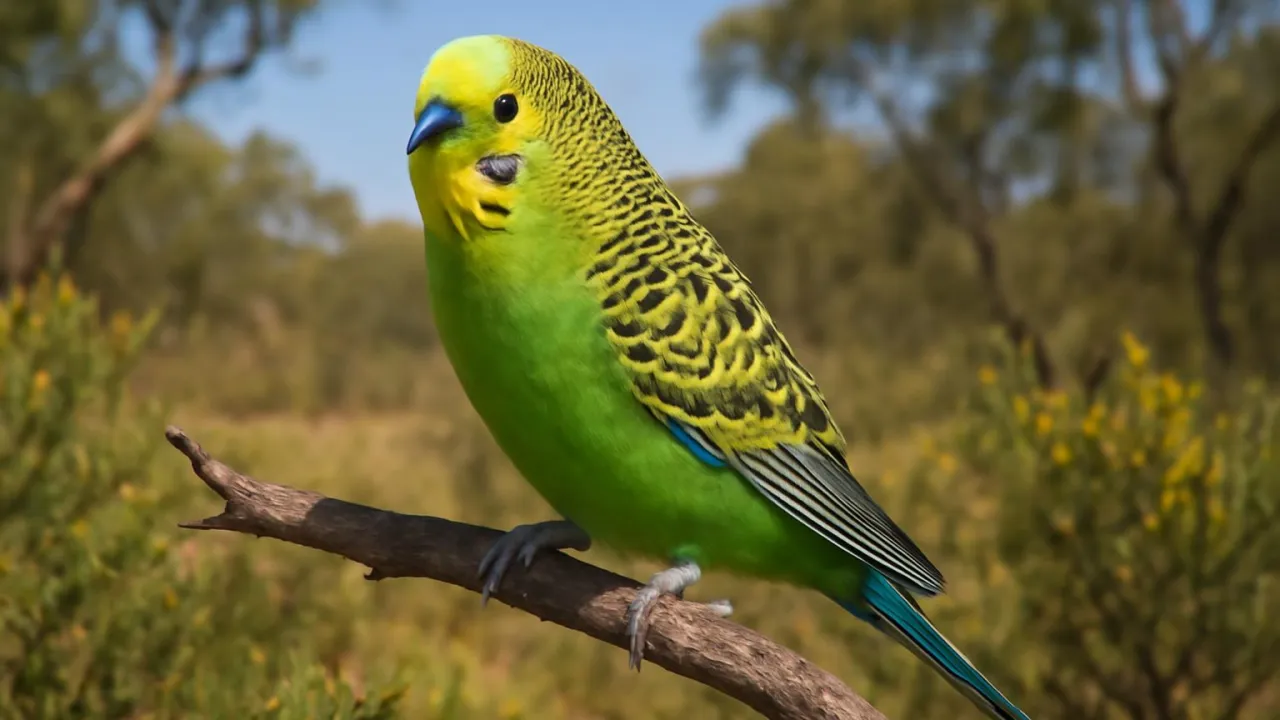
Budgerigars can learn to copy many human words and sounds!
✨ Word Sparks (Grade 2 Glossary)
Tap 🔊 to hear
mimic
To copy sounds or actions like someone else
flock
A group of birds that live and fly together
curved
Bending like a bow or a smile shape
🪝
Have you ever heard a tiny bird talk like a person?
1
Colorful and Small
Budgerigars are small parrots with green and yellow feathers and black stripes on their wings. They have short tails and beaks that help them eat seeds. Their bright colors help them hide in the trees where they live.
2
Home Sweet Home
These birds live mostly in Australia’s dry woodlands and grasslands where trees grow far apart. Budgerigars drink water from puddles and small lakes after rain falls. They often fly in to find food and safety together.
3
Seed Eaters with a Talent
Budgerigars eat mostly seeds and some fruits, using their strong beaks to crack open hard shells. They are famous for their ability to sounds, including human speech, which makes them popular pets worldwide.
Budgerigars’ feathers help them hide from predators by blending into tree leaves!
✨ Word Sparks (Grade 3 Glossary)
Tap 🔊 to hear
camouflage
Colors or patterns that help hide animals
predator
An animal that hunts other animals for food
nutrients
Food parts that help living things grow strong
🪝
How does a tiny green bird survive in the wild and talk like a human?
1
Appearance and Camouflage
Budgerigars have bright green and yellow feathers with black stripes that help them in trees. Their curved beaks are perfect tools for cracking open tough seeds. This camouflage protects them from in Australia’s open woodlands.
2
Habitat and Social Life
These birds live in dry woodlands and grasslands where water is scarce. They gather in flocks to find food and protect each other from . Their social behavior helps them survive in harsh environments.
3
Diet and Adaptations
Budgerigars eat mainly seeds and some fruits, gaining needed for energy and growth. Their strong beaks allow them to break seed shells easily. This adaptation helps them access food that other animals cannot.
4
Mimicry and Communication
Budgerigars are known for their ability to mimic sounds, including human speech, which helps them communicate in captivity. In the wild, they use calls to warn others of danger and to stay in contact with flock members.
1. Why do budgerigars have black stripes on their feathers?
2. What helps budgerigars break open seeds?
🤯 Mind-Blowing Fact • Grade 4
Budgerigars help plants grow by spreading seeds across Australia’s dry lands!
✨ Word Sparks (Grade 4 Glossary)
Tap 🔊 to hear
ecosystem
A community of living things and their environment
vigilance
Being watchful to stay safe from danger
conservation
Protecting nature and animals from harm
🪝
What makes budgerigars such clever birds in Australia’s dry lands?
1
Physical Features and Survival
Budgerigars have bright green and yellow feathers with black stripes, which provide excellent camouflage in the Australian woodlands. Their curved beaks are specialized tools that allow them to crack open tough seeds, an essential food source. This adaptation directly affects their survival by enabling them to access nutrients other animals cannot reach.
2
Ecosystem Role and Behavior
These birds play an important role in their by spreading seeds as they eat and move around, helping plants grow. Budgerigars live in large flocks, which provides safety from predators through group . Their social calls and mimicry abilities also help them communicate and maintain strong group bonds.
3
Habitat and Geographic Range
Budgerigars are native to the dry woodlands and grasslands of Australia, where water is often scarce. They depend on seasonal rains to find water in puddles and small lakes. Their ability to travel long distances in flocks helps them locate food and water sources across large areas.
4
Human Impact and Conservation
Budgerigars are popular pets worldwide due to their bright colors and talking ability, which has led to captive breeding programs. However, habitat loss and climate change affect wild populations by reducing available resources. efforts focus on protecting natural habitats and educating people about these unique birds.
Budgerigars can fly up to 30 miles per hour and mimic human speech with remarkable clarity!
✨ Word Sparks (Grade 5 Glossary)
Tap 🔊 to hear
taxonomy
How scientists group and name living things
vocal organs
Body parts that help animals make sounds
fragmentation
Breaking habitats into smaller, separated parts
🪝
How do budgerigars’ unique features help them thrive and captivate humans worldwide?
1
Taxonomy and Scientific Classification
Budgerigars belong to the family Psittaculidae and the genus Melopsittacus, with the scientific name Melopsittacus undulatus. They are small parrots native to Australia’s arid and semi-arid regions. Their classification helps scientists study their evolutionary relationships with other parrot species globally. Understanding their is key to conserving their natural populations.
2
Physiological Adaptations and Mechanics
Budgerigars’ curved beaks exert strong force to crack open hard seeds, providing essential nutrients for survival. Their feathers’ coloration results from pigment and microscopic structures that scatter light, creating camouflage in dry woodlands. Their allow complex mimicry, enabling them to imitate human speech and environmental sounds. These adaptations help them survive and communicate effectively.
3
Ecological Role and Conservation Status
In their native habitat, budgerigars contribute to seed dispersal, influencing plant community dynamics across Australian grasslands. While their wild populations remain stable, habitat and climate variability pose risks. Conservation efforts emphasize habitat protection and responsible pet trade management to preserve genetic diversity. Public education also plays a vital role in their protection.
4
Botanical Curiosities and Behavioral Insights
Budgerigars consume a variety of seeds from native grasses and shrubs, some of which are botanical fruits, aiding in plant reproduction. Their social structure involves complex vocal communication and flock dynamics, which enhance survival through cooperative behaviors and predator avoidance. Their ability to mimic sounds strengthens social bonds within flocks.
5
Quantitative Comparisons and Human Interaction
Budgerigars measure about 7 inches (18 centimeters) in length and weigh approximately 1.4 ounces (40 grams). They can fly at speeds up to 30 miles per hour (48 kilometers per hour) when evading predators. Their ability to mimic human speech has made them one of the most popular pet birds worldwide, influencing cultural connections between humans and wildlife. This unique relationship highlights the importance of ethical care.