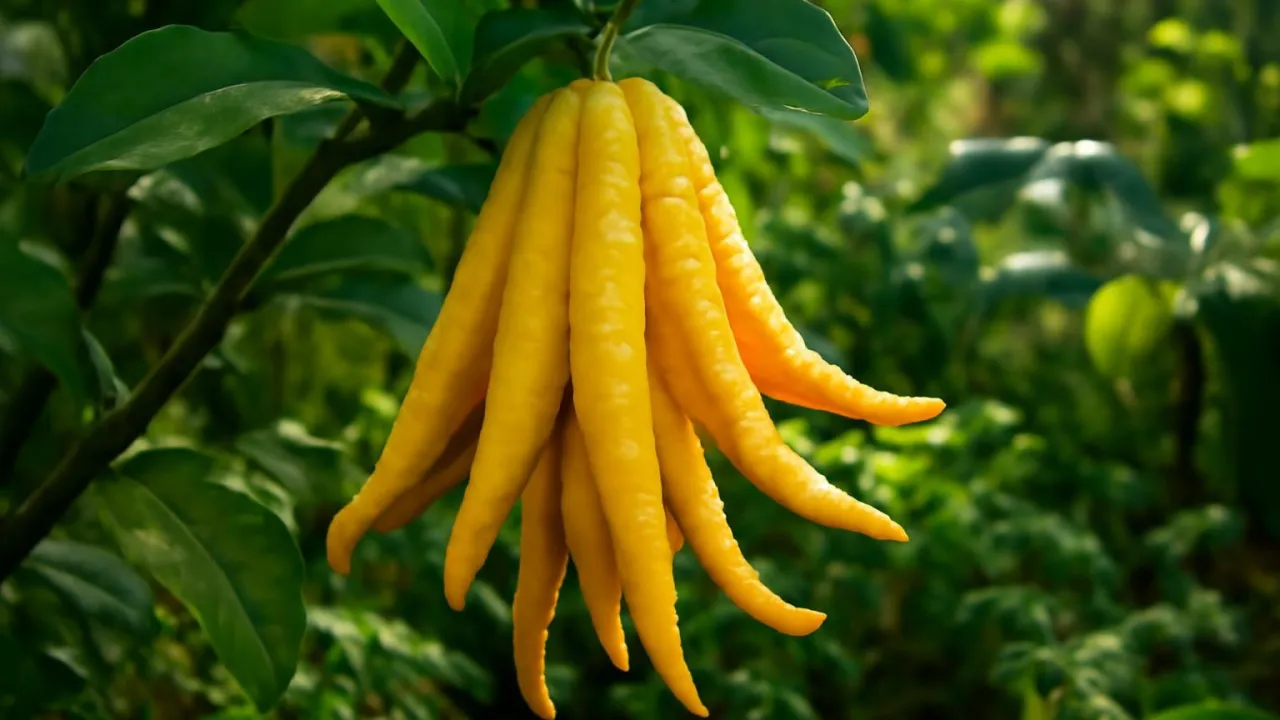
Buddha’s Hand has no seeds, which is very unusual for fruits!
✨ Word Sparks (Grade 2 Glossary)
Tap 🔊 to hear
scent
A nice smell that you can notice.
peel
The outside skin of a fruit.
warm
A temperature that is not cold.
🪝
Did you know a fruit can look like many yellow fingers?
1
Unique Shape and Color
Buddha’s Hand is a fruit shaped like many yellow fingers. It grows on green trees. The fruit has no seeds inside. People use it for its fresh .
2
Where It Grows
This fruit grows best in places like China and India. It needs plenty of sun and water. The trees can grow tall and strong. Farmers take care of them carefully.
3
Special Smell and Uses
Buddha’s Hand smells sweet and fresh like lemon. People use the in cooking or for perfume. It is not eaten like regular fruit. Many enjoy its bright color and smell.
Buddha’s Hand is a seedless citron that humans have cultivated for its unique shape and scent.
✨ Word Sparks (Grade 3 Glossary)
Tap 🔊 to hear
adaptation
A change that helps a plant or animal survive.
pollination
When bees help flowers make seeds.
fragrant
Having a nice smell.
🪝
How does Buddha’s Hand’s finger-like shape help it survive?
1
Finger-Like Shape and Bright Color
Buddha’s Hand fruit has a unique shape with long yellow fingers. This unusual shape helps it stand out to animals and humans alike. Its bright color signals ripeness and freshness. The fruit’s peel is thick and .
2
Habitat and Growth
This citron variety grows in subtropical regions of Asia, especially China and India. It thrives in warm climates with plenty of sunlight and water. The tree’s broad leaves help capture sunlight for photosynthesis. These support healthy fruit development.
3
Pollination and Seedless Nature
Unlike many fruits, Buddha’s Hand usually has no seeds, which is an for human cultivation. Bees and other pollinators visit the flowers to help fertilize the tree. The seedless fruit grows from cultivated varieties selected for this trait. This makes it easier to use in cooking and fragrance.
4
Uses and Cultural Importance
People use Buddha’s Hand peel in cooking, perfumes, and religious offerings. Its strong citrus scent comes from essential oils in the rind. In some cultures, it symbolizes happiness and good fortune. This fruit plays an important role in food webs and human culture.
Buddha’s Hand’s essential oils protect it from pests and attract helpful pollinators.
✨ Word Sparks (Grade 4 Glossary)
Tap 🔊 to hear
ecosystem
All plants and animals living together in one place.
pollinator
An animal that helps plants make seeds.
cultivation
Growing plants carefully for food or use.
🪝
How does Buddha’s Hand impact its ecosystem and human culture?
1
Physical Traits and Survival
Buddha’s Hand’s finger-like fruit shape helps it avoid some predators by looking unusual. Its thick, fragrant rind contains essential oils that deter insects and attract . The bright yellow color signals ripeness, aiding animals and humans in finding it. These traits increase its chances of survival and reproduction.
2
Ecosystem Roles and Pollination
This citron tree supports such as bees, which are vital for fertilizing flowers and producing fruit. It fits into food webs by providing habitat and scent resources for insects. The tree’s presence helps maintain biodiversity in subtropical Asian . Human has spread it beyond its native range.
3
Cultural Importance and Uses
Buddha’s Hand is used in religious ceremonies, symbolizing happiness and prosperity in many Asian cultures. Its peel is prized for cooking, perfumes, and air fresheners due to its strong citrus aroma. The fruit’s seedless nature makes it especially valuable for these purposes. Farmers carefully grow and harvest it to meet demand.
4
Geographic Distribution and Cultivation
Originally native to China and India, Buddha’s Hand is now cultivated in other warm regions worldwide. It requires full sun and moderate watering to thrive. The tree adapts well to subtropical climates but is sensitive to frost. Its spread shows how humans influence plant distribution globally.
1. What do the essential oils in Buddha’s Hand do?
2. Where did Buddha’s Hand originally come from?
🤯 Mind-Blowing Fact • Grade 5
Buddha’s Hand produces essential oils up to 3% of its weight, more than most citrus fruits.
✨ Word Sparks (Grade 5 Glossary)
Tap 🔊 to hear
parthenocarpy
Fruit growing without seeds or fertilization.
morphology
The shape and structure of a plant or fruit.
essential oils
Strong-smelling liquids from plants used in perfumes.
🪝
What makes Buddha’s Hand a unique citrus fruit in science and culture?
1
Scientific Classification and Taxonomy
Buddha’s Hand citron belongs to the species Citrus medica var. sarcodactylis, a variety of citron. It is part of the Rutaceae family, which includes many citrus fruits like lemons and oranges. Its unique finger-like distinguishes it from other citrons. Taxonomically, it is prized for its seedless trait and aromatic rind.
2
Physiological Mechanics and Adaptations
The fruit’s segmented fingers increase surface area, enhancing essential oil production in the rind. These oils serve as natural insect repellents and attract pollinators to the flowers. The thick peel protects the fruit from environmental stress and pests. Its seedless nature results from selective breeding and , a process where fruit develops without fertilization.
3
Conservation and Botanical History
Buddha’s Hand has been cultivated for centuries in Asia for religious, culinary, and medicinal uses. Despite its limited wild populations, it thrives under human care in orchards worldwide. Conservation efforts focus on preserving genetic diversity and traditional cultivation methods. Botanical studies reveal its importance in understanding citrus evolution and domestication.
4
Quantitative Comparisons and Growth
Typically, Buddha’s Hand fruits measure 6 to 10 inches (15 to 25 cm) long and weigh between 200 to 400 grams. The tree grows up to 10 feet (3 meters) tall and requires full sun with moderate watering. Essential oil content in the peel can reach up to 3% by weight, higher than many other citrus fruits. These quantitative traits make it valuable for commercial and ornamental use.
5
Cultural Significance and Modern Uses
In many Asian cultures, Buddha’s Hand symbolizes happiness, longevity, and good fortune, often used in religious offerings. Its aromatic peel is used in perfumery, cooking, and traditional medicine. Modern uses include flavoring liquors and making natural air fresheners. The fruit’s unique appearance continues to inspire art and cultural traditions worldwide.