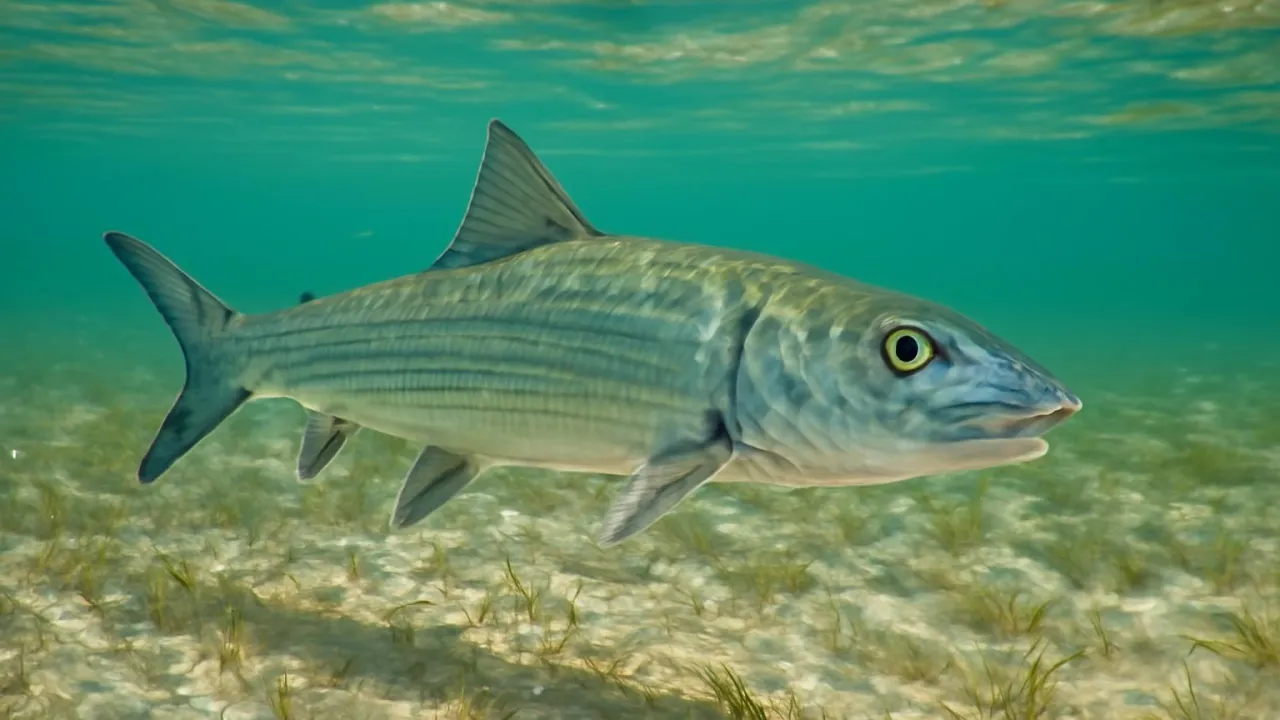
Bonefish can reach speeds up to 40 miles per hour in short bursts!
✨ Word Sparks (Grade 2 Glossary)
Tap 🔊 to hear
coastal
Near the edge of the land and ocean
crustaceans
Animals like crabs and shrimp with hard shells
predator
An animal that hunts other animals for food
🪝
Have you ever seen a fish that can run fast in shallow water?
1
Where Bonefish Live
Bonefish live in warm, shallow waters near sandy shores and flats. They like water that is not deep. These places help them find food easily.
2
Bonefish Food and Life
Bonefish eat small animals like crabs and shrimp that live in the sand. They use their nose to find food hidden under the sand. Baby bonefish grow quickly in these safe shallow waters.
3
How Bonefish Swim
Bonefish swim very fast with strong tails and shiny silver bodies. They can jump out of the water to escape danger. Their speed helps them avoid bigger fish that want to eat them.
Bonefish can swim faster than a car driving in a city street during short bursts!
✨ Word Sparks (Grade 3 Glossary)
Tap 🔊 to hear
camouflage
Color that helps hide from predators
prey
Animals that are hunted for food
ecosystem
All living and nonliving things in one place
🪝
Did you know bonefish use their speed and silver color to survive in shallow water?
1
Bonefish Habitat and Adaptations
Bonefish live in shallow coastal flats where water is warm and clear. Their silver color helps with , blending in with sunlight reflections. This adaptation protects them from predators. They thrive in sandy and muddy bottoms.
2
Feeding and Life Cycle
Bonefish feed on crustaceans and small fish hidden in the sand. They use their sensitive nose to detect under the surface. Juvenile bonefish grow in protected shallow waters before moving to deeper areas. This life cycle helps them avoid predators.
3
Movement and Speed
Bonefish have strong tails that allow quick bursts of speed up to 40 miles per hour. Their streamlined bodies reduce water resistance for fast swimming. They can leap out of water to escape danger. Speed is their main defense against predators.
4
Role in the Ecosystem
Bonefish are important for larger fish and birds in coastal food webs. They help control populations of small crustaceans. Their presence indicates healthy shallow water habitats. Humans also value bonefish for sport fishing.
2. Why do juvenile bonefish stay in shallow water?
🤯 Mind-Blowing Fact • Grade 4
Bonefish can swim at speeds comparable to a fast car in short bursts, making them one of the fastest fish in shallow waters.
✨ Word Sparks (Grade 4 Glossary)
Tap 🔊 to hear
mangroves
Trees that grow in salty coastal water
foraging
Searching for food in nature
benthic
Living on the bottom of water bodies
🪝
How does the bonefish’s speed and habitat help it survive in tropical coastal ecosystems?
1
Bonefish Habitat and Geographic Range
Bonefish primarily inhabit tropical and subtropical shallow coastal flats and . These areas provide warm, clear waters with sandy or muddy bottoms essential for their feeding habits. Their distribution spans the Atlantic, Caribbean, and Indo-Pacific regions, showing adaptability to various shallow marine environments.
2
Adaptations for Survival
Bonefish have a sleek, silver body that camouflages them against the reflective water surface, reducing visibility to predators. Their powerful tail fin enables rapid bursts of speed, sometimes reaching 40 miles per hour, which helps them evade larger predatory fish. Their sensitive snout detects prey hidden beneath sand, aiding in efficient .
3
Ecological Role and Food Webs
As mid-level predators, bonefish control populations of small crustaceans and fish, maintaining ecological balance. They serve as prey for larger fish, birds, and marine mammals, linking multiple levels of the coastal food web. Their feeding behavior also helps aerate the sediment, promoting healthy ecosystems.
4
Human Impact and Conservation
Bonefish are highly prized in sport fishing, which raises awareness about coastal habitat conservation. However, habitat loss due to coastal development and pollution threatens their populations. Conservation efforts focus on protecting shallow flats and to preserve bonefish habitats and sustain their ecological roles.
Bonefish can swim faster than many shallow-water fish, reaching speeds up to 40 miles per hour in short bursts.
✨ Word Sparks (Grade 5 Glossary)
Tap 🔊 to hear
caudal fin
The tail fin that helps fish swim fast
morphological
Related to the shape and structure of animals
trophic levels
Steps in a food chain or web
🪝
What makes the bonefish one of the fastest and most specialized shallow-water fish in tropical marine ecosystems?
1
Taxonomy and Scientific Classification
The bonefish, scientifically named Albula vulpes, belongs to the family Albulidae within the order Albuliformes. It is a ray-finned fish known for its slender, elongated body adapted for speed. This species is closely related to other bonefish found worldwide, sharing similar traits that aid in shallow water survival.
2
Physiological Adaptations for Speed
Bonefish possess a streamlined, silver-colored body that reduces drag while swimming in shallow waters. Their powerful generates rapid thrust, allowing bursts of speed up to 40 miles per hour. Their muscular structure supports quick acceleration and agile maneuvers, essential for evading predators and capturing prey.
3
Ecological Role and Conservation Status
Bonefish play a crucial role in coastal food webs by preying on benthic crustaceans and small fish, thus controlling these populations. They are preyed upon by larger marine predators and birds, linking multiple . Although not currently endangered, bonefish face threats from habitat degradation, prompting conservation efforts focused on mangrove and flat ecosystem protection.
4
Historical and Cultural Significance
Bonefish have long been valued by coastal communities for subsistence and sport fishing due to their challenging catch and high fighting ability. Their presence supports ecotourism industries in tropical regions, fostering economic benefits and promoting habitat conservation awareness among local populations.
5
Quantitative Comparisons and Environmental Impact
Bonefish can reach speeds of 40 miles per hour in short bursts, faster than many other shallow-water fish species. They typically grow up to one meter in length and weigh around 8 to 10 pounds. Their feeding behavior aerates sediment, improving nutrient cycling in coastal ecosystems, which supports biodiversity and habitat health.