Blue Marlin
Ocean Rockets with Sword-Sharp Noses
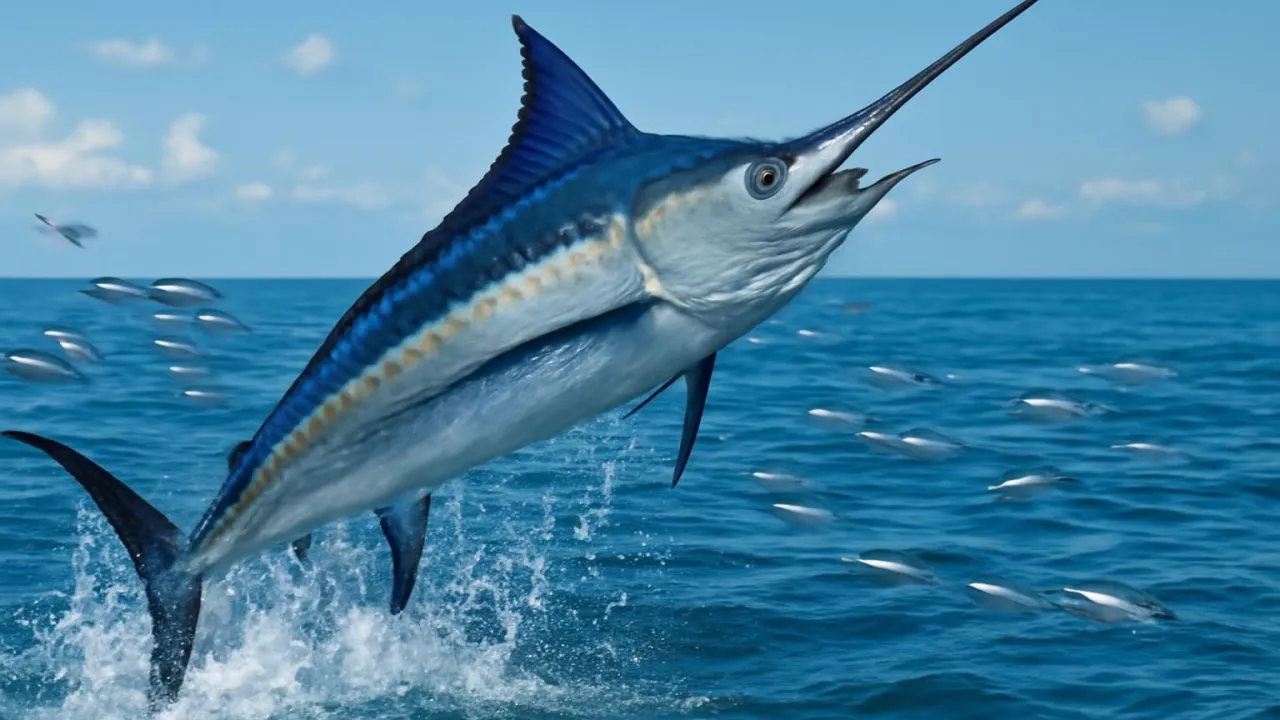
The blue marlin’s top speed of 60 mph rivals that of a cheetah on land!
1 Meet the Blue Marlin: Ocean Sprinter
The blue marlin (Makaira nigricans) is a member of the billfish family Istiophoridae, renowned for its extraordinary speed and agility in tropical and subtropical oceans worldwide. Reaching lengths up to 16 feet (5 meters) and weights over 1,400 pounds (635 kilograms), blue marlins are among the largest and fastest predatory fish on Earth. Their distinctive cobalt-blue dorsal surface and silvery-white underbelly provide effective camouflage, making them nearly invisible from above and below. The marlin’s signature feature is its elongated, sword-like upper jaw, or bill, which it uses to slash and stun schools of prey. This adaptation, along with a streamlined body and tall, rigid dorsal fin, allows the blue marlin to accelerate to speeds of 60 miles per hour (97 kilometers per hour) in short bursts.
2 Habitat and Migration Across Oceans
Blue marlins inhabit the warm, open waters of the Atlantic, Pacific, and Indian Oceans, favoring depths from the surface down to about 600 feet (180 meters). They are highly migratory, traveling thousands of miles each year to follow temperature changes and the movements of prey such as tuna, mackerel, and squid. Females, which can be nearly four times larger than males, spawn in tropical waters, releasing up to 7 million eggs in a single season to maximize offspring survival. Blue marlins are solitary hunters, but they sometimes aggregate in regions with abundant prey, especially near underwater seamounts or current edges. Their wide distribution makes them important indicators of ocean health and climate change impacts.
3 Physiology: Built for Speed and Power
The blue marlin’s muscular, torpedo-shaped body is packed with red muscle fibers that deliver rapid, sustained bursts of energy for high-speed pursuits. Its powerful, crescent-shaped tail fin acts like a propeller, generating thrust and enabling agile maneuvers while chasing prey. The marlin’s bill, covered in tiny, backward-facing teeth, is not used for stabbing but for slashing through dense schools of fish, stunning or injuring multiple prey at once. Specialized vision, including a high density of rod cells in its eyes, allows the blue marlin to spot prey even in dim, deep waters. These physiological adaptations make the blue marlin one of the most efficient and formidable predators in the ocean.
4 Role in Marine Ecosystems and Human Impact
As an apex predator, the blue marlin helps regulate populations of fast-swimming fish like tuna and mackerel, maintaining balance within marine food webs. However, blue marlins are vulnerable to overfishing, both as in commercial longline fisheries and as targets in recreational sport fishing. Over the past several decades, blue marlin populations have declined in some regions due to unsustainable fishing practices and habitat degradation. International conservation efforts, such as catch limits and tagging programs, aim to protect blue marlins and ensure the health of ocean ecosystems. Their presence in the wild is a sign of a thriving, balanced marine environment.
5 Amazing Numbers and Conservation Challenges
A blue marlin can weigh as much as a small car and leap more than 10 feet (3 meters) above the ocean’s surface during a chase. Their migratory journeys can cover thousands of miles, crossing entire ocean basins in search of food and spawning grounds. Water temperature, prey availability, and ocean currents all influence their patterns, making them sensitive indicators of climate change. Conservation organizations track blue marlin populations using satellite tags and genetic studies to better understand their life cycles and vulnerabilities. Protecting blue marlins is crucial, not only for their own survival but also for the health and diversity of ocean ecosystems worldwide.
1. How does the blue marlin’s bill help it catch prey?
2. Why are blue marlins important indicators of ocean health?