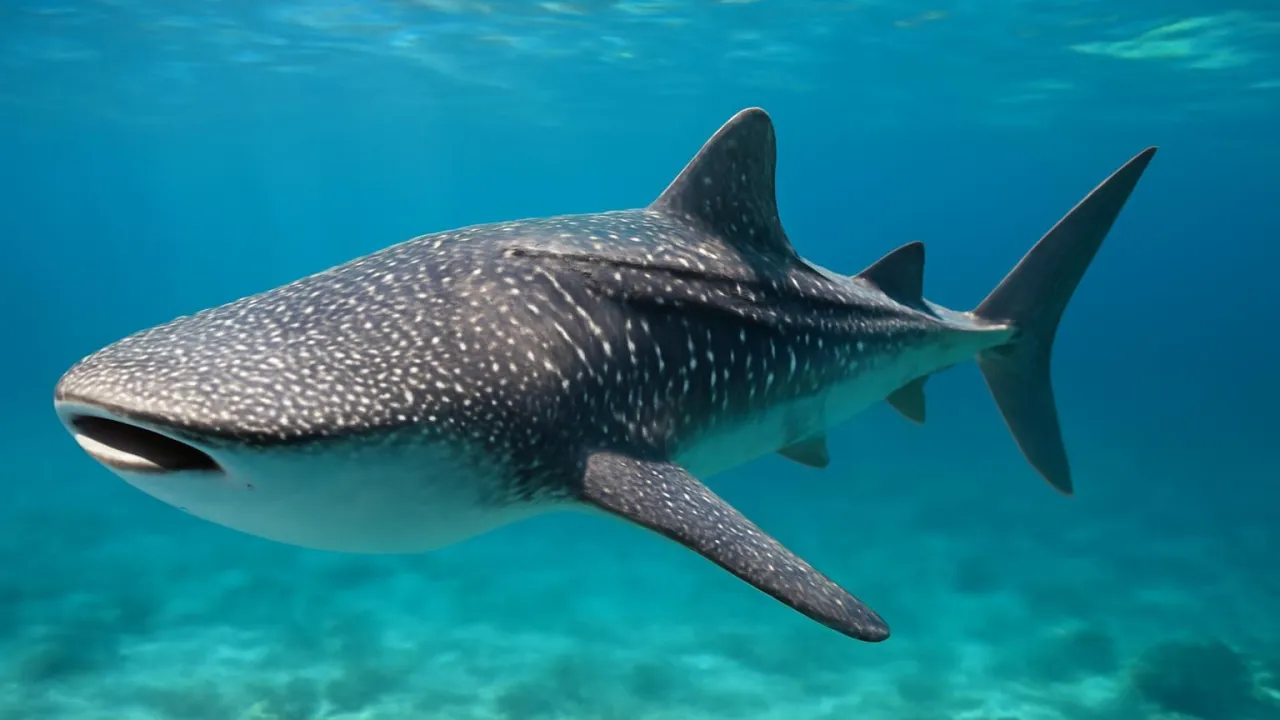
A whale shark’s mouth can be as wide as a car door!
✨ Word Sparks (Grade 2 Glossary)
Tap 🔊 to hear
filter
To clean or catch small things from water
plankton
Tiny plants and animals in ocean water
gill rakers
Parts inside a fish’s mouth that catch food
🪝
Have you ever seen a fish as big as a bus swimming in the ocean?
1
Huge and Spotted
The whale shark is the largest fish in the ocean, and it has white spots all over its body. It can grow up to 40 feet long, which is as big as a bus. Despite its size, it swims slowly and gently in warm ocean waters.
2
Eating Tiny Food
Whale sharks eat tiny and small fish by opening their huge mouths wide. Water flows in, and they food using special inside their mouths. This way, they get lots of tiny food without chasing fast prey.
3
Warm Ocean Home
These gentle giants live in warm tropical oceans all around the world. They often swim near the surface where is plentiful. Whale sharks travel long distances to find food and sometimes gather in groups to feed.
Whale sharks can filter up to 1,500 gallons of water every hour to catch tiny food!
✨ Word Sparks (Grade 3 Glossary)
Tap 🔊 to hear
camouflage
Colors or patterns that help hide in nature
adaptation
A change that helps animals survive better
filter feeding
Eating by straining tiny food from water
🪝
Did you know the whale shark is the largest fish that feeds by filtering tiny plankton?
1
Giant Filter Feeder
The whale shark is the largest fish in the ocean, reaching lengths up to 40 feet. It feeds by filtering plankton and small fish through its gill rakers. This helps it eat tiny food without chasing fast prey. Its white spots provide in the ocean light.
2
How It Survives
Whale sharks use their wide mouths to take in huge amounts of water. Their gill rakers trap food while letting water pass through. This is an important for survival. Their slow swimming helps conserve energy while feeding.
3
Where It Lives
These gentle giants live in warm tropical oceans worldwide, often near the surface. They migrate long distances to find plankton-rich waters. Their presence supports ocean ecosystems by controlling plankton populations. Whale sharks are peaceful and avoid predators.
4
Amazing Adaptations
The whale shark’s spotted skin helps it blend with sunlight patterns underwater. This protects it from predators. Its huge size also deters most threats. These make it a successful filter feeder in ocean habitats.
Whale sharks can travel over 3,700 miles during migrations to find food-rich waters!
✨ Word Sparks (Grade 4 Glossary)
Tap 🔊 to hear
symbiosis
A close relationship between different living things
migration
Long-distance travel to find food or mates
ecosystem
A community of plants and animals living together
🪝
How does the whale shark’s gentle nature help it thrive in the ocean’s food web?
1
Largest Fish with Special Feeding
The whale shark is the largest fish species, growing up to 40 feet long and weighing over 20,000 pounds. It feeds by filter feeding, using gill rakers to strain plankton and small fish from the water. This feeding method allows it to consume huge amounts of tiny food without chasing prey, conserving energy effectively.
2
Role in Ocean Ecosystems
Whale sharks play a key role in marine by controlling plankton populations and supporting food webs. Their filter feeding helps balance ocean life, and they serve as hosts to remoras and other symbiotic fish. Human activities like fishing and pollution threaten their populations, so conservation is vital.
3
Global Habitat and Migration
These gentle giants inhabit warm tropical and subtropical oceans worldwide, including the Indian, Pacific, and Atlantic Oceans. They migrate thousands of miles annually to find plankton-rich waters. Their seasonal gatherings at feeding sites attract ecotourism, which supports local economies and conservation efforts.
4
Adaptations for Survival
The whale shark’s spotted skin provides camouflage by breaking up its outline in sunlight patterns underwater. Its massive size deters most predators, while slow swimming conserves energy during long . These adaptations enable it to thrive in diverse ocean habitats despite environmental challenges.
1. What role do whale sharks play in ocean ecosystems?
2. Why do whale sharks migrate long distances?
🤯 Mind-Blowing Fact • Grade 5
Whale sharks can filter up to 1,500 gallons of water every hour while swimming slowly through the ocean!
✨ Word Sparks (Grade 5 Glossary)
Tap 🔊 to hear
extant
Still living today, not extinct
IUCN
Group that protects endangered animals
gill rakers
Fish mouth parts that catch tiny food
🪝
What makes the whale shark a unique giant in the fish family, and how does it survive in vast oceans?
1
Scientific Classification and Size
The whale shark (Rhincodon typus) is the largest fish species, belonging to the order Orectolobiformes. Adult whale sharks can reach lengths of 40 feet and weigh up to 20,600 pounds, making them true giants of the marine world. Despite their enormous size, they are gentle filter feeders rather than fierce predators.
2
Physiological Mechanics of Filter Feeding
Whale sharks feed by swimming with their mouths wide open, filtering up to 1,500 gallons of water per hour through specialized . These gill rakers trap plankton, small fish, and other microscopic organisms, allowing the whale shark to efficiently extract nutrients from vast volumes of water. Their slow swimming conserves energy during this continuous feeding process.
3
Conservation Status and Human Impact
Classified as endangered by the , whale sharks face threats from fishing, ship strikes, and habitat degradation. Conservation efforts include protected marine areas and ecotourism initiatives that promote awareness and safeguard populations. Understanding their migratory patterns is critical for effective protection strategies.
4
Migration and Geographic Range
Whale sharks inhabit warm tropical and subtropical waters worldwide, including the Indian, Pacific, and Atlantic Oceans. They undertake long migrations exceeding 3,700 miles annually to access plankton blooms and breeding grounds. These migrations are vital for their survival and influence oceanic ecological dynamics.
5
Comparative Size and Speed
Compared to other large marine animals, whale sharks are slower swimmers, cruising at speeds around 3 miles per hour. Their size rivals that of the largest whales, yet their feeding strategy differs significantly. This unique combination of size and gentle feeding behavior distinguishes them within marine megafauna.