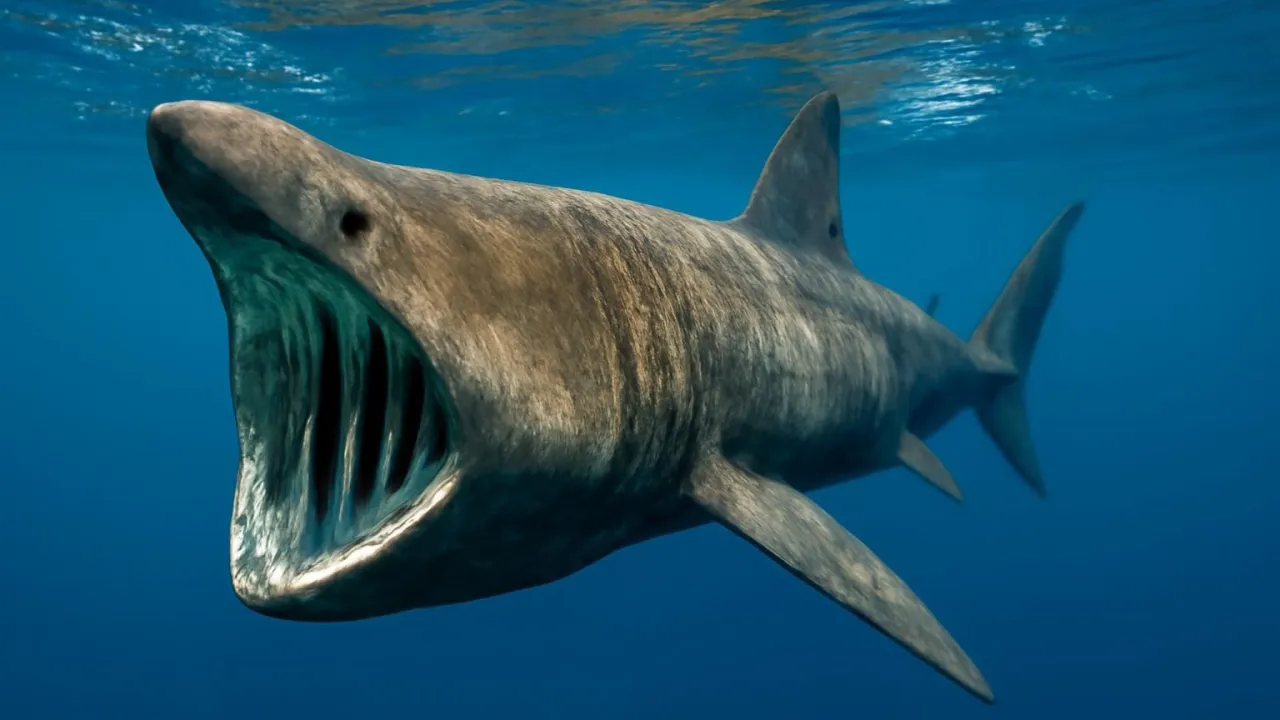
Basking sharks can filter up to 2,000 gallons of water every minute to catch plankton.
✨ Word Sparks (Grade 2 Glossary)
Tap 🔊 to hear
filter
To clean or catch small things from water
plankton
Tiny animals and plants in water
temperate
Not too hot or too cold weather
🪝
Have you ever seen a shark that swims slowly with its mouth wide open?
1
Giant Shark in the Sea
The basking shark is one of the biggest sharks in the ocean, growing up to 26 feet long. It swims slowly near the water’s surface and looks very calm. People can often see it because it stays near the top of the water.
2
Eating Tiny Plankton
This shark eats tiny by swimming with its mouth wide open. Water flows in and out as it food. It does not hunt other fish like many sharks do.
3
Where They Live
Basking sharks live in cool, oceans all over the world. They like to swim near coasts during the summer. In winter, they swim deeper and farther away.
2. Where do basking sharks like to swim in summer?
🤯 Mind-Blowing Fact • Grade 3
Basking sharks can filter up to 2,000 gallons of water every minute using their gill rakers.
✨ Word Sparks (Grade 3 Glossary)
Tap 🔊 to hear
gill rakers
Parts inside a shark’s mouth that catch tiny food
plankton
Tiny plants and animals floating in water
migration
Moving to different places during seasons
🪝
Did you know the basking shark is the second largest fish and a gentle filter feeder?
1
Huge but Gentle
The basking shark is the second largest fish in the world, growing up to 26 feet long. Despite its size, it is gentle and swims slowly near the ocean surface. Its large mouth stays open to filter tiny from the water. This slow swimming helps it catch enough food without chasing prey.
2
Filter Feeding Adaptation
Basking sharks have special inside their mouths that act like a sieve to trap . As water flows through, tiny animals and plants get caught on these rakers. This adaptation allows the shark to eat without using teeth to bite. It is a unique feeding method among sharks.
3
Habitat and Behavior
These sharks live in temperate coastal waters worldwide and migrate seasonally. They often swim near the surface in spring and summer to feed. In colder months, they dive deeper to find food and avoid cold weather. Their slow movements help them conserve energy.
4
Role in the Ocean
Basking sharks play an important role in the ocean food web by controlling populations. They are prey for larger predators like orcas but generally avoid danger by swimming slowly and calmly. Their presence indicates a healthy marine ecosystem.
1. What special body part helps basking sharks catch plankton?
2. Why do basking sharks swim slowly near the surface?
🤯 Mind-Blowing Fact • Grade 4
Basking sharks filter enough water each minute to fill a large bathtub, helping clean ocean ecosystems.
✨ Word Sparks (Grade 4 Glossary)
Tap 🔊 to hear
ecosystem
A community of plants and animals living together
migration
Seasonal movement to find food or better homes
conservation
Protecting animals and nature from harm
🪝
How does the basking shark’s slow swimming help ocean ecosystems thrive?
1
Giant Filter Feeder
The basking shark is the second largest fish species, reaching lengths up to 26 feet and weighing over 3,000 pounds. Its slow swimming with an open mouth allows it to filter vast amounts of plankton from the water. This feeding behavior supports ocean food webs by controlling plankton populations, which affects many other marine species.
2
Seasonal Migration Patterns
Basking sharks migrate seasonally between coastal waters and deeper ocean areas. In warmer months, they stay near the surface to feed on abundant plankton. During colder months, they dive deeper and travel farther to find food and avoid harsh weather. These help balance plankton growth in different ocean regions.
3
Ecosystem Role and Interactions
As filter feeders, basking sharks help maintain healthy plankton levels, which supports fish and whale populations. They also serve as prey for orcas and large sharks, fitting into the marine food web. Human activities like fishing and pollution threaten their numbers, impacting ocean where they play key roles.
4
Global Distribution and Conservation
Basking sharks are found in temperate coastal waters worldwide, from the Atlantic to the Pacific Ocean. efforts focus on protecting them from overfishing and habitat loss. Understanding their and feeding habits helps scientists develop strategies to keep their populations stable and oceans healthy.
1. Why is the basking shark important to ocean ecosystems?
2. What threats do basking sharks face from humans?
🤯 Mind-Blowing Fact • Grade 5
A basking shark can filter enough water in one hour to fill an average backyard swimming pool.
✨ Word Sparks (Grade 5 Glossary)
Tap 🔊 to hear
gill rakers
Bony structures that trap food inside shark mouths
marine gigantism
Very large size of some ocean animals
plankton blooms
Large growths of tiny ocean plants and animals
🪝
What makes the basking shark a unique giant filter feeder in the marine world?
1
Scientific Classification and Size
The basking shark, scientifically named Cetorhinus maximus, belongs to the order Lamniformes. It is the second largest fish after the whale shark, reaching lengths up to 26 feet and weighing over 3,000 pounds. Its massive size allows it to filter enormous volumes of water efficiently, making it a remarkable example of .
2
Physiological Mechanics of Filter Feeding
Basking sharks use specialized to filter plankton from seawater. As they swim slowly with their mouths wide open, water passes through the gill rakers, trapping tiny planktonic organisms. This passive feeding strategy requires minimal energy compared to active hunting, allowing the shark to sustain itself on microscopic food sources.
3
Behavior, Migration, and Conservation
These sharks migrate seasonally between coastal and offshore waters, following . Their slow, surface swimming makes them vulnerable to fishing nets, leading to population declines. Conservation measures include protected marine areas and fishing regulations to preserve their critical ecological role and prevent further endangerment.
4
Ecological Role and Food Web Impact
By filtering plankton, basking sharks control primary producer populations, indirectly supporting fish and marine mammals. They serve as prey for orcas and large sharks, integrating into complex food webs. Their presence indicates healthy ocean ecosystems, and their decline signals environmental imbalance that could affect many species.
5
Quantitative Comparisons and Environmental Adaptations
Basking sharks can filter approximately 2,000 gallons of water per minute, equivalent to filling a large bathtub. They tolerate water temperatures ranging from 41 to 68 degrees Fahrenheit and dive to depths over 1,000 feet during migration. These adaptations enable them to exploit diverse marine environments and maintain energy efficiency despite their large size.