Blue Marlin
Ocean Rockets with Sword-Sharp Noses
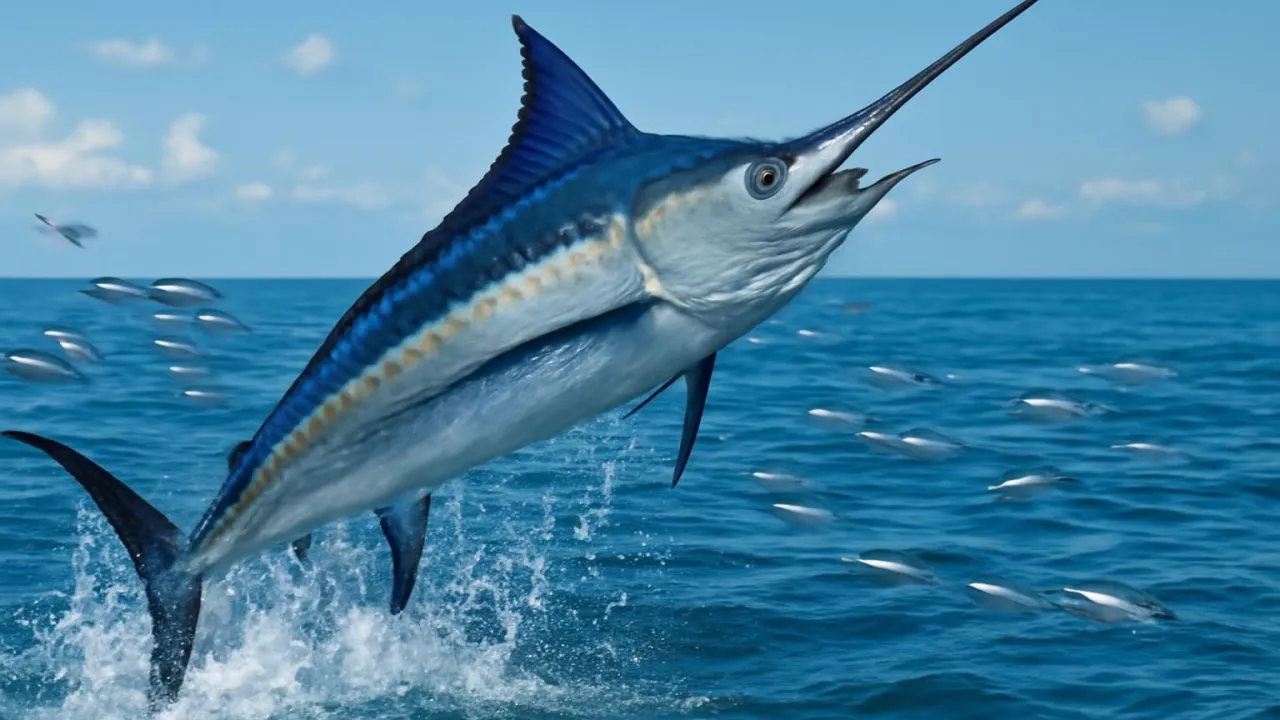
A female blue marlin can lay over 7 million eggs in one season!
1 A Real-Life Ocean Rocket
Blue marlins are famous for their incredible speed and strength, making them one of the ocean’s most powerful predators. Their long, pointed bills are used to slash through schools of fish, stunning or injuring their prey before eating them. With deep blue backs and silvery bellies, blue marlins are perfectly camouflaged in the open sea, hiding from both prey and larger predators. Their streamlined bodies and tall dorsal fins help them cut through water with very little resistance.
2 Life Far from Shore
These majestic fish live in tropical and subtropical waters of the Atlantic, Pacific, and Indian Oceans, rarely coming close to land. Blue marlins prefer the deep, warm parts of the ocean, where they can find plenty of food and space to roam. Females are much larger than males and can weigh over 1,000 pounds, laying millions of eggs during spawning season to ensure the survival of their species. Blue marlins are solitary hunters, but sometimes gather where prey is plentiful.
3 Ocean Food Web Champions
As , blue marlins play a vital role in maintaining healthy ocean by keeping populations of tuna, mackerel, and squid in check. Their presence at the top of the food web means they are affected by changes in fish populations below them, as well as by human activities like overfishing. Sport fishers often seek blue marlins for their size and strength, which can impact local populations if not managed carefully. Healthy blue marlin numbers are a sign of a balanced marine environment.
4 Challenges in a Changing Ocean
Blue marlins face threats from commercial fishing, pollution, and habitat changes caused by warming oceans. When too many are caught, it can upset the balance of the ocean food web, leading to problems for other species. Conservation groups work to protect blue marlins through fishing limits and by studying their migration patterns. Protecting these amazing fish helps keep ocean healthy for all marine life.
1. Why is the blue marlin important to the ocean ecosystem?
2. What is one threat to blue marlins?