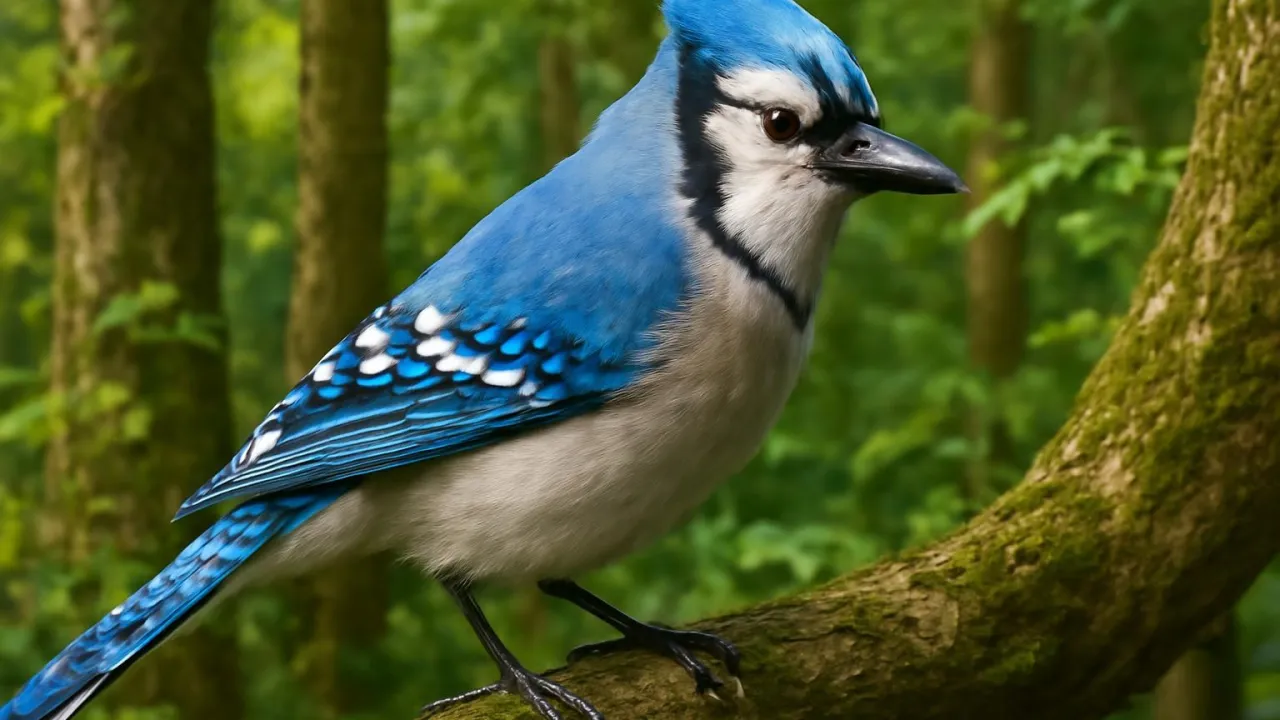
Blue jays can mimic hawk calls so well that other birds get scared and fly away!
✨ Word Sparks (Grade 2 Glossary)
Tap 🔊 to hear
mimic
To copy sounds or actions closely
predator
An animal that hunts other animals
habitat
The natural home of a plant or animal
🪝
Have you ever heard the loud call of a blue jay in a forest?
1
Bright and Beautiful Feathers
Blue jays have bright blue feathers with white and black stripes on their wings. Their feathers shine in the sunlight. These colors help them stand out in the forest.
2
Loud Calls and Mimicry
Blue jays make loud calls to warn other birds of danger. They can also hawks to scare away . Their sounds help them protect their homes.
3
Where Blue Jays Live
Blue jays live in forests and woodlands across North America. They build nests high in trees using twigs and leaves. They eat nuts, seeds, insects, and small animals.
Blue jays can remember where they hide hundreds of nuts, showing strong memory skills!
✨ Word Sparks (Grade 3 Glossary)
Tap 🔊 to hear
camouflage
Colors or patterns that help hide animals
adaptation
A trait that helps animals survive
ecosystem
A community of plants and animals living together
🪝
Did you know blue jays use their bright feathers and loud calls to survive?
1
Bright Feathers and Camouflage
Blue jays have bright blue feathers that help them blend with the sky and trees. This protects them from predators. Their white and black wing patterns also confuse enemies during flight. Bright feathers also attract mates in spring.
2
Loud Calls and Mimicry Skills
These birds use loud calls to warn others about predators nearby. Blue jays can mimic hawk calls to scare smaller birds away. This clever helps protect their food and nests. Their vocal skills are important for survival.
3
Habitat and Nesting
Blue jays live mostly in forests and woodlands across North America. They build sturdy nests high in trees using twigs and leaves. The nests protect their eggs and young birds from predators. Blue jays are active during the day.
4
Diet and Role in Nature
Blue jays eat nuts, seeds, insects, and sometimes small animals. They help spread seeds by hiding nuts in the ground. This seed dispersal helps grow new trees. Blue jays are important to forest .
Blue jays can mimic the calls of multiple bird species, not just hawks, to protect themselves.
✨ Word Sparks (Grade 4 Glossary)
Tap 🔊 to hear
refraction
Bending of light to create colors
territorial
Protecting an area from others
seed dispersal
Spreading seeds to grow new plants
🪝
What makes the blue jay a clever bird in North American forests?
1
Feather Colors and Survival
Blue jays’ bright blue feathers result from light , not pigments, which helps camouflage them in the sky and trees. This optical adaptation confuses predators and aids in avoiding attacks. Their wing patterns also play a role in signaling other birds during flight. These colors help blue jays survive in diverse forest habitats.
2
Vocalizations and Mimicry
Blue jays produce a variety of loud calls to warn flock members about approaching predators, enhancing group safety. They mimic hawk calls so accurately that smaller birds often flee, reducing competition for food. This vocal mimicry is a sophisticated survival strategy. Their communication skills support their social and behaviors.
3
Ecological Role and Behavior
By caching nuts and acorns, blue jays contribute to forest regeneration through , benefiting many plant species. They also control insect populations by feeding on various bugs, helping maintain ecosystem balance. Their aggressive defense of nests protects their young from predators. Blue jays’ activities influence food webs and forest health.
4
Geographic Range and Habitat
Blue jays inhabit forests, woodlands, and suburban areas throughout eastern and central North America. They adapt well to human-altered environments, often visiting bird feeders. Seasonal movements vary, with some populations migrating short distances. Their wide distribution reflects their adaptability to different climates and habitats.
1. How do blue jays’ feathers create their blue color?
2. What other birds can blue jays mimic besides hawks?
🤯 Mind-Blowing Fact • Grade 5
Blue jays’ feather structures bend light to create their blue color, a rare trait among birds worldwide.
✨ Word Sparks (Grade 5 Glossary)
Tap 🔊 to hear
syrinx
Bird’s voice box used to make sounds
caching
Hiding food to eat later
mob
Group of birds chasing a predator
🪝
How does the blue jay’s unique biology and behavior help it thrive in North American ecosystems?
1
Scientific Classification and Physical Traits
The blue jay, scientifically named Cyanocitta cristata, belongs to the Corvidae family known for intelligence. It measures about 9 to 12 inches long and weighs roughly 70 to 100 grams. Its distinctive blue coloration results from microscopic feather structures that refract light, rather than pigments. These birds have a crest on their heads and strong bills adapted for cracking nuts and seeds.
2
Physiological Mechanics and Vocal Abilities
Blue jays produce a wide range of vocalizations, including harsh calls and mimicked hawk sounds, using specialized muscles. Their mimicry confuses other bird species, reducing competition and predation risks. Their strong flight muscles enable agile maneuvering through dense forests at speeds up to 20 miles per hour. Their memory for cached food locations is highly developed, aiding survival during scarce months.
3
Ecological Role and Conservation Status
Blue jays play a crucial role in seed dispersal, particularly for oak trees, by burying acorns that often germinate into new saplings. They also control insect populations, contributing to forest health. Currently, blue jays are not endangered and maintain stable populations across their range. However, habitat loss and climate change could impact future numbers.
4
Behavioral Adaptations and Social Structure
These birds exhibit complex social behaviors, including cooperative mobbing of predators and territorial defense. They form family groups during breeding seasons and communicate through diverse vocal signals. Their ability to mimic other species’ calls demonstrates advanced cognitive skills. Seasonal migration patterns vary, with some populations remaining resident while others travel short distances.
5
Quantitative Comparisons and Environmental Impact
Blue jays weigh about 70 to 100 grams and measure 23 to 30 centimeters in length, making them medium-sized songbirds. They can fly at speeds approaching 20 miles per hour and cache hundreds of nuts each autumn. Their seed dispersal activities influence forest composition over large areas. By controlling insect populations, they indirectly support agricultural health and biodiversity.