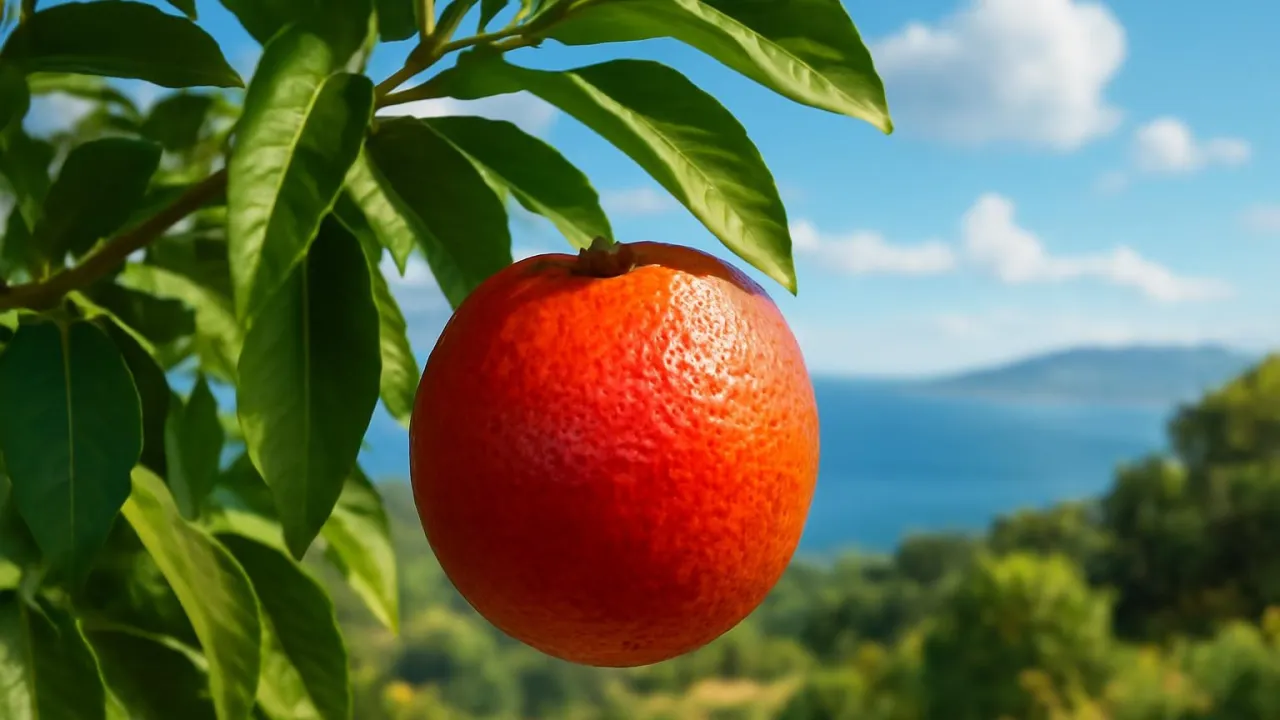
The red color in blood oranges is rare among citrus fruits and appears mostly in cool nights.
✨ Word Sparks (Grade 2 Glossary)
Tap 🔊 to hear
pigment
A color that makes things look bright
ripe
When fruit is ready to eat
tangy
A sharp, sour taste in food
🪝
Have you ever seen an orange that looks like it has red juice inside?
1
Bright and Colorful Fruit
Blood oranges have a bright orange skin and red flesh inside. Their red color comes from a called anthocyanin. This makes them look very special compared to regular oranges.
2
Growing in Warm Places
Blood orange trees grow best in warm places like Italy and Spain. They need lots of sun and good soil to grow healthy fruit. Farmers pick the fruit when it is and sweet.
3
Sweet and Tangy Taste
The taste of blood oranges is sweet and a little . People often use them to make juice or eat them fresh. Their unique flavor makes them popular in many recipes.
Anthocyanin in blood oranges is the same pigment that colors blueberries and red cabbage.
✨ Word Sparks (Grade 3 Glossary)
Tap 🔊 to hear
anthocyanin
A natural red pigment in some fruits
pollination
When bees help flowers make fruit
adaptation
A change that helps plants survive
🪝
Did you know blood oranges have a natural red pigment that helps protect them?
1
Unique Red Pigment
Blood oranges get their red color from , a pigment rare in citrus fruits. This pigment acts like a natural sunscreen and antioxidant. It helps the fruit survive cooler nights in its Mediterranean habitat. This makes blood oranges stand out from regular oranges.
2
Growing in Mediterranean Climates
Blood orange trees thrive in Mediterranean climates with warm days and cool nights. These conditions encourage the production of in the fruit’s flesh. The trees need well-drained soil and plenty of sunlight to grow healthy fruit. Farmers harvest the fruit when it is ripe and full of flavor.
3
Flavor and Uses
The flavor of blood oranges is a mix of sweet and tangy tastes, making them popular for fresh eating and juicing. Their bright color also adds visual appeal to dishes and drinks. Blood oranges play a role in by attracting bees with their fragrant flowers. This helps the trees produce more fruit.
4
Survival and Adaptation
The pigment not only colors the fruit but also protects it from cold damage. This allows blood oranges to grow in regions where other oranges might not thrive. Their thick skin helps protect the fruit from pests and weather. These features improve their chances of survival in nature.
1. What helps blood oranges survive cooler nights?
2. How do bees help blood orange trees?
🤯 Mind-Blowing Fact • Grade 4
Blood oranges’ anthocyanin pigment helps them survive cold nights and attracts pollinators.
✨ Word Sparks (Grade 4 Glossary)
Tap 🔊 to hear
antioxidant
A substance that protects cells from damage
symbiotic
A helpful relationship between two living things
irrigation
Watering plants to help them grow
🪝
How does the blood orange’s red pigment affect its role in the ecosystem?
1
Anthocyanin’s Role in Survival
Blood oranges produce anthocyanin, a pigment that protects the fruit from cold temperatures during cool Mediterranean nights. This pigment acts as an , reducing damage from environmental stressors. As a result, blood oranges can grow in regions where other oranges might struggle to survive. This cause-and-effect relationship shows how the pigment supports the fruit’s survival.
2
Ecosystem and Pollination
Blood orange trees contribute to their ecosystem by providing nectar for pollinators like bees and butterflies. These insects help pollinate the flowers, which leads to fruit production. The fruit also serves as food for birds and small mammals, creating a food web connection. This relationship benefits both the trees and the animals.
3
Geographic Distribution and Farming
Blood oranges are mostly grown in Mediterranean regions such as Sicily, Spain, and parts of California. Farmers cultivate these trees in warm climates with well-drained soil to maximize fruit quality. Human agricultural practices, including and pest control, impact the health and yield of blood orange orchards. Sustainable farming helps maintain these important growing areas.
4
Impact on Humans and Cuisine
The unique flavor and color of blood oranges have made them popular in culinary uses worldwide. They are used in juices, salads, desserts, and sauces, adding both taste and visual appeal. Their properties also contribute to human health benefits. Thus, blood oranges play an important role in both natural ecosystems and human culture.
1. Why is anthocyanin important for blood oranges?
2. How do blood oranges help animals in their ecosystem?
🤯 Mind-Blowing Fact • Grade 5
Blood orange anthocyanins are the same antioxidants found in blueberries, contributing to health benefits.
✨ Word Sparks (Grade 5 Glossary)
Tap 🔊 to hear
cultivar
A plant variety bred for special traits
oxidative stress
Damage caused by harmful oxygen molecules
genetic diversity
Variety of genes in plants or animals
🪝
What scientific factors explain the blood orange’s unique color and ecological importance?
1
Taxonomy and Scientific Context
Blood orange (Citrus × sinensis) is a of sweet orange, classified in the Rutaceae family. It is distinguished by the presence of anthocyanin pigments in its flesh, a rare trait among citrus fruits. This pigment is responsible for the characteristic deep red color that develops during fruit maturation. The cultivar likely originated in the Mediterranean basin, especially Sicily, Italy, where it thrives in specific climatic conditions.
2
Physiological Mechanics of Pigmentation
Anthocyanin synthesis in blood oranges is triggered by cooler temperatures during night-time, particularly below 50°F (10°C). This pigment acts as an antioxidant, protecting fruit cells from caused by environmental factors. Additionally, the thick peel of the blood orange provides physical protection against pests and mechanical damage. These physiological adaptations contribute to the fruit’s survival and distinctive appearance.
3
Conservation and Agricultural History
Blood orange cultivation has been historically significant in Mediterranean agriculture, with Sicily being a primary production center. Modern agricultural practices include irrigation management and integrated pest control to maintain orchard health. Conservation efforts focus on preserving among blood orange to ensure resilience against climate change and diseases. These practices help sustain global blood orange production.
4
Ecological and Economic Roles
Blood orange trees support local ecosystems by providing nectar for pollinators such as bees and butterflies, which are essential for fruit set. The fruit itself is a food source for various birds and mammals, integrating the tree into regional food webs. Economically, blood oranges are valued for their unique flavor and antioxidant properties, contributing to specialty markets worldwide. Sustainable farming practices balance ecological health with economic benefits.
5
Quantitative Comparisons and Growth Conditions
Blood oranges typically measure 3 to 5 inches (7.5 to 13 cm) in diameter and weigh between 150 to 300 grams. They require full sun exposure and well-drained, slightly acidic soils with pH between 6.0 and 7.5. Optimal growth occurs in Mediterranean climates with warm days around 75°F (24°C) and cool nights near 50°F (10°C). Compared to standard oranges, blood oranges develop their red pigmentation only under these specific temperature fluctuations.