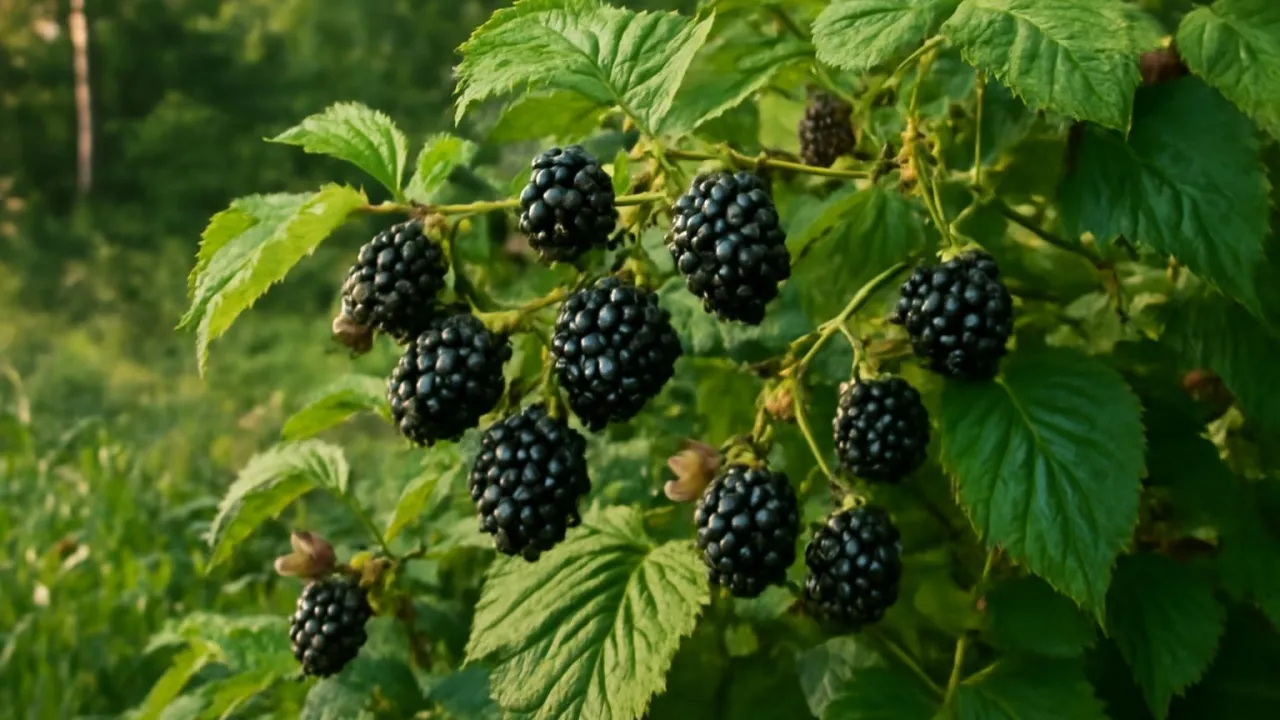
Blackberry bushes use sharp thorns to protect their sweet fruits from hungry animals!
✨ Word Sparks (Grade 2 Glossary)
Tap 🔊 to hear
thorny
Having many sharp points or thorns
pollinate
When insects help flowers make fruit
moist
A little wet or damp
🪝
Have you ever tasted a sweet blackberry from a wild bush?
1
Blackberries Are Juicy and Sweet
Blackberries grow on bushes in sunny places. They are small and shiny fruits. People and animals enjoy eating them. The berries taste sweet and a little sour.
2
Where Do Blackberries Live?
Blackberry bushes grow in forests and along roadsides. They need sunlight and soil to grow well. Birds and insects visit the bushes to eat or flowers. The bushes can grow up to six feet tall.
3
A Special Feature of the Bush
Blackberry bushes have sharp thorns on their branches. These thorns help protect the berries from animals that want to eat them. The thorns also help the plant climb over other plants. This way, blackberries get more sunlight.
Blackberries rely on insects for pollination and animals to spread their seeds far away!
✨ Word Sparks (Grade 3 Glossary)
Tap 🔊 to hear
pollination
When insects help flowers make fruit
predator
An animal that hunts other animals
adaptation
A special trait that helps survival
🪝
Did you know blackberries use thorns to defend themselves from hungry animals?
1
Blackberries and Their Habitat
Blackberries grow on thorny bushes that can reach six feet tall. These bushes thrive in temperate forests and hedgerows. They prefer sunny spots with moist, well-drained soil. The bushes often form dense patches that provide shelter for small animals.
2
How Blackberries Grow and Change
Blackberries start as small green fruits that grow larger and turn red. When ripe, they become shiny black and juicy. by bees and other insects helps flowers turn into fruit. The plant’s thorns protect the developing berries from .
3
Thorns Help Protect the Plant
The sharp thorns on blackberry branches act as a defense against animals. This helps the plant survive by keeping many creatures from eating its fruit. The thorns also allow the plant to climb over other plants for more sunlight. This climbing helps the bush grow bigger and produce more berries.
4
Blackberries in Nature’s Food Web
Blackberries provide food to many animals like birds, bears, and insects. These animals help spread blackberry seeds through droppings. This seed dispersal helps new blackberry plants grow far from the parent bush. Thus, blackberries play an important role in their ecosystem.
Blackberries help spread seeds far and wide by feeding animals that carry them away!
✨ Word Sparks (Grade 4 Glossary)
Tap 🔊 to hear
herbivore
An animal that eats plants
symbiotic
A helpful relationship between living things
disperse
To spread seeds or animals far away
🪝
Have you ever wondered how blackberry bushes survive and help their forest homes?
1
Blackberry Bushes and Their Environment
Blackberry bushes grow mostly in temperate forests and along roadsides where sunlight is plentiful. These bushes thrive in moist, well-drained soils that provide necessary nutrients for growth. Their thorny branches protect them from many that might otherwise eat the berries. This protection allows the bushes to produce more fruit each season.
2
How Blackberries Grow and Spread
Pollination by bees and other insects is essential for blackberry flowers to develop fruit. Once ripe, the blackberries attract birds and mammals that eat the fruit and the seeds through droppings. This seed dispersal helps blackberries colonize new areas, maintaining healthy populations. The plant’s climbing habit allows it to reach sunlight by growing over other plants.
3
Role in the Ecosystem and Food Web
Blackberries serve as a food source for many animals, including birds, bears, and insects, making them a vital part of the food web. The seeds passed through animal droppings help new plants grow, supporting biodiversity. Humans also harvest blackberries for food, showing a relationship between people and plants. However, overharvesting or habitat loss can threaten blackberry populations.
4
Geographic Distribution and Human Impact
Blackberries are native to Europe but have spread widely across North America and other temperate regions. They often grow in disturbed areas like roadsides and forest edges, showing adaptability. While they benefit ecosystems by providing food and shelter, invasive blackberry species can sometimes crowd out native plants. Conservation efforts focus on balancing blackberry growth with protecting native habitats.
2. Why is it important to protect blackberry habitats?
🤯 Mind-Blowing Fact • Grade 5
Blackberries are aggregate fruits made of many tiny drupelets, each with its own seed inside!
✨ Word Sparks (Grade 5 Glossary)
Tap 🔊 to hear
aggregate fruit
A fruit made of many small parts joined together
biennial
A plant that grows for two years before fruiting
mutualistic
A helpful relationship between two different species
🪝
Did you know blackberries belong to the rose family and have complex survival strategies?
1
Scientific Classification and Origins
Blackberries belong to the genus Rubus in the Rosaceae family, which includes roses and raspberries. The species Rubus fruticosus is native to Europe but has naturalized widely across temperate regions worldwide. Their ability to grow in diverse environments makes them successful colonizers of disturbed habitats. Botanists study their complex genetics because many blackberry species hybridize easily.
2
Physiological Adaptations and Growth
Blackberry plants develop canes that grow vigorously the first year and produce fruit in the second year. Their thorny stems serve as physical defenses against herbivores and help the plant climb over other vegetation to access sunlight. The fruit is an aggregate of small drupelets, each containing a seed, which aids in reproductive success. Photosynthesis in their broad leaves provides energy for growth and berry production.
3
Pollination, Seed Dispersal, and Ecological Role
Pollination primarily occurs through bees and other insects transferring pollen between flowers, enabling fruit development. Animals such as birds and mammals eat the berries and disperse seeds via their droppings, often kilometers away from the parent plant. This relationship enhances genetic diversity and colonization of new areas. Blackberries contribute to food webs by supporting numerous species and promoting ecosystem stability.
4
Conservation, Agricultural Use, and Human Impact
While wild blackberries are abundant, some invasive species can outcompete native plants, requiring management to protect biodiversity. Cultivated blackberry varieties have been bred for larger fruit size, sweeter taste, and thornless stems to improve harvesting. These berries are economically important in agriculture and nutrition worldwide. Conservation efforts balance blackberry cultivation with habitat preservation to sustain both natural and agricultural ecosystems.
5
Quantitative Comparisons and Growth Details
Blackberry bushes can grow up to 6 feet (1.8 meters) tall and produce fruit weighing about 5 grams each. The plants grow best in temperatures between 68 and 86 degrees Fahrenheit (20 to 30 degrees Celsius). Their thorny canes can grow several feet per season, allowing rapid spread. Compared to raspberries, blackberries have larger, shinier fruit with a distinct sweet-tart flavor that varies by variety.