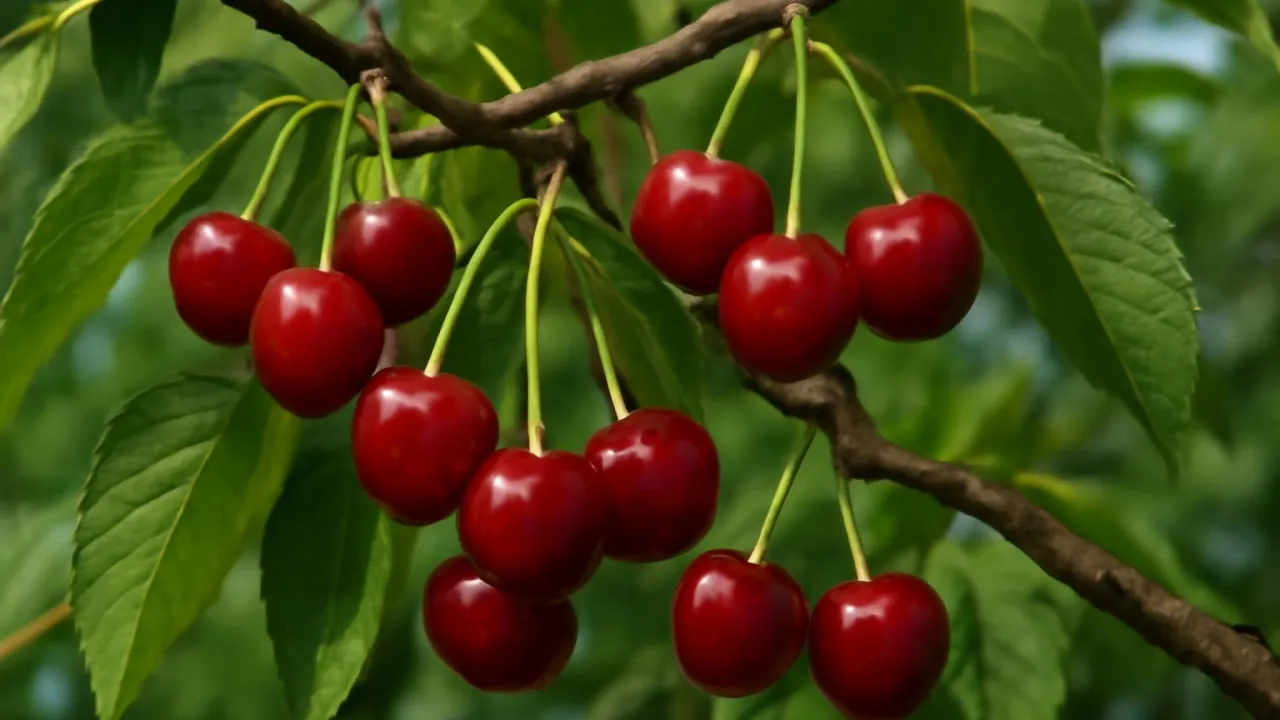
Bing cherries were first grown in Oregon in the late 1800s and became very popular soon after!
✨ Word Sparks (Grade 2 Glossary)
Tap 🔊 to hear
ripe
Ready to eat and sweet
stem
The small stick that holds fruit to the tree
dessert
A sweet treat eaten after a meal
🪝
Have you ever tasted a cherry that is both sweet and juicy?
1
What Bing Cherries Look Like
Bing cherries are shiny and bright red when they are . They grow on tall trees that can reach many feet high. The cherries are round and smooth with a small attached.
2
Where Bing Cherries Grow
Bing cherry trees grow best in places with warm summers and cold winters. They need full sun and plenty of water to produce sweet fruit. Farmers usually pick the cherries in the summer season.
3
Why Bing Cherries Are Special
Bing cherries are known for their juicy sweetness and rich red color. Birds and people both enjoy eating these tasty fruits fresh or in . The cherries have a firm texture that makes them easy to pick.
Bing cherries have a natural protective skin that helps them stay fresh longer than many other fruits!
✨ Word Sparks (Grade 3 Glossary)
Tap 🔊 to hear
photosynthesis
How plants use sunlight to make food
seed dispersal
How seeds move to grow new plants
adaptation
A change that helps plants or animals survive
🪝
Did you know Bing cherries have a special way to stay fresh and tasty?
1
Bing Cherry Appearance and Growth
Bing cherries are shiny, deep red fruits that grow on tall trees called cherry trees. These trees can reach heights of up to forty feet and produce clusters of cherries each summer. The fruit has a firm skin that helps protect it from insects and weather damage.
2
How Bing Cherries Survive and Grow
Bing cherry trees need full sunlight and regular watering to grow healthy fruit. Their leaves help capture sunlight for , which provides nutrients for the cherries. The firm skin of the cherries acts as a natural barrier against pests and keeps the fruit fresh longer.
3
Role in the Ecosystem
Bing cherries provide food for many animals, including birds and insects, which help spread the seeds. This process, called , helps new cherry trees grow in different places. The cherries’ bright red color also attracts animals, which is an to protect the tree’s future.
4
From Tree to Table
Farmers harvest Bing cherries carefully to avoid bruising the fruit, which keeps them fresh for eating or baking. These cherries are popular in desserts and snacks because of their sweet flavor and juicy texture. Their firmness helps them stay fresh during transport to markets.
Bing cherries help spread seeds by attracting animals, which supports forest growth worldwide!
✨ Word Sparks (Grade 4 Glossary)
Tap 🔊 to hear
symbiotic
Two living things helping each other
orchard
A farm where fruit trees grow
chilling requirement
Cold time trees need to grow fruit
🪝
How do Bing cherries help their environment and people around the world?
1
Growth and Habitat Needs
Bing cherry trees thrive in temperate climates where summers are warm and winters are cold enough to meet their . These conditions allow the trees to break dormancy and produce fruit each year. The trees need full sunlight and well-drained soil to grow healthy, juicy cherries.
2
Ecosystem Role and Food Web
Bing cherries serve as an important food source for many birds, insects, and mammals, which in turn help spread the seeds through their droppings. This relationship supports forest regeneration and biodiversity. The cherries’ bright red color attracts these animals, which is an evolutionary adaptation to promote seed dispersal.
3
Human Impact and Agriculture
Farmers carefully cultivate Bing cherry using irrigation and pruning techniques to maximize fruit quality and yield. The cherries are harvested by hand to prevent damage, ensuring they reach markets fresh. This fruit supports local economies and is a popular export from regions like the Pacific Northwest.
4
Geographic Distribution
Originally developed in Oregon in the late 1800s, Bing cherry cultivation has spread to other temperate regions worldwide. The trees are now grown in parts of Europe, North America, and Asia where climate conditions are suitable. Their adaptability allows them to contribute to global fruit production and agriculture.
Bing cherries need hundreds of cold hours each winter to bloom and produce their sweet fruit!
✨ Word Sparks (Grade 5 Glossary)
Tap 🔊 to hear
cultivar
A plant variety made by people
dormancy
A resting period for plants in winter
photosynthesis
How plants turn sunlight into food
🪝
What scientific secrets make Bing cherries a beloved fruit worldwide?
1
Scientific Classification and Origin
Bing cherries belong to the species Prunus avium, a member of the Rosaceae family, which includes many other fruit trees. This was developed in Oregon in 1875 by horticulturist Seth Lewelling and his foreman Ah Bing. Since then, Bing cherries have become a staple in temperate fruit agriculture worldwide.
2
Physiological Adaptations and Growth
Bing cherry trees require a chilling period of approximately 700 to 900 hours below 45°F (7°C) to break and initiate flowering. Their broad leaves maximize , providing energy to develop large, juicy fruits. The thick skin of Bing cherries protects against fungal infections and mechanical damage during harvest and transport.
3
Conservation and Agricultural History
While wild cherry species face habitat loss, Bing cherries thrive under careful orchard management practices. Modern techniques include integrated pest management and precision irrigation to reduce environmental impact. The ’s history reflects human innovation in breeding fruit varieties for sweetness, size, and shelf life.
4
Quantitative Comparisons and Uses
A single Bing cherry can weigh about 8 grams and measure up to 2 centimeters in diameter. These cherries can be harvested at speeds of up to 1,000 pounds per hour using mechanical shakers in large orchards. They are commonly used fresh, in baked goods, jams, and juices due to their high sugar content averaging 18%.
5
Global Impact and Future Prospects
Bing cherry production contributes significantly to economies in the Pacific Northwest and other temperate regions worldwide. Climate change poses challenges to chilling requirements, prompting research into more adaptable . Continued scientific study aims to improve disease resistance and fruit quality for future generations.