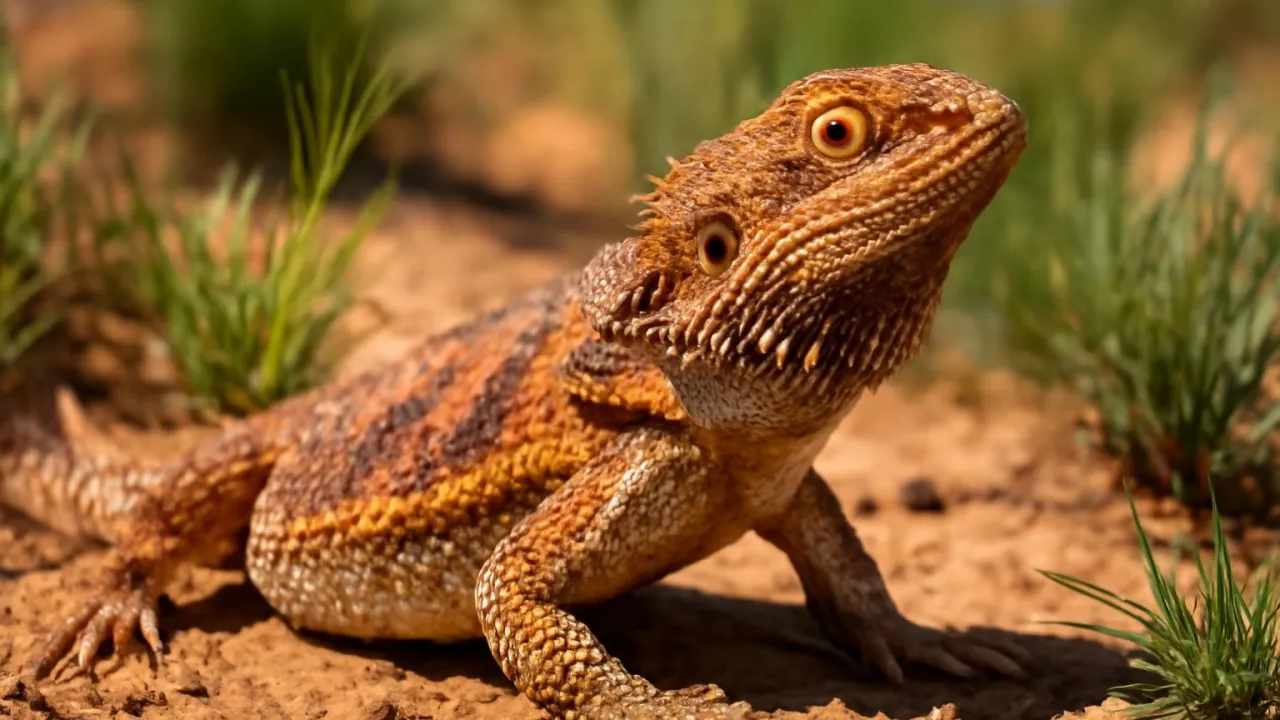
Bearded dragons’ black beards puff out to warn enemies they are not safe to eat.
✨ Word Sparks (Grade 2 Glossary)
Tap 🔊 to hear
predator
An animal that hunts other animals
bask
To lie in the sun to get warm
burrow
A hole in the ground for shelter
🪝
Have you ever seen a lizard puff out a spiky beard to scare?
1
The Spiky Beard and Its Use
Bearded dragons can puff out their spiky beards when they feel scared or angry. This makes them look bigger and helps protect them from . The beard turns black when puffed up, which is very noticeable. This cool feature helps them stay safe in the wild.
2
Where They Live and How They Stay Warm
These lizards live in Australia’s deserts and woodlands where it is very hot and dry. They like to in the sun on rocks to warm their bodies. At night, they hide under bushes or in to stay safe and cool. Their habitat helps them find food and water.
3
What They Eat and How They Grow
Bearded dragons eat insects like crickets and worms, as well as plants and fruits. Young dragons eat more insects to grow strong. Adults eat more plants to stay healthy. They need water to drink and grow up to two feet long.
Bearded dragons use their black beards and camouflage to survive predators and harsh weather.
✨ Word Sparks (Grade 3 Glossary)
Tap 🔊 to hear
adaptation
A body change that helps an animal survive
omnivore
An animal that eats plants and animals
incubation
The time eggs stay warm before hatching
🪝
How does a bearded dragon’s beard help it survive in the wild?
1
Beard Puffing and Camouflage
The bearded dragon can puff out its beard to look bigger and more threatening to predators. When puffed, the beard turns black, making it easier to scare enemies. This helps the lizard avoid danger by using visual signals. It also uses camouflage to blend into its rocky environment.
2
Habitat and Temperature Control
Bearded dragons live in arid deserts and woodlands of Australia where temperatures vary widely. They regulate their body heat by basking in the sun and hiding in shade or burrows. This behavior helps them maintain the right body temperature for digestion and activity. Their scales also protect them from the harsh sun.
3
Diet and Nutrient Needs
These lizards are that eat insects, small animals, plants, and fruits to get nutrients. Insects provide protein for growth, while plants supply fiber and vitamins. This varied diet helps them stay healthy and strong. They also drink water from dew or puddles in their habitat.
4
Life Cycle and Growth
Bearded dragons hatch from eggs laid in sandy soil after about two months of . Young dragons grow quickly by eating lots of insects. As they mature, they eat more plants and fruits. They can live up to 10 years in the wild with proper care and habitat.
1. What does the black beard do for the bearded dragon?
2. Where do bearded dragons lay their eggs?
🤯 Mind-Blowing Fact • Grade 4
Bearded dragons’ beard puffing is a clever survival trick that warns predators and helps keep balance in nature.
✨ Word Sparks (Grade 4 Glossary)
Tap 🔊 to hear
symbiosis
A helpful relationship between different living things
ecosystem
A community of plants and animals living together
predator
An animal that hunts other animals for food
🪝
Why is the bearded dragon’s spiky beard important for its survival in Australia?
1
Beard Puffing and Defense
The bearded dragon puffs out its spiky beard to appear larger and more intimidating to , which helps prevent attacks. This defense mechanism causes the beard to turn black, signaling danger to other animals. The ability to change beard color is a cause-and-effect adaptation to threats in its environment. This visual warning reduces the chance of being eaten.
2
Role in the Ecosystem
Bearded dragons play an important role in their by controlling insect populations and dispersing plant seeds through their diet. Their omnivorous eating habits help balance food webs between plants, insects, and . They also serve as prey for larger animals, creating a symbiotic balance. Human impact through habitat loss affects their populations in some areas.
3
Habitat and Geographic Range
These lizards are native to the arid and semi-arid regions of central and eastern Australia, including deserts and woodlands. They rely on warm temperatures and sunlight to regulate their body heat, which is essential for survival. Seasonal changes affect their activity levels and food availability. Their geographic distribution is limited by climate and habitat conditions.
4
Physical Adaptations for Survival
Besides their beard, bearded dragons have rough scales that protect them from and harsh weather. Their strong legs and claws help them climb and dig burrows for shelter. Their eyes can see in color, aiding in finding food and spotting danger. These adaptations work together to help them thrive in tough environments.
1. What happens when a bearded dragon puffs its beard?
2. How do bearded dragons help their ecosystem?
🤯 Mind-Blowing Fact • Grade 5
Bearded dragons can puff their black beards by inflating throat muscles, a unique defense against predators.
✨ Word Sparks (Grade 5 Glossary)
Tap 🔊 to hear
taxonomy
How scientists group and name living things
physiology
How an animal’s body works inside
conservation
Protecting animals and their homes
🪝
What unique adaptations allow the bearded dragon to thrive in Australia’s harsh deserts?
1
Taxonomy and Scientific Classification
The bearded dragon, scientifically named Pogona vitticeps, belongs to the Agamidae family of lizards native to Australia. It is one of eight species within the Pogona genus, recognized for their distinctive spiny throat and calm temperament. Taxonomically, it is classified within the order Squamata, which includes snakes and lizards. This classification helps scientists understand its evolutionary relationships and ecological niche.
2
Physiological Mechanics of Beard Puffing
Bearded dragons puff their beards by expanding loose skin and inflating throat muscles, which darken due to increased blood flow. This physiological response is triggered by stress or territorial displays to intimidate predators or rivals. The black coloration enhances the visual signal, making the lizard appear larger and more threatening. This mechanism is an effective defense without engaging in physical combat.
3
Conservation Status and Human Impact
Currently, bearded dragons are not endangered and thrive in their native habitats, but habitat destruction and climate change pose future risks. The pet trade has increased their popularity worldwide, leading to captive breeding programs that reduce wild capture. efforts focus on habitat preservation and educating the public about responsible pet ownership to ensure sustainable populations in the wild.
4
Ecological Role and Quantitative Comparisons
Bearded dragons serve as both predator and prey within their ecosystems, consuming insects that can number in the thousands annually. They can grow up to 24 inches (61 cm) and weigh around 0.5 to 1.1 pounds (230 to 500 grams). Their body temperature regulation depends on ambient temperatures ranging from 70 to 110 degrees Fahrenheit (21 to 43 degrees Celsius). These quantitative traits illustrate their adaptation to extreme environments.
5
Behavioral Adaptations and Lifespan
These lizards exhibit complex behaviors such as head bobbing and arm waving for communication and mating rituals. They have a lifespan of up to 10 years in the wild, with captive individuals sometimes living longer due to controlled environments. Their ability to dig burrows and climb trees aids in thermoregulation and predator avoidance. These behaviors enhance their survival and reproductive success.