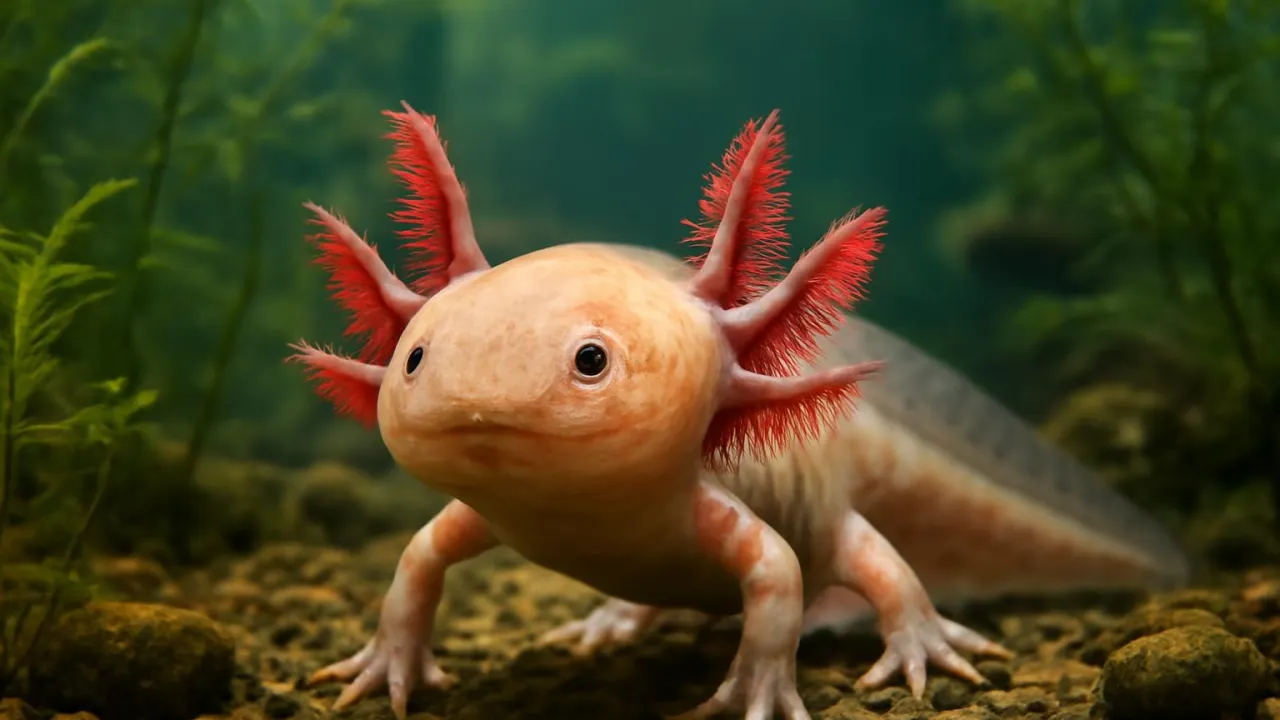
Axolotls can regrow lost limbs, tails, and even parts of their hearts!
✨ Word Sparks (Grade 2 Glossary)
Tap 🔊 to hear
freshwater
Water without salt like lakes and rivers
limbs
Arms or legs that animals use to move
gills
Body parts that help animals breathe underwater
🪝
Have you heard about an animal that can grow back its limbs?
1
Where Axolotls Live
Axolotls live in lakes near Mexico City. They swim and walk underwater using their tiny legs. These lakes have cool, clean water that helps them survive.
2
What Axolotls Eat
Axolotls eat worms, insects, and small fish in the water. They catch food with their mouths and hunt mostly at night. Their diet helps them grow strong and healthy.
3
Amazing Body Feature
Axolotls have feathery outside their heads to breathe underwater. These gills let them get oxygen easily from water. They also have tiny legs to walk on the lake bottom.
Axolotls can regenerate complex body parts including limbs, spinal cord, and even parts of their brain.
✨ Word Sparks (Grade 3 Glossary)
Tap 🔊 to hear
regenerate
To grow back parts of the body that are lost
camouflage
Colors or shapes that help animals hide
neoteny
Keeping young traits while growing up
🪝
Did you know the axolotl can regrow its limbs and even its heart?
1
Habitat and Lifestyle
Axolotls live in freshwater lakes near Mexico City, where the water is cool and clean. They spend their whole lives underwater, using their legs to walk on the lake bottom. Their habitat provides food and shelter from predators. These lakes are part of a fragile ecosystem that supports many species.
2
Body and Adaptations
Axolotls have external feathery gills that help them breathe underwater. Their skin is smooth and can be pink, white, or brown. They use to hide from predators by blending with plants and rocks. Their wide mouths help them catch prey like worms and small fish.
3
Amazing Regeneration
One of the axolotl’s most amazing adaptations is its ability to lost body parts. It can regrow limbs, tails, and even parts of its heart and brain. This regeneration helps the axolotl survive injuries from predators or accidents. Scientists study axolotls to learn how regeneration works.
4
Life Cycle and Growth
Axolotls hatch from eggs laid in water and grow into adults without changing much. Unlike many amphibians, they keep their gills and stay aquatic their whole lives. This is called , a special trait that keeps them in their larval form. They can live up to 15 years in the wild or captivity.
2. What special trait keeps axolotls in their larval form?
🤯 Mind-Blowing Fact • Grade 4
Axolotls’ regeneration ability allows them to survive injuries that would kill most other animals.
✨ Word Sparks (Grade 4 Glossary)
Tap 🔊 to hear
ecosystem
A community of living things and their environment
invasive
Non-native species that harm local plants or animals
regeneration
Growing back lost body parts
🪝
How does the axolotl’s incredible regeneration affect its survival in nature?
1
Habitat and Geographic Range
Axolotls are native to the freshwater lakes and canals around Mexico City, especially Lake Xochimilco. These habitats provide cool, clean water and abundant food sources for the species. However, urban growth, pollution, and species have greatly reduced their natural habitat. Conservation efforts focus on protecting these fragile to save the species from extinction.
2
Role in the Ecosystem
Axolotls play an important role as both predator and prey in their . They help control populations of insects and small fish by feeding on them regularly. At the same time, they provide food for birds and larger fish, maintaining balance. Their presence supports a healthy aquatic food web and overall ecosystem health.
3
Regeneration and Adaptations
The axolotl’s ability to regenerate limbs, spinal cord, and heart tissue helps it recover from injuries caused by predators or accidents quickly. This adaptation increases its chances of survival and reproduction in the wild. Additionally, their external gills allow efficient oxygen exchange in water with low oxygen levels, showing how they adapt well to their environment.
4
Human Impact and Conservation
Human activities such as pollution, habitat destruction, and introduction of species threaten axolotl populations severely. Scientists and conservationists work to breed axolotls in captivity and restore their natural habitats. Public education about the axolotl’s unique biology helps raise awareness and support for its protection efforts.
1. Why is axolotl regeneration important for survival?
2. What threatens axolotl habitats the most?
🤯 Mind-Blowing Fact • Grade 5
Axolotls regenerate complex tissues faster than any other known vertebrate species.
✨ Word Sparks (Grade 5 Glossary)
Tap 🔊 to hear
blastema
A group of cells that grow new body parts
neoteny
Keeping young features while growing up
ecosystem
Living things and their environment working together
🪝
What makes the axolotl a unique subject for scientific study in regeneration biology?
1
Scientific Classification and Origin
The axolotl, Ambystoma mexicanum, belongs to the family Ambystomatidae and is native to the ancient freshwater lakes of the Valley of Mexico. Unlike most amphibians, axolotls exhibit , retaining larval features such as external gills throughout their lives. This unique trait makes them a fascinating model organism for developmental biology and regeneration research.
2
Physiological Mechanisms of Regeneration
Axolotls possess remarkable regenerative abilities, enabling them to regrow entire limbs, spinal cord segments, heart tissue, and parts of their brain. This process involves specialized cells called that dedifferentiate and proliferate to replace lost tissues. Their immune system supports regeneration by preventing scarring, which differs from most vertebrates’ healing processes.
3
Conservation Status and Human Impact
Axolotls are critically endangered in the wild due to habitat destruction, pollution, and invasive species such as tilapia and carp. Conservation efforts include captive breeding programs and habitat restoration projects in Lake Xochimilco. Public awareness campaigns emphasize the importance of preserving this species for ecological balance and scientific advancement.
4
Botanical and Ecological Context
Axolotls inhabit freshwater rich in aquatic plants like water lilies and reeds, which provide shelter and breeding grounds. These plants contribute oxygen to the water, supporting axolotl respiration through their external gills. The axolotl’s role as both predator and prey maintains the delicate balance of this ecosystem’s food web.
5
Quantitative Comparisons and Unique Traits
Adult axolotls typically reach lengths of 9 to 12 inches (23 to 30 centimeters) and weigh up to 1.5 pounds (700 grams). They can regenerate limbs within 40 to 60 days, a process much faster than most vertebrates. Their external gills allow efficient oxygen absorption even in low-oxygen water, and they can survive water temperatures between 14 and 20 degrees Celsius.