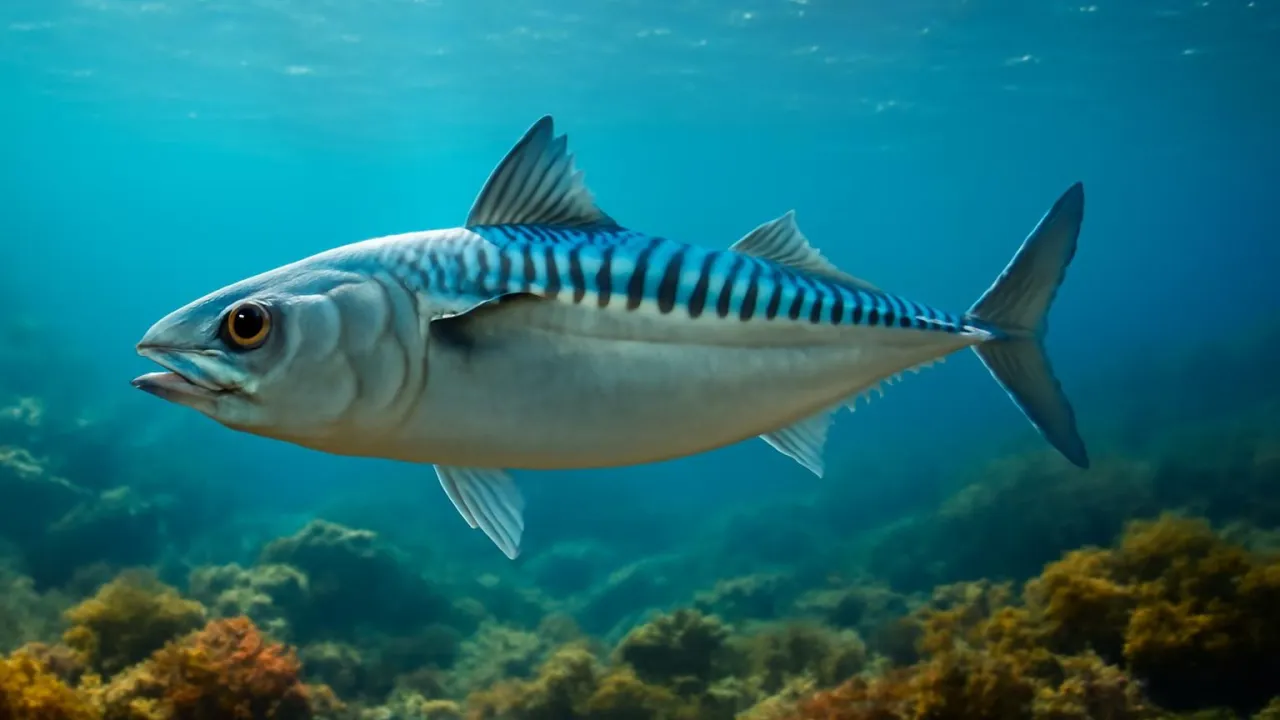
Atlantic mackerel can swim up to 30 miles per hour to escape predators!
✨ Word Sparks (Grade 2 Glossary)
Tap 🔊 to hear
plankton
Tiny animals and plants in the ocean
predator
An animal that hunts other animals for food
school
A group of fish swimming together
🪝
Have you ever wondered how fish can swim so fast in the ocean?
1
Fast and Colorful Fish
Atlantic mackerel have shiny blue stripes on their backs and silvery sides. They swim very fast using their strong tail fins. Their bodies are slim and smooth to cut through water easily.
2
Ocean Homes and Groups
These fish live in the cold North Atlantic Ocean near coasts. They travel in large groups called to stay safe from . Schools help them swim together and find food more easily.
3
Eating Small Fish and Plankton
Atlantic mackerel eat small fish and tiny animals called . They catch food quickly using sharp teeth and fast swimming. Eating well helps them grow and stay healthy in the ocean.
Atlantic mackerel can swim up to 30 miles per hour using their powerful tail fins.
✨ Word Sparks (Grade 3 Glossary)
Tap 🔊 to hear
camouflage
Colors or patterns that help hide animals
adaptation
A body part or behavior that helps survival
plankton
Tiny animals and plants floating in water
🪝
Did you know the Atlantic mackerel uses its body to escape predators quickly?
1
Sleek Body and Speedy Swimming
The Atlantic mackerel has a streamlined body that reduces water resistance. Its strong tail fin propels it forward at high speeds. This helps it escape predators quickly. The fish’s shiny stripes also help it blend in with the shimmering ocean surface.
2
Living in the North Atlantic Ocean
Atlantic mackerel live in the cold waters of the North Atlantic Ocean. They often swim near the coast but can also be found in deeper waters. These fish form large schools to protect themselves from predators. Their schooling behavior confuses predators and improves survival chances.
3
Eating Small Fish and Plankton
Atlantic mackerel feed on small fish and , tiny drifting animals in the ocean. Their sharp teeth help them catch slippery prey quickly. They play an important role in the ocean food web as both predator and prey. Eating nutritious food gives them the energy to swim fast.
4
Camouflage and Protection
The mackerel’s stripes create by breaking up its shape in the water. This helps it avoid being seen by predators. Their schooling behavior also acts as protection by making it hard for predators to target one fish. These survival keep the Atlantic mackerel safe.
2. What role do Atlantic mackerel play in the ocean?
🤯 Mind-Blowing Fact • Grade 4
Atlantic mackerel can swim in schools of thousands, creating dazzling moving patterns that confuse predators.
✨ Word Sparks (Grade 4 Glossary)
Tap 🔊 to hear
ecosystem
A community of plants and animals living together
thrust
Force that pushes something forward
sustainable
Using resources without harming the environment
🪝
How does the Atlantic mackerel’s speed and schooling help it survive in ocean ecosystems?
1
Speed and Streamlined Body
The Atlantic mackerel’s streamlined body reduces drag, allowing it to swim rapidly through water. Its powerful tail fin generates for bursts of speed up to 30 miles per hour. This remarkable speed helps the fish escape predators like larger fish and seabirds. Fast swimming is a key adaptation for survival in its ocean habitat.
2
Schooling Behavior and Protection
Atlantic mackerel form large schools that can number in the thousands, which confuses predators and reduces individual risk. Schooling also improves their ability to find food by coordinating movements. This social behavior is an important survival strategy in the dynamic ocean environment. The fish rely on their group for both defense and feeding success.
3
Role in the Ocean Food Web
As mid-level predators, Atlantic mackerel feed on small fish and plankton, transferring energy up the food chain. They are also prey for larger marine animals, including sharks and marine mammals. This dual role makes them a vital link in ocean . Their population health directly impacts the balance of marine food webs.
4
Geographic Distribution and Human Impact
Atlantic mackerel are found throughout the North Atlantic Ocean, from North America to Europe. Commercial fishing targets them for food, which can affect their population sizes. fishing practices are important to maintain healthy mackerel stocks. Protecting their habitats ensures the ocean remains balanced.
1. Why do Atlantic mackerel swim in large schools?
2. How does fishing affect Atlantic mackerel?
🤯 Mind-Blowing Fact • Grade 5
Atlantic mackerel swim up to 30 miles per hour, faster than many ocean predators, using specialized muscles and body shape.
✨ Word Sparks (Grade 5 Glossary)
Tap 🔊 to hear
fusiform
Spindle-shaped body, wide in middle, narrow ends
trophic
Relating to feeding levels in a food chain
metabolic
Relating to how the body uses energy
🪝
What unique biological features allow Atlantic mackerel to thrive in the North Atlantic’s fast-moving waters?
1
Taxonomy and Scientific Classification
The Atlantic mackerel, scientifically known as Scomber scombrus, belongs to the family Scombridae. This family includes other fast-swimming fish like tuna and bonito. Its classification reflects shared adaptations such as streamlined bodies and forked tails. These traits are essential for rapid swimming and efficient predation in pelagic ocean zones.
2
Physiological Mechanics of Swimming
Atlantic mackerel use a combination of body undulations and powerful tail fin strokes to propel themselves forward. Their streamlined, body shape minimizes drag, allowing speeds up to 30 miles per hour. Specialized muscle fibers provide bursts of speed for escaping predators and chasing prey. Their gill structures efficiently extract oxygen to support high rates.
3
Ecological Role and Conservation
As mid- level predators, Atlantic mackerel consume planktonic crustaceans and small fish, transferring energy through the marine food web. They are prey for larger fish, marine mammals, and seabirds, making them integral to ecosystem balance. Overfishing has led to population declines in some regions, prompting management plans focused on sustainable harvests. Conservation efforts aim to preserve their habitats and maintain ocean biodiversity.
4
Botanical and Culinary Notes
Although called mackerel, this fish is a true animal, not a plant or fruit. Unlike botanical fruits, which develop from flowers, the Atlantic mackerel is a vertebrate animal with gills and fins. It is a popular seafood choice worldwide, rich in omega-3 fatty acids, contributing to human health benefits. Understanding its biology helps improve sustainable fishing practices.
5
Quantitative Comparisons and Adaptations
Atlantic mackerel can reach lengths up to 24 inches (60 cm) and weigh about 3 pounds (1.4 kg). They swim at speeds reaching 30 miles per hour (48 kilometers per hour), faster than many ocean predators. Their schooling behavior involves thousands of individuals moving in coordinated patterns to confuse predators. These adaptations optimize survival in the cold, nutrient-rich North Atlantic waters.