👷 CAREERS
💼 Healthcare & Sports Medicine
VA Economics, Civics & Career Readiness SOL K.8, 1.8, 2.8, 3.9
Athletic Trainer
Keeping Athletes Safe, Strong, and Ready
Grade 2 • Developing • 106 words
🧭 Career FieldHealthcare, Sports Medicine & Rehabilitation
🛠️ Key Tools & SkillsAthletic tape, ice packs, splints, medical kits, and injury prevention skills
🏢 WorkplaceSidelines, school athletic training clinics, stadiums, and rehab centers
⚡ Everyday Impact SparkPreventing sports injuries and guiding hurt athletes safely back to play
🤯 Mind-Blowing Fact • Grade 1
A busy school athletic trainer can unroll miles of supportive ankle tape during just one sports season!
✨ Word Sparks (Grade 1 Glossary)
Tap 🔊 to hear
joint
A place where two bones meet
swelling
Puffiness on the body after a bump
support
To hold something steady and safe
🪝
Who rushes onto the field with a medical bag when a player falls?
1
First on the Field
Oh no! A soccer player trips and grabs her ankle. Right away, a friendly helper jogs out from the sideline. That sports health helper is an athletic trainer.
2
Tape, Ice, and Care
Athletic trainers check sore knees, ankles, and shoulders. They wrap strong tape to . Cold ice packs help calm bumps and fast.
3
Safe to Play Again
Trainers also stop injuries before they happen. They teach safe stretches and remind kids to drink water. Thanks to them, athletes heal up strong!
1. What does an athletic trainer put on a bump to calm swelling?
2. How do athletic trainers stop injuries before a game even starts?
🤯 Mind-Blowing Fact • Grade 2
NASA employs certified athletic trainers to help astronauts keep their muscles and joints healthy before and after spaceflight!
✨ Word Sparks (Grade 2 Glossary)
Tap 🔊 to hear
licensed
Officially trained and approved to do healthcare
examine
To look closely and check someone's health
mend
To heal and grow healthy again
🪝
What is the difference between a fitness trainer at a gym and an athletic trainer on a team?
1
Healthcare Pros for Active People
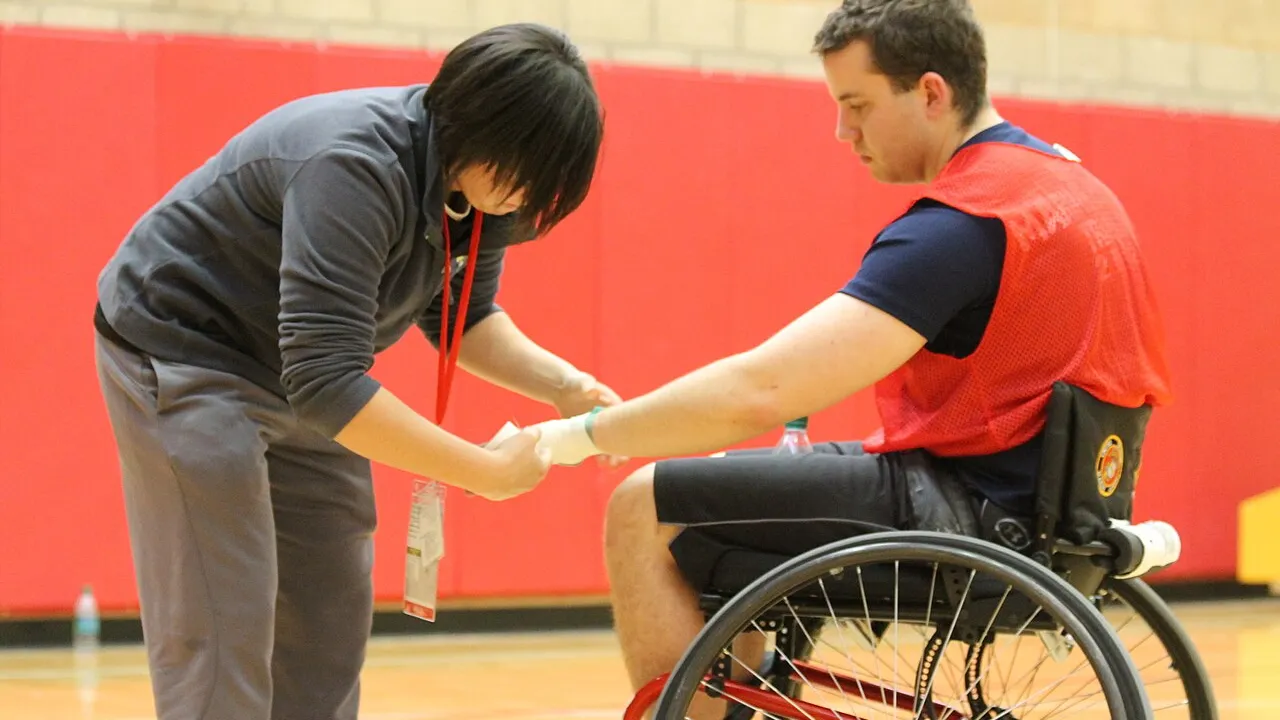
Rip! Goes a roll of white tape inside the school clinic before Friday's big game. Despite the similar name, an athletic trainer is not a gym workout coach. Athletic trainers are healthcare pros who protect athletes from getting hurt.
2
Quick Checks on the Sideline
During practices and games, athletic trainers watch every play closely. If a runner twists an ankle or bumps heads, the trainer rushes over to the injury, apply first aid, and decide whether it is safe to keep playing.
3
Helping Muscles Heal
When an athlete needs time to , trainers guide gentle balance and strength exercises each day. Step by step, they rebuild confidence until the player returns safely.
1. What kind of professional is a certified athletic trainer?
2. Where else besides sports fields do some athletic trainers work?
🤯 Mind-Blowing Fact • Grade 3
Athletic trainers use a special Wet Bulb Globe Thermometer that measures sunlight, wind, humidity, and air temperature all at once to prevent heat illness!
✨ Word Sparks (Grade 3 Glossary)
Tap 🔊 to hear
concussion
A brain injury caused by a jolt
rehabilitation
Guided exercises that restore strength after injury
ligament
Tough tissue connecting one bone to another
🪝
How does an athletic trainer know when a bumped player must rest instead of returning to the game?
1
Guardians of the Sideline
Summer heat shimmers above a practice field as an athletic trainer checks a weather meter for humidity and temperature. Before a single whistle blows, the trainer sets up shaded water stations and wraps weak ankles with supportive braces so small aches never turn into big injuries.
2
Spotting Hidden Injuries
Not every sports injury leaves a visible bruise. When two players collide, an athletic trainer tests balance, memory, and eye movement to check for a , which is a mild brain injury. If warning signs appear, the trainer keeps the athlete safely on the bench to see a physician.
3
Guiding Rehabilitation
Healing takes patience, encouragement, and smart science. Through —special stretches, elastic resistance bands, and wobble balance boards—trainers help injured and muscles regain full motion and strength step by step.
4
Beyond Stadiums and Schools
Besides high schools, colleges, and pro sports teams, athletic trainers care for ballet dancers, firefighters, astronauts, military members, and factory workers whose active daily jobs demand healthy, pain-free movement.
1. What does an athletic trainer test if two players collide and risk a concussion?
2. Which non-sports workers also receive care from athletic trainers?
🤯 Mind-Blowing Fact • Grade 4
The National Athletic Trainers' Association was founded in 1950 by about 200 trainers and has grown to more than 40,000 healthcare professionals worldwide!
✨ Word Sparks (Grade 4 Glossary)
Tap 🔊 to hear
orthopedic
Related to bones, joints, ligaments, and muscles
sprain
Stretching or tearing a bone-connecting ligament
progressive
Advancing steadily in careful, planned stages
🪝
What happens behind the doors of an athletic training clinic from early morning taping to final buzzer?
1
Inside the Afternoon Rush
At three o'clock, the school dismissal bell rings and dozens of student-athletes stream into the athletic training clinic before practice. One swimmer warms up her shoulder with elastic tubing, a cross-country runner balances steadily on a foam pad, and the athletic trainer skillfully anchors figure-eight tape strips around a sprinter's arch to stabilize tiny foot joints before track workouts begin.
2
Five Pillars of Sports Medicine
Working closely with supervising team physicians, certified athletic trainers master five core responsibilities: injury prevention, clinical examination and diagnosis, immediate emergency care, therapeutic rehabilitation, and healthcare administration. Before any sports season kicks off, they review pre-participation health histories, check hydration plans, and rehearse Emergency Action Plans so coaches and staff know exactly where automated external defibrillators and ambulance gates are located.
3
Anatomy in Action
When a basketball player lands awkwardly from a high rebound, an athletic trainer uses gentle, precise hands-on tests to tell whether a ligament , muscle strain, or possible bone fracture has occurred. Making calm, accurate clinical decisions right on the court protects injured tissues from further damage and guides prompt medical referrals.
4
Step-by-Step Return to Play
Recovering athletes cannot simply jump back into full-speed games overnight. Athletic trainers design return-to-play stages—moving gradually from pain-free walking to light jogging, figure-eight agility cutting drills, non-contact team drills, and finally full competition—making sure repaired tissues handle real athletic force safely.
1. What is the difference between a ligament sprain and other tissue injuries checked by trainers?
2. Why do athletic trainers use progressive return-to-play stages after an injury?
🤯 Mind-Blowing Fact • Grade 5
Targeted neuromuscular warm-up programs led by athletic trainers have been shown in medical studies to cut youth knee ligament injuries nearly in half!
✨ Word Sparks (Grade 5 Glossary)
Tap 🔊 to hear
proprioception
Your body's sense of joint position
neuromuscular
Involving nerves and muscles working together
ergonomic
Designed for safe, comfortable human movement
🪝
How do split-second medical protocols and months of biomechanical rehab come together in an athletic trainer's career?
1
Calm Precision in Critical Seconds
Distant thunder rumbles across a Blue Ridge hillside while two varsity lacrosse teams sprint downfield. Checking a digital lightning detector showing cloud-to-ground strikes within ten miles, the certified athletic trainer immediately signals game officials to suspend play, clear metal bleachers, and shepherd players and spectators indoors. Protecting human life—from lightning hazards and exertional heat stroke to sudden cardiac or cervical-spine emergencies—anchors every single shift on the sideline.
2
Rigorous Medical Education
Today, becoming a certified athletic trainer (ATC) in the United States requires earning a master's degree from a Commission on Accreditation of Athletic Training Education program and passing a comprehensive national Board of Certification exam. Graduate students complete hundreds of supervised clinical hours studying human gross anatomy, neurobiology, biomechanics, pharmacology, sports nutrition, and emergency trauma management alongside orthopedic physicians and physical therapists.
3
Evidence-Based Injury Prevention
Rather than waiting passively for injuries to strike, modern athletic trainers analyze three-dimensional movement patterns to spot imbalances before pain ever starts. For instance, coaching soccer and basketball athletes to land softly with hips flexed and knees aligned squarely over toes during jump-landing warm-ups can reduce devastating anterior cruciate ligament (ACL) knee tears by up to 50 percent.
4
Therapeutic Science and Proprioceptive Recovery
Inside the rehabilitation clinic, trainers blend joint mobilization, targeted eccentric resistance exercise, and re-education to restore —the nervous system's unconscious sense of joint position in space. Even after torn ankle ligaments knit back together structurally, single-leg balance drills on unstable surfaces are essential to retrain rapid nerve reflexes so the ankle stabilizes instantly on uneven turf.
5
Expanding Frontiers of Occupational Care
While high schools, universities, and professional sports franchises remain iconic workplaces, today's athletic trainers increasingly staff hospital orthopedic clinics, touring Broadway Performing Arts companies, NASA astronaut strength-and-reconditioning labs, airline programs, and municipal fire and police academies—proving that sports medicine serves every active community.