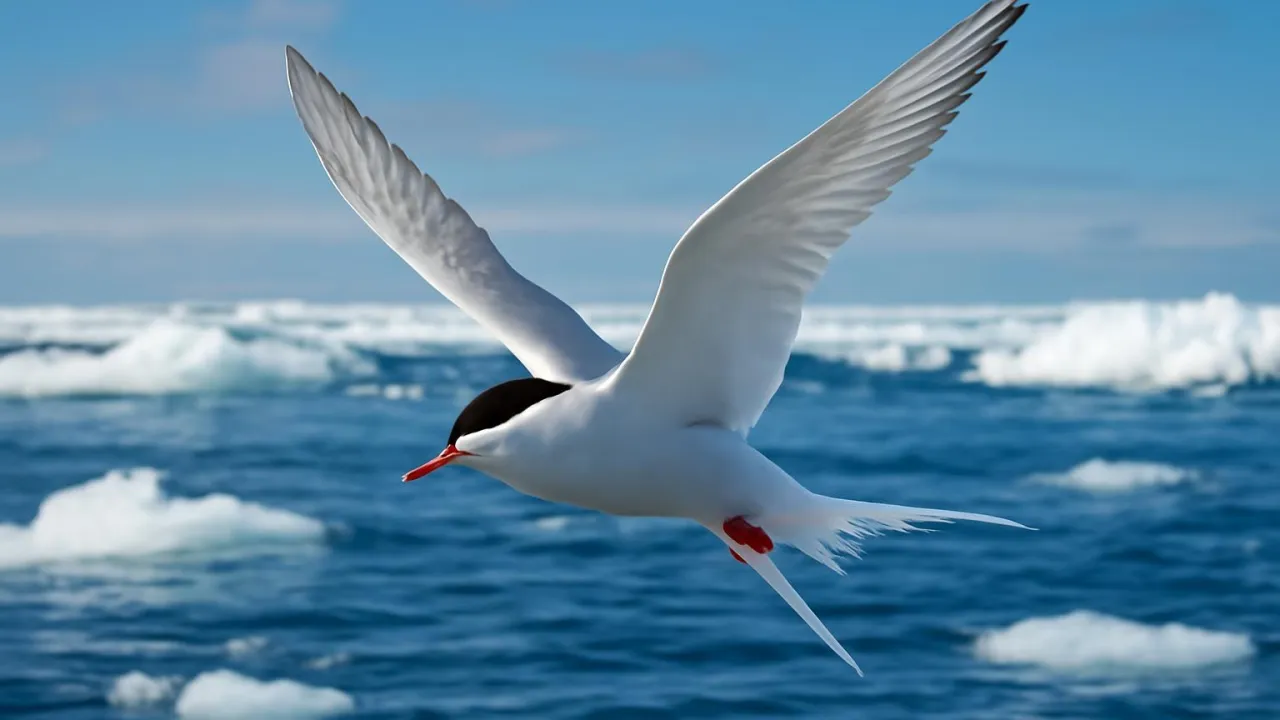
Arctic Terns fly farther than any other animal on Earth every year!
✨ Word Sparks (Grade 3 Glossary)
Tap 🔊 to hear
migration
Long travel to find food or better homes
adaptation
Body change that helps animals survive
ecosystem
A community of living things and their home
🪝
Why does the Arctic Tern make the longest migration on Earth?
1
Longest Migration in the World
The Arctic Tern migrates from the Arctic to the Antarctic every year. This bird travels about 25,000 miles annually. It uses its long wings to glide over oceans. This helps it find food and stay warm.
2
Body Adaptations for Flight
Its slender body and long wings reduce air resistance during flight. The red beak and feet help it catch slippery fish. The bird’s feathers provide insulation in cold climates. These help it survive harsh environments.
3
Habitat and Diet
The Arctic Tern lives near cold oceans and tundra. It feeds mainly on small fish and insects caught near the water surface. It uses sharp eyesight to spot prey from high above. Its diet provides the nutrients needed for long flights.
4
Role in the Ecosystem
The Arctic Tern helps control fish and insect populations in its habitat. It is prey for larger birds and mammals, fitting into the food web. Its links distant across the globe. This bird’s survival depends on healthy ocean environments.
1. What helps the Arctic Tern survive cold weather?
2. How does the Arctic Tern help its ecosystem?
🤯 Mind-Blowing Fact • Grade 4
The Arctic Tern’s migration covers more distance than flying to the Moon and back!
✨ Word Sparks (Grade 4 Glossary)
Tap 🔊 to hear
migration
Seasonal travel to find food and shelter
insulate
To keep warm by blocking cold air
biodiversity
Variety of living things in an area
🪝
How does the Arctic Tern’s migration affect ecosystems around the world?
1
Epic Yearly Journey
The Arctic Tern migrates annually from the Arctic to the Antarctic, traveling about 25,000 miles. This long trip allows it to experience two summers each year. By migrating, it avoids harsh winters and finds abundant food. Its long wings and streamlined body reduce energy use during flight.
2
Physical Adaptations and Survival
Its lightweight body and long, narrow wings provide excellent lift and maneuverability. The bird’s sharp beak helps catch small fish and insects near the water surface. Thick feathers it from cold temperatures in polar regions. These adaptations enable the tern to survive extreme conditions and long flights.
3
Ecosystem Role and Food Web
The Arctic Tern plays a vital role in marine food webs by controlling fish and insect populations. It serves as prey for larger birds and mammals, linking different levels of the food chain. Its connects diverse ecosystems across hemispheres, contributing to global . Human impacts like pollution and climate change threaten its habitats.
4
Geographic Range and Human Impact
This bird breeds in Arctic coastal areas and winters near Antarctica’s coasts. Climate change affects sea ice and fish availability, challenging its survival. Conservation efforts focus on protecting breeding sites and reducing pollution. Understanding its helps scientists monitor ocean health worldwide.
1. Why does the Arctic Tern migrate so far each year?
2. How do humans affect Arctic Terns?
🤯 Mind-Blowing Fact • Grade 5
Arctic Terns fly farther in a lifetime than the distance from Earth to the Moon and back multiple times!
✨ Word Sparks (Grade 5 Glossary)
Tap 🔊 to hear
aerodynamic
Shaped to move easily through the air
navigation
Finding the way during travel
trophic
Related to food chains and energy flow
🪝
What scientific secrets allow the Arctic Tern to fly farther than any other animal?
1
Scientific Classification and Migration
The Arctic Tern (Sterna paradisaea) belongs to the family Laridae and is renowned for its extraordinary migration. It annually travels approximately 25,000 miles between Arctic breeding grounds and Antarctic wintering areas. This migration is the longest known in the animal kingdom, showcasing remarkable endurance and skills. Scientists study its flight patterns to understand avian migration mechanisms.
2
Physiological Adaptations for Flight
This bird’s lightweight skeletal structure and wings reduce energy expenditure during long flights. Its muscles are adapted for sustained flapping and gliding over open oceans. The Arctic Tern’s efficient respiratory and circulatory systems support high oxygen demands. Additionally, its feathers provide waterproofing and insulation against extreme cold temperatures.
3
Conservation Status and Challenges
Although currently listed as Least Concern, Arctic Terns face threats from climate change, habitat loss, and pollution. Changes in sea ice patterns affect fish populations, their primary food source. Conservation efforts focus on monitoring populations and protecting critical breeding habitats. Understanding their migratory routes aids in global conservation strategies.
4
Ecological Importance and Food Web Dynamics
Arctic Terns play a crucial role in polar marine ecosystems by regulating fish and insect populations. They serve as prey for larger predators, linking levels within food webs. Their migration connects disparate ecosystems, facilitating nutrient cycling across hemispheres. Protecting Arctic Terns helps maintain biodiversity and ecosystem stability.
5
Quantitative Comparisons and Flight Mechanics
Arctic Terns fly up to 25,000 miles annually, surpassing the Moon’s distance from Earth, about 238,855 miles, in cumulative travel over their lifetime. They weigh approximately 100 grams and measure 35 centimeters in length. Their wingbeat frequency and gliding techniques optimize energy use during migration. These quantitative traits highlight their exceptional evolutionary adaptations.