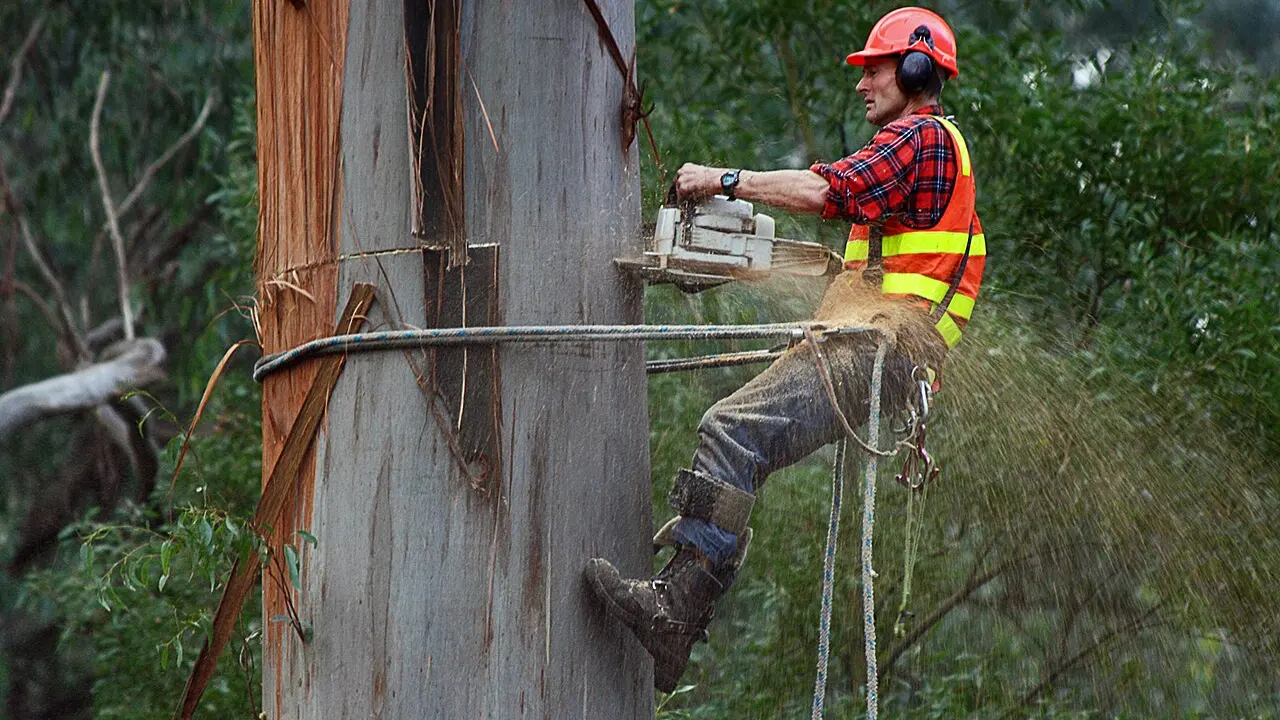
🏢 WorkplaceHigh up in leafy tree canopies, city parks, neighborhoods, and botanical gardens
⚡ Everyday Impact SparkHealing sick trees and pruning tall branches safely so communities stay shady and green
🤯 Mind-Blowing Fact • Grade 1
Professional arborists never wear sharp climbing spikes on healthy living trees because spikes poke holes in the bark!
✨ Word Sparks (Grade 1 Glossary)
Tap 🔊 to hear
canopy
The high leafy roof of trees
prune
To trim branches carefully for tree health
bark
The tough outer skin of a tree
🪝
Who climbs sixty feet up an oak tree wearing a helmet and ropes?
1
Up in the Leafy Top
Clip, clack! Strong ropes click onto a climbing belt. Wearing a bright helmet, a tree helper pulls up into high green branches. Meet the arborist, a doctor for trees!
2
Checking Bark and Leaves
Just like people, big trees can get sick or hurt in storms. Arborists look closely at roots, , and leaves. They trim broken limbs so trees stay safe.
3
Planting Cool Shade
Arborists also plant young trees in parks and yards. Healthy trees clean our air, make cool shade, and give birds cozy homes!
2. Why do arborists avoid wearing sharp leg spikes on healthy living trees?
🤯 Mind-Blowing Fact • Grade 2
One large, healthy shade tree cared for by an arborist can cool the air around it as much as ten room-sized air conditioners!
✨ Word Sparks (Grade 2 Glossary)
Tap 🔊 to hear
harness
Safety straps that hold a climber securely
compost
Rich decayed plants that feed soil
canopy
Spreading upper branches and leaves of trees
🪝
How does a tree doctor reach the very tip-top of a giant sycamore safely?
1
Rope Climbers of the Park
Whoosh! A small weighted throw-bag sails high over a sturdy fork in an elm tree, pulling a bright climbing rope behind it. Clipped into a padded saddle , an arborist glides smoothly upward into the sunlit .
2
Solving Tree Mysteries
When leaves turn yellow too early or hungry beetles chew under the bark, arborists investigate like detectives. They test the soil around roots, add rich , and prune dead branches before heavy winds can knock them down.
3
Picking the Right Tree
Arborists also help towns plant the right tree in the right spot—choosing shorter flowering dogwoods under overhead power lines and tall, sturdy shade oaks in wide open community parks!
1. How does an arborist get a climbing rope over a high branch?
2. What does 'right tree, right place' mean when arborists plant in cities?
🤯 Mind-Blowing Fact • Grade 3
Every summer, the International Society of Arboriculture holds Tree Climbing Championships where top arborists race through high canopies to rescue a dummy climber!
✨ Word Sparks (Grade 3 Glossary)
Tap 🔊 to hear
tomography
Imaging inside an object using waves
invasive
Spreading from elsewhere and harming local nature
collar
Swollen ring where branch meets tree trunk
🪝
How can an arborist look inside a 200-year-old oak trunk without cutting the tree down?
1
Listening to Heartwood
Tap, tap, tap! Standing beside a massive historic oak, an arborist taps tiny sound sensors placed carefully around the trunk. Much like a doctor's ultrasound, sonic measures how fast sound waves travel through wood—revealing whether the inside is solid or hollow without harming the living tree!
2
The Science of Pruning
Trees do not heal wounds by growing brand-new skin the way humans do; instead, they seal off damaged spots with special protective wood rings. Arborists study plant biology so they prune cleanly right outside the swollen branch , allowing the tree to close the cut naturally.
3
Guarding Against Invasive Pests
Arborists watch closely for insects like the emerald ash borer or spotted lanternfly. Spotting tiny bark holes early and giving gentle trunk treatments can save entire neighborhood streets lined with mature shade trees.
4
First Responders After Storms
When winter ice storms or summer hurricanes snap heavy limbs across roads and wires, specially trained utility arborists team up with bucket-truck and crane crews to clear hazards safely and restore neighborhood power.
1. How does sonic tomography help an arborist examine an old tree?
2. Why do arborists cut just outside the swollen branch collar when pruning?
🤯 Mind-Blowing Fact • Grade 4
Research shows that mature urban trees along a single city block can intercept thousands of gallons of rainwater each year, easing street flooding!
✨ Word Sparks (Grade 4 Glossary)
Tap 🔊 to hear
arboriculture
Science and care of individual trees
xylem
Tiny plant tubes carrying water upward
compacted
Pressed tightly together with little air space
🪝
Why does caring for a city tree require solving underground puzzles beneath sidewalks as well as climbing overhead?
1
Eighty Feet Above Main Street
Balanced comfortably inside a rope-and-pulley rigging harness eighty feet up a towering tulip poplar, a certified arborist inspects a split V-shaped fork swayed by autumn gusts. Down below, families stroll along brick sidewalks completely unaware of the careful physics, rope angles, and plant biology keeping tons of overhead timber sturdy and safe.
2
Solving the Underground Squeeze
Surprisingly, most urban tree problems begin right beneath our shoes! Unlike spongy forest soil cushioned with fallen autumn leaves, city soil gets packed rock-hard by footsteps, heavy trucks, and concrete sidewalks, squeezing out the oxygen and rainwater that tree roots need to breathe. Arborists use compressed-air 'air spades' to fluff dirt gently without slicing delicate feeder roots, then spread wood-chip mulch to hold moisture.
3
Vascular Systems and Tree Medicine
Inside every tree trunk, microscopic tubes called carry water and minerals skyward from roots while inner bark tubes called phloem transport sugary sap from sunlit leaves back down. When fungal blights or boring beetles threaten a landmark specimen, arborists can deliver targeted trunk micro-injections that travel right up the xylem highway without spraying mist into neighborhood air.
4
Growing Resilient Urban Forests
Municipal arborists map tens of thousands of street and park trees using satellite GPS software, tracking species diversity, stormwater absorption, and summer shade coverage so every community neighborhood enjoys cleaner air, cooler sidewalks, and thriving wildlife habitats.
1. Why do arborists sometimes use a compressed-air 'air spade' around city trees?
2. How do trunk micro-injections reach high leaves without spraying into the air?
🤯 Mind-Blowing Fact • Grade 5
At George Washington's Mount Vernon estate in Virginia, specialist arborists still care for tulip poplars and buckeyes actually planted under Washington's direction in the 1780s!
✨ Word Sparks (Grade 5 Glossary)
Tap 🔊 to hear
compartmentalization
Walling off damaged wood to stop decay
mycorrhizal
Helpful fungi partnering with plant roots
rigging
Ropes and pulleys controlling heavy branch loads
🪝
How do arborists combine biomechanical rigging, plant pathology, and climate planning to steward centuries-old trees?
1
Canopy Physics in Three Dimensions
Suspended ninety feet high inside the spreading crown of a heritage white oak, an ISA Certified Arborist calculates rope vector angles and friction ratios before lowering a 600-pound storm-cracked limb directly above a fragile Victorian glass conservatory. Using high-strength braided synthetic lines, basal friction brakes, and anodized pulley blocks, skilled arborists control dynamic shock loads so massive sections of timber float gently to earth with millimeter precision.
2
CODIT: How Trees Wall Off Decay
Modern scientific arboriculture was transformed in the 1970s by U.S. Forest Service researcher Dr. Alex Shigo, who discovered of Decay in Trees (CODIT). Because woody perennial plants cannot replace injured cells through cell division like animal skin, trees construct four chemical and anatomical 'walls' around wounds to block wood-rotting fungi from spreading inward, sideways, or vertically. Arborists honor CODIT by avoiding flush trunk cuts, skipping messy tar wound paints that trap moisture, and preserving each branch collar's natural defense zone.
3
Diagnosing Complex Stressors
Declining upper crowns rarely stem from a single cause. Consulting arborists run laboratory leaf-tissue analyses for iron or manganese deficiencies, test soil pH and beneficial fungi partnerships around root flares, and pair resistance micro-drills with sonic tomographs to calculate exact wind-load safety margins on historic monuments—including the 230-year-old tulip poplars still towering over George Washington's Mount Vernon estate in Virginia.
4
Urban Heat Islands and Canopy Equity
Because dark asphalt roofs and streets absorb intense solar radiation, treeless city blocks can sizzle 10°F to 15°F hotter on August afternoons than nearby shaded avenues. Urban forestry arborists collaborate with civil engineers to install load-bearing structural soil cells beneath sidewalks—giving roots uncompacted room to grow—and plant drought-tolerant, genetically diverse species so no single pest like Dutch elm disease can wipe out an entire town's canopy.
5
Training for Life in the Treetops
Career arborists train through hands-on apprenticeships or university degrees in urban forestry, horticulture, and plant pathology, mastering chainsaw mechanics, aerial climber rescue, electrical-line clearance protocols, and International Society of Arboriculture certification exams to safeguard living monuments that shelter communities across generations.