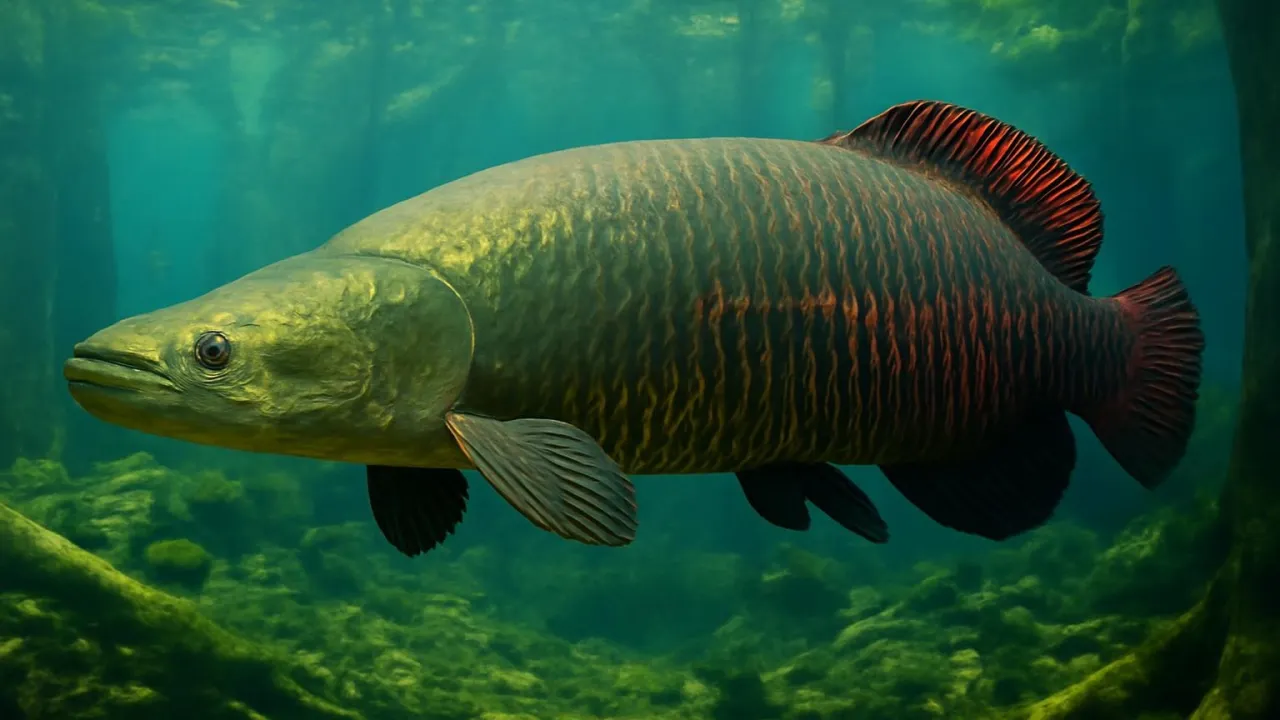
Arapaima can grow up to 15 feet long, making it one of the largest freshwater fish.
✨ Word Sparks (Grade 2 Glossary)
Tap 🔊 to hear
Amazon
A huge river in South America
organ
A body part that does a special job
oxygen
The air we breathe to live
🪝
Have you ever heard of a fish that breathes air to survive?
1
A Giant Fish in the Amazon
The arapaima lives in the River. It can grow very large and long. It swims slowly through the water. It has shiny, tough scales that protect it.
2
Breathing Air to Stay Alive
This fish breathes air from the surface of the water. It must come up often to breathe. It uses a special to take air in. This helps it live where water has little .
3
What the Arapaima Eats
Arapaima eats smaller fish and frogs in the river. It hunts near the water’s surface. It uses its sharp teeth to catch food. This fish needs plenty of food to grow big.
Arapaima’s labyrinth organ lets it breathe air, making it unique among many fish.
✨ Word Sparks (Grade 3 Glossary)
Tap 🔊 to hear
labyrinth organ
A special organ that helps fish breathe air
carnivore
An animal that eats other animals
camouflage
Colors that help animals hide in nature
🪝
Did you know the arapaima uses a special lung to survive underwater?
1
Arapaima’s Giant Size and Habitat
The arapaima is one of the largest freshwater fish in the Amazon Basin. It can grow up to 15 feet long and weigh over 400 pounds. This fish lives in slow-moving rivers and flooded forests. Its large size helps it avoid many predators.
2
Breathing Air with a Lung-Like Organ
Unlike most fish, the arapaima breathes air using a lung-like organ called a . This adaptation allows it to survive in water with low oxygen levels. It surfaces every 15 to 20 minutes to gulp air. This breathing method helps it live in warm, oxygen-poor waters.
3
How It Hunts and Eats
Arapaima is a that hunts fish and small animals near the water’s surface. Its sharp teeth help it catch slippery prey quickly. The fish’s strong muscles allow it to make sudden bursts of speed. This helps it catch food and avoid predators.
4
Scales and Camouflage
The arapaima’s large, thick scales protect it from attacks by predators and parasites. Its dark green and reddish colors help it blend into the river environment. This is an important adaptation for survival. It hides well among plants and shadows.
1. What special organ helps the arapaima breathe air?
2. Why do the arapaima’s colors help it?
🤯 Mind-Blowing Fact • Grade 4
Arapaima’s air-breathing ability allows it to survive in oxygen-poor waters where many fish cannot live.
✨ Word Sparks (Grade 4 Glossary)
Tap 🔊 to hear
ecosystem
A community of living things and their home
symbiotic
A helpful relationship between two animals
conservation
Protecting animals and plants from harm
🪝
How does the arapaima’s unique breathing help it thrive in the Amazon River?
1
Giant Fish of the Amazon Basin
The arapaima, native to the Amazon Basin, can reach lengths of up to 15 feet and weigh over 400 pounds. Its enormous size helps maintain its position as a top predator in the freshwater . The fish inhabits slow-moving rivers and flooded forests where oxygen levels often drop. This environment challenges many aquatic animals but suits the arapaima well.
2
Adaptation: Breathing Air to Survive
Arapaima has evolved a labyrinth organ that allows it to breathe atmospheric air. This adaptation is crucial because the Amazon’s warm waters often have low oxygen content. By surfacing every 15 to 20 minutes, the arapaima can gulp air and survive where other fish might suffocate. This breathing method directly affects its ability to thrive in oxygen-poor waters.
3
Role in the Ecosystem and Human Impact
As a large predator, the arapaima plays a key role in controlling fish populations, maintaining balance in the food web. It also has a relationship with some smaller fish that clean parasites from its body. However, overfishing and habitat destruction have threatened arapaima populations. efforts focus on sustainable fishing and habitat protection to preserve this species.
4
Geographic Distribution and Habitat
The arapaima is found mainly in the Amazon River and its tributaries across Brazil, Peru, and Colombia. It prefers warm, slow-moving waters with dense vegetation. Seasonal flooding expands its habitat, allowing it to access new feeding grounds. This distribution highlights the importance of protecting the Amazon .
2. What is one way humans affect arapaima populations?
🤯 Mind-Blowing Fact • Grade 5
Arapaima’s labyrinth organ allows it to breathe air, letting it survive in waters where other fish cannot.
✨ Word Sparks (Grade 5 Glossary)
Tap 🔊 to hear
labyrinth organ
A special organ that helps fish breathe air
hypoxic
Water with very low oxygen levels
apex predator
Top animal that hunts others in its home
🪝
What makes the arapaima’s breathing system a rare adaptation among giant freshwater fish?
1
Scientific Classification and Size
The arapaima, scientifically named Arapaima gigas, belongs to the family Arapaimidae. It is one of the largest freshwater fish globally, reaching lengths up to 15 feet and weights exceeding 440 pounds. This fish’s massive size places it among in the Amazon Basin. Its size and strength allow it to dominate its aquatic environment effectively.
2
Physiological Adaptations for Breathing
Arapaima gigas possesses a highly specialized that functions similarly to lungs, enabling it to extract oxygen directly from the air. This organ supplements its gills, which alone cannot provide sufficient oxygen in Amazonian waters. The fish surfaces every 15 to 20 minutes to gulp air, maintaining its metabolic needs. This dual respiratory system is a remarkable evolutionary adaptation.
3
Ecological Role and Conservation History
As a top predator, the arapaima regulates populations of smaller fish species, maintaining ecological balance. Historically, indigenous communities have sustainably fished arapaima for food and cultural purposes. However, recent overfishing and habitat degradation have caused population declines. Conservation programs now focus on regulated fishing and habitat restoration to ensure the species’ survival.
4
Habitat Range and Environmental Conditions
The arapaima inhabits the Amazon River and its tributaries across Brazil, Peru, and Colombia, favoring warm, slow-moving waters with dense aquatic vegetation. Seasonal flooding expands its habitat, providing increased feeding opportunities. Water temperatures in its habitat range from 75 to 86 degrees Fahrenheit. These environmental factors influence its behavior and reproductive cycles.
5
Comparative Facts and Unique Features
Compared to other freshwater fish, the arapaima grows faster and larger, reaching lengths three times longer than most species. It can weigh over 440 pounds, which is heavier than many adult humans. Its air-breathing ability allows survival in oxygen-poor waters that would suffocate other fish. The arapaima’s scales are among the largest and toughest, providing protection against predators and parasites.