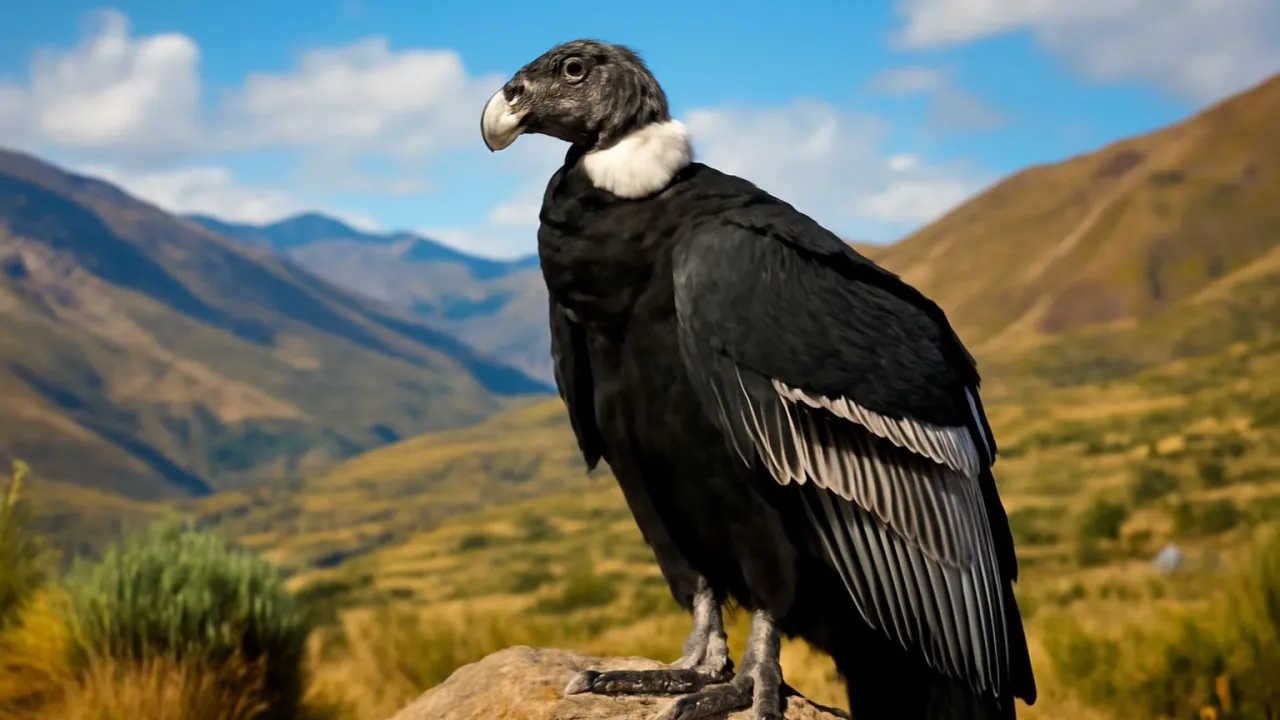
The Andean Condor can fly up to 18,000 feet high, higher than many airplanes!
✨ Word Sparks (Grade 2 Glossary)
Tap 🔊 to hear
wingspan
The full width of a bird’s wings when spread
carrion
Dead animals that some birds eat for food
cliffs
Steep rocks where birds build nests and rest
🪝
Have you ever seen a bird with wings wider than a car?
1
A Giant Bird
The Andean Condor has a that can reach over ten feet wide. It uses these big wings to soar high above the mountains. This bird can glide without flapping for hours at a time.
2
Mountain Home
It lives in the Andes Mountains in South America where the air is thin and cold. The condor nests on rocky where it is safe from predators. These high places help it find warm air currents to glide.
3
Eating Dead Animals
The Andean Condor eats , which means dead animals it finds on the ground. This helps keep the environment clean and healthy. It has a strong beak to tear meat from bones.
Andean Condors can fly as high as 18,000 feet, higher than most birds in the world.
✨ Word Sparks (Grade 3 Glossary)
Tap 🔊 to hear
thermals
Warm air that rises and helps birds glide
scavenger
An animal that eats dead plants or animals
camouflage
Colors or patterns that help hide animals
🪝
How does the Andean Condor use its huge wings to survive in the mountains?
1
Soaring on Air Currents
The Andean Condor’s wingspan can reach over ten feet, allowing it to soar easily. It uses thermal air currents to glide without flapping its wings. This adaptation helps it save energy while searching for food. Soaring high helps it spot carrion from far away.
2
Mountain Habitat and Nesting
This bird lives mainly in the Andes Mountains where rocky cliffs provide safe nesting spots. The cliffs protect the condor from predators and harsh weather. The high altitude also gives it access to warm rising air for flight. Its dark feathers help it blend with rocky surroundings, a form of .
3
Diet and Role in Ecosystem
As a , the condor feeds on carrion, dead animals found on the ground. Eating carrion helps recycle nutrients back into the ecosystem. Its strong hooked beak tears tough flesh from bones. This cleaning role prevents disease spread and supports other animals.
4
Physical Features and Adaptations
The condor’s bald head helps keep it clean while feeding on carcasses. Its large wings have special feathers for silent flight. Strong legs and sharp talons help it hold food while eating. These features are important adaptations for survival in its harsh environment.
The Andean Condor’s wingspan is the largest of any land bird, reaching over 10 feet wide.
✨ Word Sparks (Grade 4 Glossary)
Tap 🔊 to hear
thermals
Rising warm air that helps birds soar high
scavenger
An animal that eats dead plants or animals
conservation
Efforts to protect animals and their homes
🪝
What makes the Andean Condor a key player in the mountain ecosystem?
1
Master of Soaring Flight
The Andean Condor uses its enormous wingspan to soar on thermal air currents for hours without flapping. This energy-saving flight allows it to cover vast mountain areas searching for food. Because it can fly up to 18,000 feet, it accesses air layers many other birds cannot reach. This ability helps it avoid predators and spot carrion from great distances.
2
Mountain Habitat and Geographic Range
This species inhabits the Andes Mountains across South America, from Venezuela to Chile and Argentina. It prefers open grasslands and rocky cliffs for nesting and roosting. The high altitude provides warm and safety from ground predators. However, habitat loss and human disturbance threaten some populations.
3
Ecological Role and Food Web
As a , the condor plays a vital role in its ecosystem by consuming dead animals, which recycles nutrients and prevents disease spread. It forms part of a food web that includes predators and decomposers. The condor’s feeding habits support the health of other wildlife and maintain balance in the environment.
4
Human Impact and Conservation
Human activities such as hunting, poisoning, and habitat destruction have reduced condor numbers. efforts include protected areas, captive breeding, and education programs to raise awareness. These actions aim to stabilize and increase condor populations in the wild. The condor is a national symbol in several Andean countries, highlighting its cultural importance.
The Andean Condor’s wingspan is wider than a small car and it can fly higher than many airplanes.
✨ Word Sparks (Grade 5 Glossary)
Tap 🔊 to hear
taxonomy
How scientists group living things by traits
respiratory
Related to breathing and air flow in animals
thermoregulation
How animals keep their body temperature steady
🪝
How does the Andean Condor’s biology and behavior make it a unique giant scavenger of the Andes?
1
Taxonomy and Scientific Classification
The Andean Condor (Vultur gryphus) belongs to the family Cathartidae, which includes New World vultures. It is one of the largest flying birds by wingspan, classified in the order Accipitriformes. Its evolutionary adaptations are specialized for soaring flight and scavenging in mountainous habitats. This taxonomic placement highlights its distinct ecological niche among raptors.
2
Physiological Mechanics of Flight
The condor’s wingspan can reach 3.2 meters, enabling it to glide on thermal updrafts with minimal wing flapping. Its large primary feathers allow silent flight and precise control during soaring. The bird’s lightweight skeletal structure reduces energy expenditure. Additionally, its efficient system supports high-altitude flight where oxygen levels are low.
3
Ecological Role and Conservation History
As a scavenger, the Andean Condor plays a critical role in nutrient recycling by consuming carrion, which prevents disease outbreaks. Historically, populations declined due to poisoning, hunting, and habitat fragmentation. Conservation programs including captive breeding and habitat protection have helped stabilize numbers. The condor is culturally significant, symbolizing power and freedom in Andean cultures.
4
Adaptations for Survival in Harsh Environments
The condor’s bald head reduces bacterial growth when feeding on carcasses, an important adaptation for hygiene. Its strong hooked beak tears through tough hides and muscle. Large feet and talons secure food while feeding. Furthermore, its dark plumage absorbs sunlight, aiding during cold mountain mornings.
5
Quantitative Comparisons and Unique Features
The Andean Condor’s wingspan exceeds 10.5 feet, making it the largest land bird by wingspan. It can soar at altitudes up to 18,000 feet, higher than most other birds. Adults weigh between 24 and 33 pounds (11 to 15 kilograms). Its flight speed can reach 55 miles per hour during dives. These impressive measurements highlight its dominance as a giant scavenger.