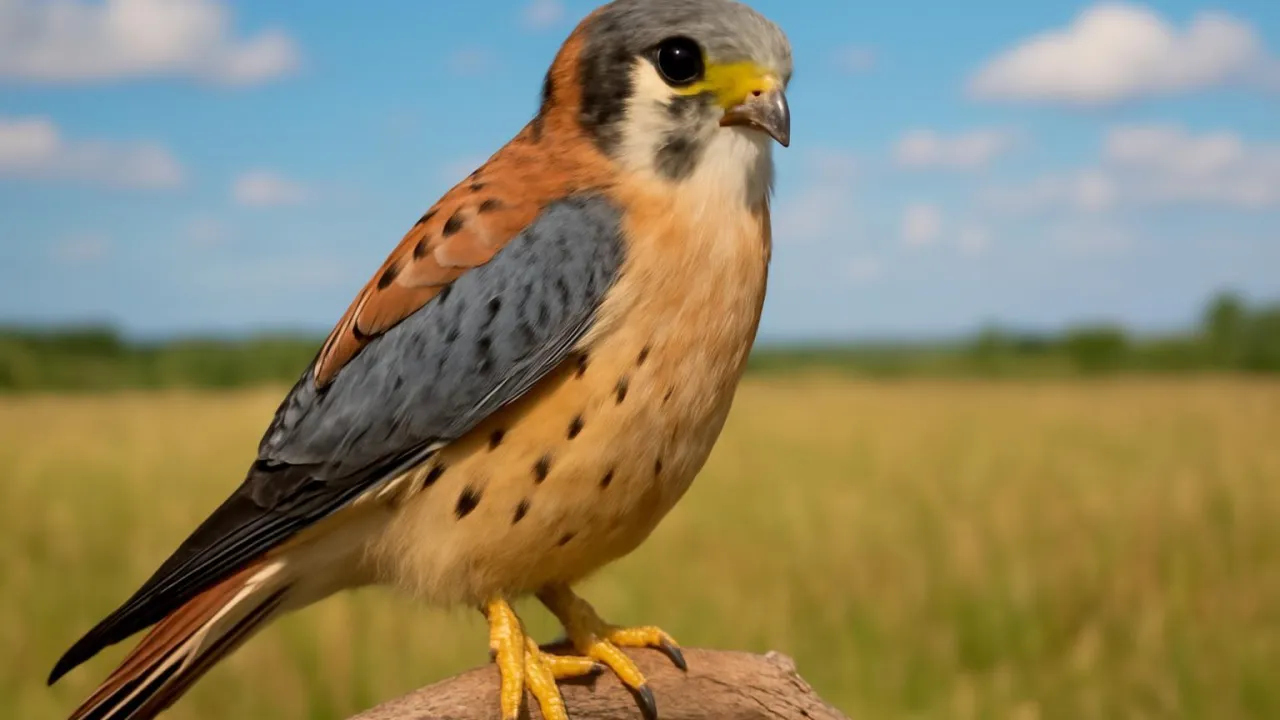
American Kestrels can hover in one spot while hunting for food below!
✨ Word Sparks (Grade 2 Glossary)
Tap 🔊 to hear
prey
Animals that are hunted for food
habitat
The place where an animal lives
falcon
A fast bird that hunts other animals
🪝
Can you imagine a bird that hovers like a tiny helicopter in the sky?
1
Bright and Small
The American Kestrel has bright blue and rusty orange feathers that shine in sunlight. It uses these colors to blend into trees and open fields where it hunts. Its sharp eyes help it spot from high above.
2
Hovering Hunter
This bird can hover in the air while looking for below. It eats insects, small birds, and rodents. Hovering helps it spot moving animals easily before swooping down.
3
Home and Habitat
American Kestrels live in open fields, meadows, and even cities. They build nests in tree holes or old woodpecker nests. They like places where they can see their clearly.
American Kestrels can hover in the air for over 30 seconds while hunting prey!
✨ Word Sparks (Grade 3 Glossary)
Tap 🔊 to hear
camouflage
Colors that help animals hide
talons
Sharp claws used to catch prey
ecosystem
All living things in one place
🪝
How does a tiny falcon catch its prey while hovering in the air?
1
Small but Colorful Falcon
The American Kestrel is the smallest falcon in North America. Its feathers are bright blue on the wings and rusty orange on the back. This coloring helps it among trees and grass. Its sharp eyes allow it to spot prey from far away.
2
Hovering and Hunting Skills
Kestrels use their special ability to hover in one spot while searching for prey. This adaptation helps them see insects and rodents clearly on the ground. When they spot prey, they dive quickly to catch it with sharp .
3
Habitat and Nesting
American Kestrels live in open habitats like fields, meadows, and even cities. They nest in tree cavities or abandoned woodpecker holes. Their choice of nesting spots protects them from predators and harsh weather.
4
Role in the Ecosystem
As predators, kestrels help control insect and rodent populations. This role supports a balanced food web in their habitat. Their presence also benefits farmers by reducing crop pests naturally.
American Kestrels can hover for long periods, using this skill to spot prey from great heights.
✨ Word Sparks (Grade 4 Glossary)
Tap 🔊 to hear
adaptation
A change that helps animals survive
predator
An animal that hunts other animals
pesticide
Chemicals that kill bugs or plants
🪝
What makes the American Kestrel’s hovering flight so important for survival?
1
Adaptations for Hunting
The American Kestrel has adapted to hover in midair, which allows it to scan the ground carefully for prey. Its keen eyesight and ability to remain still in the air give it an advantage over other birds. This hovering behavior is a key that helps kestrels catch insects, small birds, and rodents efficiently.
2
Ecosystem Role and Food Web
As a , the kestrel plays an important role in controlling the populations of insects and small mammals in its ecosystem. This helps maintain balance in the food web by preventing overpopulation of these species. Additionally, kestrels benefit farmers by naturally reducing pests that damage crops.
3
Habitat and Geographic Range
American Kestrels inhabit a wide range of environments from open fields and grasslands to urban areas across North and South America. They prefer open spaces where they can hover and hunt effectively. Human development has both created new habitats and posed challenges for kestrel populations.
4
Human Impact and Conservation
While kestrels have adapted to some urban areas, habitat loss and use threaten their numbers. Conservation efforts focus on protecting nesting sites and reducing harmful chemicals. Installing nest boxes helps support kestrel populations in areas where natural cavities are scarce.
American Kestrels can dive at speeds up to 40 miles per hour while hovering to catch prey precisely.
✨ Word Sparks (Grade 5 Glossary)
Tap 🔊 to hear
sexual dimorphism
Males and females look different
hovering
Staying still in the air while flying
ecological balance
Keeping nature’s living things in harmony
🪝
How do the American Kestrel’s unique adaptations enable it to thrive across diverse habitats?
1
Taxonomy and Scientific Context
The American Kestrel, scientifically named Falco sparverius, is the smallest falcon species in the Americas. It belongs to the Falconidae family, which includes fast and agile birds of prey. This species exhibits , with males and females showing distinct feather coloration patterns. These differences help with mating and camouflage.
2
Physiological Mechanics of Flight
Kestrels possess specialized wing and tail structures that enable precise flight by balancing lift and thrust. Their powerful flight muscles allow them to maintain a stationary position midair while scanning for prey. This hovering ability is rare among falcons and crucial for their hunting strategy. It requires great energy and control.
3
Ecological Role and Conservation History
American Kestrels play a vital role in controlling insect and small mammal populations, thus maintaining . Historically, habitat destruction and pesticide use caused population declines, but conservation efforts including nest box programs have helped stabilize some populations. Protecting natural habitats remains essential for their survival.
4
Geographic Distribution and Habitat Adaptations
This species ranges from Alaska and Canada through the United States and Central America down to South America’s southern regions. It adapts to diverse habitats, including grasslands, deserts, and urban environments, showing remarkable ecological flexibility. Urban kestrels often use man-made structures for nesting.
5
Quantitative Comparisons and Behavior
American Kestrels measure about 9 to 12 inches in length and weigh approximately 3 to 5 ounces. They can hover for up to 30 seconds while hunting and dive at speeds reaching 40 miles per hour. Their sharp talons and keen eyesight make them efficient predators despite their small size. These traits allow them to survive in many environments.