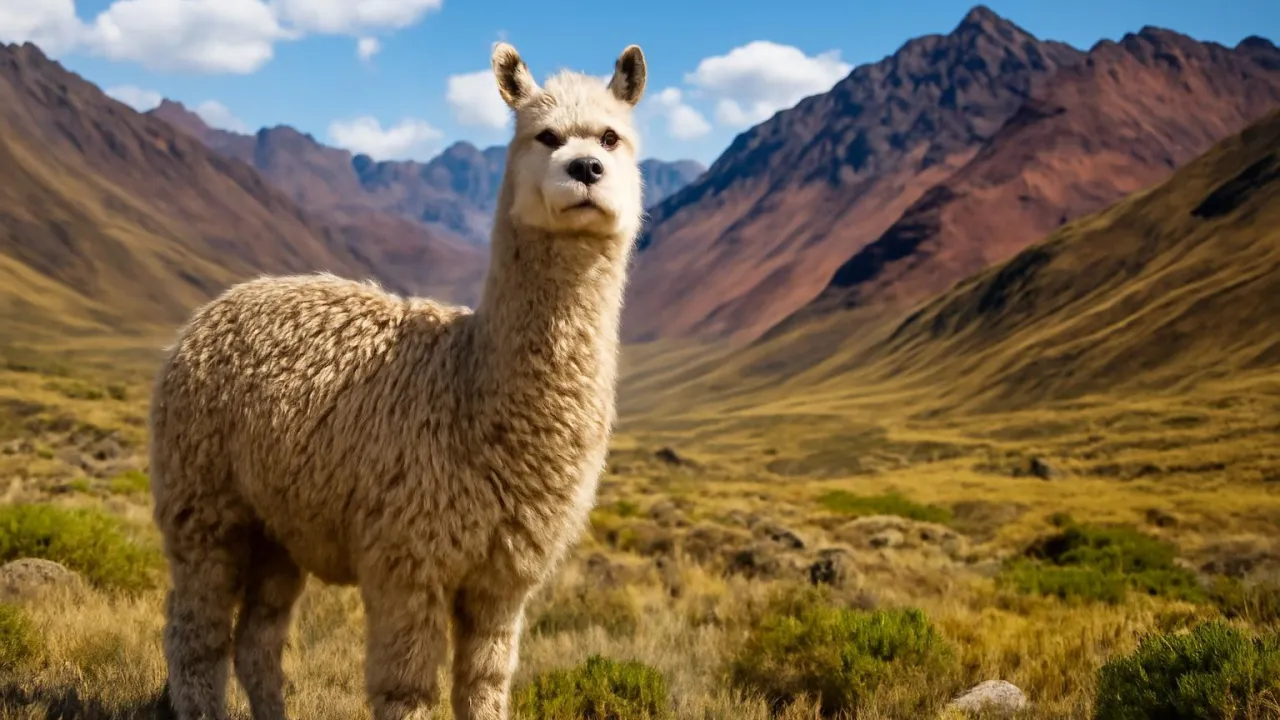
Alpaca wool is warmer and lighter than sheep’s wool, making it very special!
✨ Word Sparks (Grade 2 Glossary)
Tap 🔊 to hear
wool
Soft hair used to make warm clothes
Andes
Tall mountains in South America
digest
How animals break down food inside
🪝
Have you ever touched the soft fur of an alpaca?
1
Alpaca Fur
Alpacas have very soft fur that keeps them warm in cold weather. Their is used to make cozy clothes and blankets. People love how soft and light alpaca wool feels.
2
Mountain Home
Alpacas live high in the Mountains where it is chilly and windy. They live on grassy slopes that provide food and shelter. These mountains are in South America.
3
Eating Habits
Alpacas eat grass and leaves from plants that grow around them. They chew their food slowly to it well. They also drink fresh water from mountain streams.
Alpacas have three stomach chambers to digest tough mountain plants efficiently!
✨ Word Sparks (Grade 3 Glossary)
Tap 🔊 to hear
adaptation
A change that helps animals survive
camouflage
Colors that help animals hide
herbivore
An animal that eats plants only
🪝
Did you know alpacas use their soft wool to survive cold mountain weather?
1
Amazing Wool
Alpacas produce soft wool that helps them stay warm in cold climates. Their wool has tiny air pockets that trap heat. This protects them from freezing mountain winds. People harvest this wool to make clothing.
2
Mountain Habitat
Alpacas live in the high Andes Mountains where temperatures drop below freezing. Their habitat has grassy fields and rocky slopes. These animals are well adapted to thin air and cold weather. They use to blend with the dry grass.
3
Feeding and Digestion
Alpacas are that eat grass, leaves, and shrubs. They chew cud, which means they regurgitate and chew food again to digest better. This helps them get nutrients from tough mountain plants. Their stomachs have multiple chambers for digestion.
4
Social Animals
Alpacas live in herds to protect each other from predators like foxes. They communicate using humming sounds and body language. Herd life helps them stay safe and find food easily. Their social behavior is important for survival.
Alpaca wool is warmer and lighter than sheep’s wool, making it one of the best natural fibers!
✨ Word Sparks (Grade 4 Glossary)
Tap 🔊 to hear
insulate
Keep heat or cold from passing through
manure
Animal poop that helps plants grow
domesticated
Tamed and raised by people
🪝
How does the alpaca’s wool help it survive in harsh mountain environments?
1
Wool and Survival
Alpacas have dense, soft wool that them from cold mountain winds and freezing temperatures. This wool traps warm air close to their skin, allowing them to maintain body heat. Because of this, alpacas can live comfortably at high altitudes. Humans harvest alpaca wool for its warmth and softness.
2
Ecosystem Role
Alpacas play an important role in Andean ecosystems by grazing on grasses, which helps control plant growth. Their fertilizes the soil, supporting other plants and animals. They also serve as prey for predators like pumas, contributing to the food web. This balance helps maintain a healthy mountain environment.
3
Geographic Range
Alpacas are native to the Andes Mountains of South America, mainly in Peru, Bolivia, and Chile. They thrive in elevations between 10,000 and 16,000 feet where temperatures can be very cold. Their thick wool and strong legs help them navigate rocky, steep terrain. Farmers raise alpacas in these regions for their valuable fleece.
4
Human Impact
Humans have alpacas for thousands of years, selectively breeding them for finer wool and better health. Overgrazing by alpacas can sometimes harm fragile mountain plants, so farmers manage herds carefully. Conservation efforts focus on protecting wild relatives and preserving native habitats. Sustainable farming supports both people and alpacas.
Alpaca wool fibers are hollow, making them lighter and warmer than almost all other natural fibers!
✨ Word Sparks (Grade 5 Glossary)
Tap 🔊 to hear
camelid
Family of animals like camels and llamas
insulation
Material that keeps heat or cold in
micron
A tiny unit to measure fiber thickness
🪝
What makes the alpaca’s wool scientifically unique among mountain mammals?
1
Scientific Classification and Origins
The alpaca, scientifically named Vicugna pacos, belongs to the family, which includes llamas and camels. It was domesticated around 6,000 years ago in the Andes Mountains of South America. Alpacas descend from the wild vicuña, adapting over millennia to high-altitude environments. Their evolutionary history reflects selective breeding for soft wool and docile behavior.
2
Physiological Adaptations
Alpacas possess a unique respiratory system that efficiently extracts oxygen in thin mountain air. Their thick fleece contains fine, hollow fibers that trap air, providing exceptional against cold temperatures. These hollow fibers reduce the wool’s weight while maximizing warmth. Additionally, alpacas have padded feet that protect delicate mountain soils and help with traction on rocky terrain.
3
Conservation and Agricultural Importance
Alpacas are vital to Andean agriculture, providing wool that supports local economies through textile production. Conservation efforts focus on protecting wild relatives like the vicuña and preserving native grasslands. Sustainable alpaca farming balances wool harvesting with environmental stewardship to prevent overgrazing and habitat degradation. These practices ensure alpacas remain a renewable resource for future generations.
4
Quantitative Comparisons
Adult alpacas typically weigh between 100 and 200 pounds (45 to 90 kilograms) and stand about 3 feet (0.9 meters) tall at the shoulder. Their wool fibers average 18 to 25 in diameter, which is finer than most sheep wool. Alpacas can survive temperatures ranging from below freezing to over 80 degrees Fahrenheit (27 degrees Celsius). Their fleece is prized for being both lightweight and highly insulating.
5
Cultural and Economic Impact
Alpacas have been culturally significant to Andean peoples for thousands of years, symbolizing wealth and status. Their wool is woven into traditional textiles that are sold worldwide, supporting indigenous communities. Modern alpaca farming combines ancient knowledge with contemporary techniques to improve fiber quality. This blend of culture and science sustains alpaca populations and preserves mountain heritage.