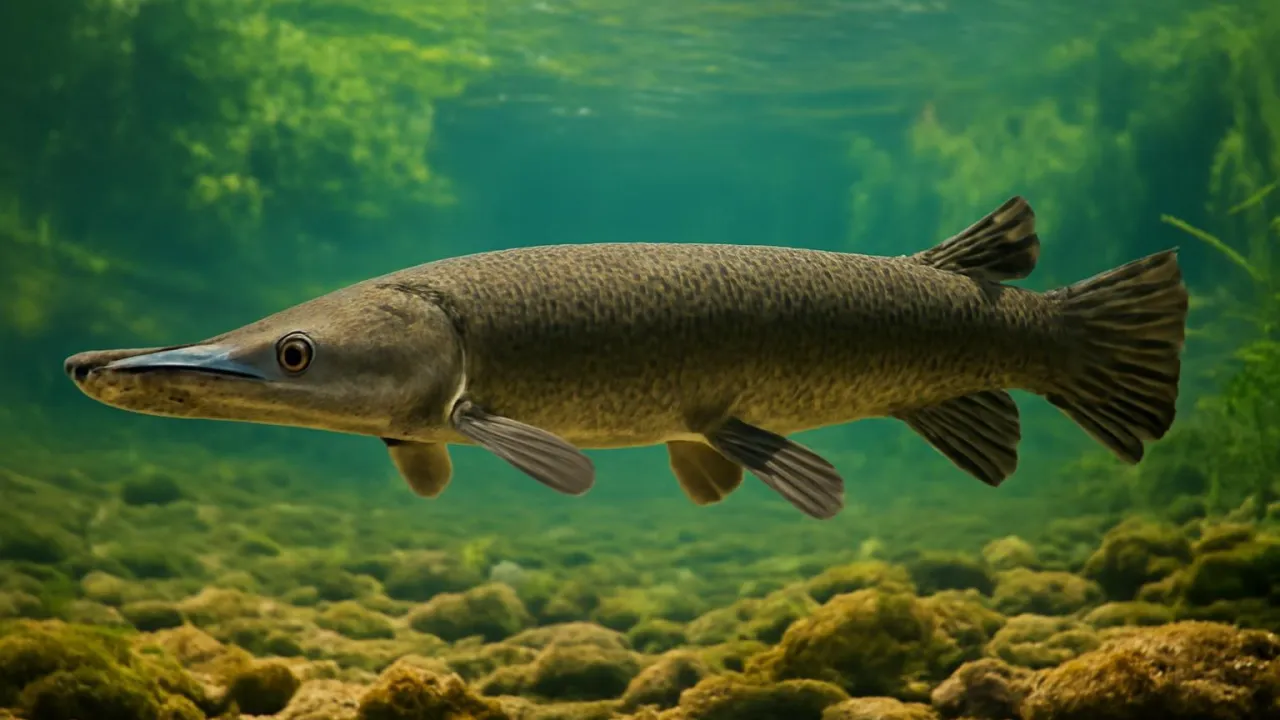
Alligator gars have been around since the time of dinosaurs!
✨ Word Sparks (Grade 2 Glossary)
Tap 🔊 to hear
scales
Small plates that cover a fish’s body
prey
Animals that are hunted for food
habitat
The place where an animal lives
🪝
Have you ever seen a fish with teeth like a crocodile?
1
A Fish with Teeth Like an Alligator
The alligator gar has long sharp teeth that look like an alligator’s. It swims slowly in fresh water. It uses its teeth to catch fish and crabs. Its body is covered with hard for protection.
2
Where It Lives and Grows
This fish lives in rivers and lakes in the southern United States. It hides near plants and logs in the water. Young alligator gars grow fast and eat small fish. Adults can grow very large, up to ten feet long.
3
How It Hunts and Eats
The alligator gar waits quietly to catch its . It snaps its strong jaws very fast. Its sharp teeth help it hold slippery fish and crabs. This fish needs to eat often to stay healthy and strong.
Alligator gars are called 'living fossils' because they have changed very little for millions of years.
✨ Word Sparks (Grade 3 Glossary)
Tap 🔊 to hear
camouflage
Colors or patterns that help hide animals
predator
An animal that hunts other animals
apex
The top or highest part, like a predator
🪝
What makes the alligator gar’s armor help it stay safe underwater?
1
Armor-Like Scales Protect the Fish
The alligator gar has tough, armor-like scales covering its body. These scales protect it from and sharp objects in the water. Its long snout is full of sharp teeth for catching prey. This fish uses its armor and teeth to survive in rivers.
2
Living and Hunting in Murky Water
Alligator gars live in slow rivers and lakes with many plants. Their colors help them blend in with the murky water. They wait quietly to catch fish and crabs with strong jaws. This helps them avoid bigger .
3
Growing from Eggs to Giant Fish
Alligator gars start life as eggs laid on underwater plants. The young fish eat small insects and tiny fish to grow. As they get bigger, they develop stronger jaws and sharper teeth. Adults can grow up to ten feet long and weigh many pounds.
4
Helping Keep the Water Healthy
Alligator gars are top in their freshwater homes. They eat weak or sick fish, which helps keep fish populations healthy. People fish for them sometimes, but they need protection. Their presence shows a balanced and healthy ecosystem.
2. What is one role of alligator gars in their ecosystem?
🤯 Mind-Blowing Fact • Grade 4
Alligator gars’ ganoid scales are so tough they can resist some fishing hooks and arrows.
✨ Word Sparks (Grade 4 Glossary)
Tap 🔊 to hear
ganoid scales
Hard, shiny scales that protect some fish
apex predator
Top hunter with no natural enemies
ecosystem
A community of living things and their environment
🪝
How does the alligator gar’s ancient design help it thrive in modern waters?
1
Ancient Armor and Powerful Jaws
The alligator gar’s body is covered in that act like armor, protecting it from predators and injury. Its long snout holds sharp, needle-like teeth that allow it to catch and hold slippery prey effectively. This fish’s powerful bite is a key adaptation for hunting in murky freshwater habitats. These features have helped the species survive since prehistoric times.
2
Freshwater Habitat and Geographic Range
Alligator gars inhabit slow-moving rivers, lakes, and bayous primarily in the southern United States, including Texas and Louisiana. They prefer waters with abundant aquatic vegetation that provides cover and hunting grounds. Seasonal water temperature changes affect their activity and feeding patterns. Human impacts like pollution and habitat loss threaten their natural range.
3
Ecological Role and Food Web Impact
As , alligator gars regulate populations of smaller fish and crustaceans, maintaining balance. They consume weak or sick individuals, which helps prevent disease spread among fish communities. Their presence supports healthy aquatic food webs and biodiversity. Humans sometimes harvest them, but sustainable practices are needed to protect their populations.
4
Conservation and Human Interaction
Conservation efforts focus on protecting alligator gar habitats and monitoring populations to prevent overfishing. These fish are sometimes misunderstood and feared due to their fierce appearance, but they are important for health. Education programs help people appreciate their ecological role and promote coexistence. Restoring wetlands benefits both alligator gars and other wildlife.
2. Why are alligator gars important in their ecosystems?
🤯 Mind-Blowing Fact • Grade 5
Alligator gars can breathe air using their swim bladder, allowing survival in low-oxygen water.
✨ Word Sparks (Grade 5 Glossary)
Tap 🔊 to hear
ganoid scales
Hard, shiny fish scales that act like armor
swim bladder
An organ that helps fish float and breathe air
apex predator
Top animal hunter with no natural enemies
🪝
How do alligator gars combine ancient traits and modern survival skills in freshwater habitats?
1
Scientific Classification and Evolutionary History
The alligator gar, scientifically named Atractosteus spatula, belongs to the family Lepisosteidae. This species is considered a living fossil, having existed relatively unchanged for over 100 million years. Its evolutionary adaptations include and a torpedo-shaped body that aid in survival. Fossil evidence shows their ancestors thrived alongside dinosaurs in the Cretaceous period.
2
Physiological Adaptations and Mechanics
Alligator gars possess composed of ganoine, a hard enamel-like substance that provides exceptional protection. Their elongated snout contains two rows of sharp, interlocking teeth designed for gripping prey firmly. They have a that can function like a lung, allowing them to breathe air in oxygen-poor waters. This physiological trait helps them survive in stagnant or low-oxygen environments.
3
Habitat Range and Environmental Impact
These fish primarily inhabit freshwater ecosystems in the southern United States, including Texas, Louisiana, and Arkansas. They prefer slow-moving waters with dense aquatic vegetation, which offers shelter and hunting grounds. Seasonal temperature fluctuations between 50°F and 85°F influence their metabolic rates and feeding behavior. Human activities like pollution and habitat fragmentation pose significant threats to their populations.
4
Ecological Role and Conservation Status
As , alligator gars regulate fish and crustacean populations, maintaining healthy aquatic ecosystems. Their predation helps reduce disease spread by removing weak or infected prey. Although not currently endangered, localized overfishing and habitat loss have led to conservation concerns. Protective measures include habitat restoration and fishing regulations to ensure sustainable populations.
5
Quantitative Comparisons and Records
Adult alligator gars can reach lengths up to 10 feet (3 meters) and weigh over 300 pounds (136 kilograms). They can swim at speeds up to 35 miles per hour (56 kilometers per hour) in short bursts. Their powerful bite force exceeds 300 pounds per square inch, enabling them to capture large prey. These impressive physical capabilities make them one of the largest freshwater fish in North America.