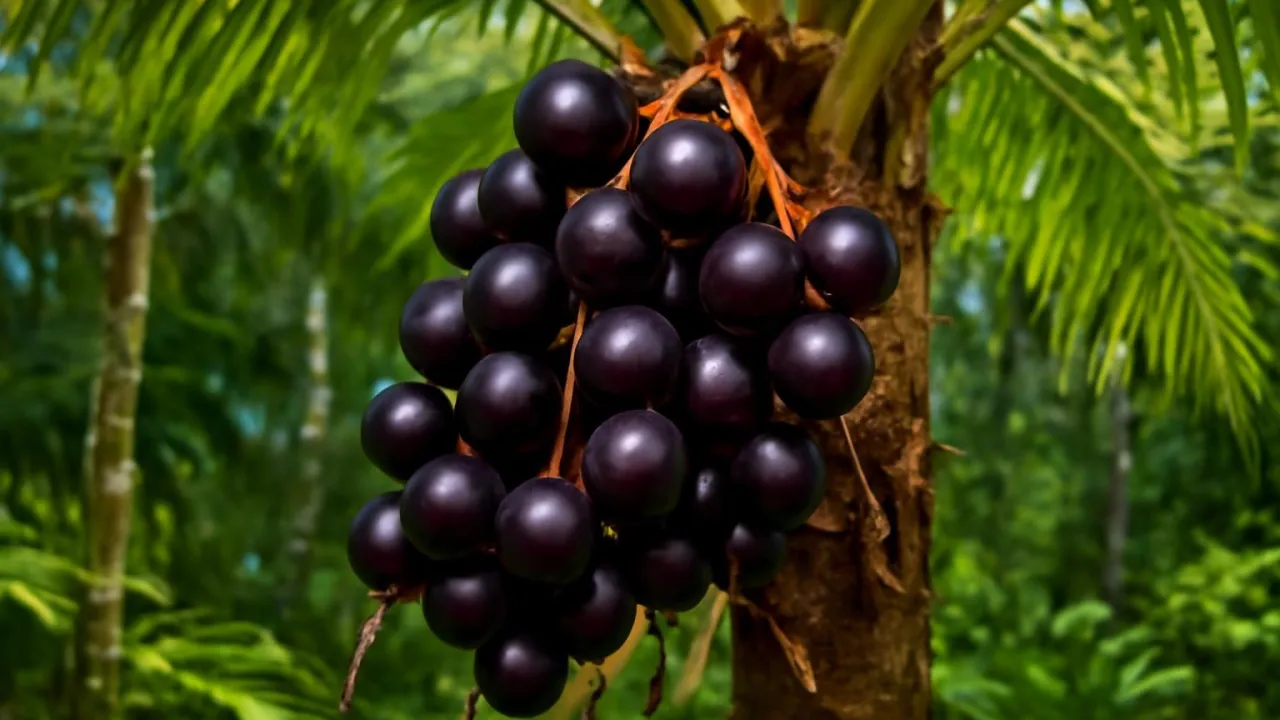
Acai berries grow in huge bunches on very tall palm trees!
✨ Word Sparks (Grade 2 Glossary)
Tap 🔊 to hear
nutrients
Good stuff in food that helps your body grow
antioxidants
Things that help keep your body healthy and strong
cluster
A group of things growing close together
🪝
Have you ever tasted a berry that grows in the rainforest?
1
Looking at Acai Berries
Acai berries are small and round, about one inch wide, and dark purple in color. They grow in on tall palm trees that reach high into the sky. The berries have a shiny skin and a large seed inside that takes up most of the berry.
2
Where They Live
These berries grow in the warm and wet Amazon rainforest in South America. The palm trees need lots of water and sun to grow tall and strong. The rainforest is very busy with many animals and plants living together.
3
Why People Like Them
People eat acai berries because they have many that help the body stay healthy. The berries taste sweet and a little sour, and they are often made into juices or smoothies. They are known for having that protect the body.
Acai berries’ antioxidants help protect your body from harmful molecules!
✨ Word Sparks (Grade 3 Glossary)
Tap 🔊 to hear
camouflage
Blending in to hide from others
antioxidants
Helpers that protect your body’s cells
adaptation
A change that helps living things survive
🪝
Did you know acai berries help protect the body with antioxidants?
1
What Are Acai Berries?
Acai berries are small, round fruits that grow on tall palm trees in rainforests. Their dark purple color helps them blend in with leaves, which is a form of . Each berry contains a large seed inside that stores nutrients for the plant’s growth. Their shiny skin protects them from insects and weather.
2
Where Do They Grow and Live?
Acai palms thrive in the warm, wet Amazon rainforest where sunlight and water are plentiful. This tropical habitat provides the perfect environment for the palms to grow tall and produce many berries. The rainforest ecosystem is full of animals and plants that depend on each other for survival. Acai berries are an important food source for many rainforest creatures.
3
How Do Acai Berries Help People?
People eat acai berries because they contain , which protect cells from damage caused by harmful molecules. These antioxidants help the body fight illness and stay healthy. Acai berries also provide important nutrients like fiber and healthy fats. They are often used in smoothies and juices to support good nutrition.
4
How Does the Acai Palm Adapt?
The acai palm’s tall height helps it reach sunlight above other plants in the dense forest. Its clustered berries grow in bunches that make it easier for animals to eat and spread the seeds. This helps the plant reproduce and survive in the competitive rainforest. The large seed inside each berry stores energy for new plants to grow.
Acai palms help keep the rainforest healthy by feeding animals and cleaning the air!
✨ Word Sparks (Grade 4 Glossary)
Tap 🔊 to hear
symbiotic
When two living things help each other
seed dispersal
How seeds move to grow new plants
biodiversity
Many different kinds of plants and animals
🪝
How do acai berries play a role in the Amazon rainforest’s food web?
1
Acai Berries and Their Habitat
Acai berries grow on tall palm trees that thrive in the warm, humid Amazon rainforest, where heavy rainfall supports lush vegetation. This tropical environment provides the perfect conditions for the palms to produce abundant fruit clusters, which are vital food sources for many animals. The consistent warmth and moisture allow these palms to grow quickly and reach sunlight above the dense forest floor. Without this habitat, acai palms could not survive or reproduce effectively.
2
Role in the Ecosystem
Acai berries serve as an important food source for birds, mammals, and insects, creating a relationship where animals help spread seeds through their droppings. This allows new palms to grow throughout the rainforest, supporting and forest regeneration. Additionally, the acai palm contributes to the forest’s carbon cycle by absorbing carbon dioxide and releasing oxygen. Human harvesting of acai berries must be managed carefully to avoid disrupting these ecological roles.
3
Physical Features and Adaptations
The acai palm’s tall, slender trunk allows it to compete for sunlight in the dense rainforest canopy, while its large clusters of dark purple berries attract animals for . The thick skin of the berries protects them from pests and harsh weather, ensuring the seeds inside remain viable. These adaptations increase the palm’s chances of survival and reproduction in a competitive environment. The large seed inside each berry stores nutrients essential for the growth of new plants.
4
Geographic Distribution and Human Impact
Acai palms are native to the Amazon basin, mainly in Brazil, where they grow along riverbanks and floodplains. The increasing global demand for acai products has led to expanded harvesting and cultivation, which can impact local ecosystems if not done sustainably. Conservation efforts focus on balancing human use with protecting natural habitats to maintain . Sustainable farming practices help preserve the rainforest while supporting local communities economically.
2. What can happen if acai harvesting is not managed well?
🤯 Mind-Blowing Fact • Grade 5
Acai berries contain more antioxidants per gram than most other fruits studied by scientists!
✨ Word Sparks (Grade 5 Glossary)
Tap 🔊 to hear
anthocyanins
Pigments that give berries their purple color
carbon sequestration
How plants store carbon to help the Earth
drupe
A fruit with one big seed inside
🪝
What scientific secrets make the acai berry a nutritional powerhouse in tropical ecosystems?
1
Scientific Classification and Botanical Traits
The acai berry, scientifically named Euterpe oleracea, belongs to the Arecaceae family, which includes many palm species. It is classified as a fruit, containing a single large seed surrounded by a thin layer of pulp. Botanically, it is distinct from common berries because most of the edible part is skin and pulp rather than seed. This classification helps scientists understand its growth and reproduction strategies in tropical environments.
2
Physiological Mechanics and Nutritional Composition
Acai berries contain high levels of , which are antioxidant pigments responsible for their deep purple color and health benefits. These antioxidants neutralize free radicals, reducing oxidative stress in human cells. Additionally, acai provides essential fatty acids, dietary fiber, and micronutrients like vitamin A and calcium. The berry’s thick skin protects these nutrients from environmental damage while aiding seed dispersal through animal consumption.
3
Ecological Role and Conservation Challenges
In the Amazon rainforest, acai palms contribute significantly to and support diverse wildlife by providing food and habitat. Their berries are a key resource for birds, mammals, and insects, facilitating seed dispersal and forest regeneration. However, increased commercial harvesting pressures threaten natural populations, necessitating sustainable management and conservation programs. Protecting acai palm habitats is crucial for maintaining rainforest biodiversity and ecosystem services.
4
Botanical History and Human Uses
Indigenous peoples of the Amazon have harvested acai berries for centuries, using them as a staple food and in traditional medicine. Modern global demand has popularized acai in health foods and supplements, creating economic opportunities for local communities. Scientific research continues to explore acai’s potential health benefits and applications. Understanding its botanical history enriches appreciation of its cultural and ecological importance.
5
Quantitative Comparisons and Growth Conditions
Acai palms can grow up to 82 feet (25 meters) tall, producing berry clusters weighing up to 10 pounds (4.5 kilograms). The berries are about 1 inch (2.5 centimeters) in diameter and thrive in temperatures ranging from 77 to 95 degrees Fahrenheit (25 to 35 degrees Celsius). Their growth is optimized in nutrient-rich, waterlogged soils of Amazon floodplains. These precise conditions are critical for maximizing yield and nutritional quality.