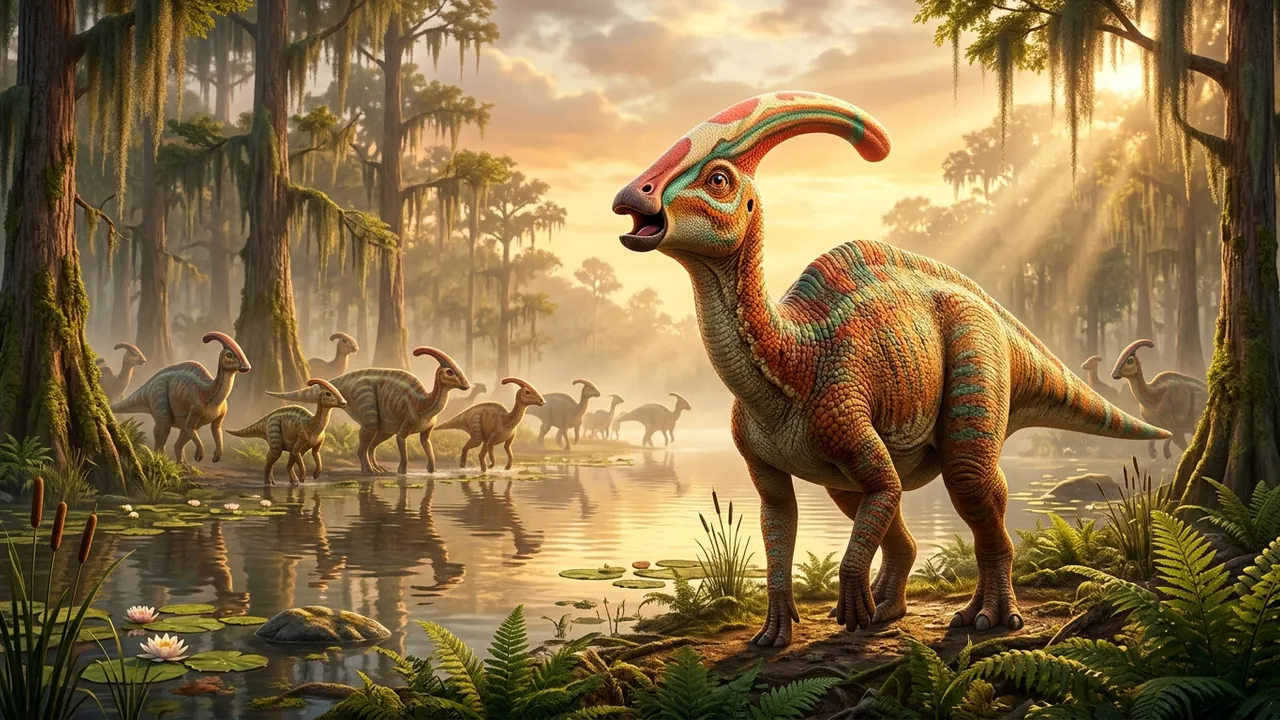
Meet the Legend: Trumpet Dino!
Say hello to Parasaurolophus (PAIR-uh-sor-OL-uh-fus)! Its name means near crested lizard. This gentle giant had a wide flat like a duck. Best of all, a six-foot hollow swept back from its head! That curved bone tube worked just like a giant brass horn. It walked on four legs or ran fast on two!
Lost World Habitat: Misty Swamps
Parasaurolophus lived seventy-five million years ago in western North America. Tall cypress trees shaded warm, muddy rivers and green marshes. This friendly dinosaur never wandered alone for long. Instead, it traveled in a noisy ! Every leaf and shell shows its wet neighborhood stayed green and warm all year.
What's on the Prehistoric Menu?
Parasaurolophus was a hungry that munched plants from morning till dusk. Using its broad duck-like , it snipped pine needles, willow leaves, and soft water weeds. Deep inside its cheeks sat hundreds of tightly packed teeth! Those rough tooth stacks ground tough twigs into soft, easy bites before swallowing.
Superpowers & Anatomy: Living Trombone
Inside that sweeping hid an amazing secret! Long hollow tubes looped from its nose all the way to the tip and back down. Every big breath buzzed through the bone like a deep foghorn. That booming call let a lost youngster find its across thick, misty swamp woods!
Flight vs. Fight Arena! Team Escape
Speedy meat-eater Gorgosaurus prowled near those lush rivers! Peaceful Parasaurolophus wore no bony armor or sharp horns. Instead, it starred on Team Flight! When one lookout spotted danger, it blasted a booming warning from its . Right away, the whole stood on two legs and sprinted to safety!
Fossil Detective Secrets: Baby Joe!
Explorers found the first Parasaurolophus skull in Canada in 1920. Long ago, people guessed its hollow worked like an underwater snorkel! Real rock clues proved there was no breathing hole on top. Later, scientists in Utah dug up a cute baby skeleton named Joe with a tiny stubby crest!