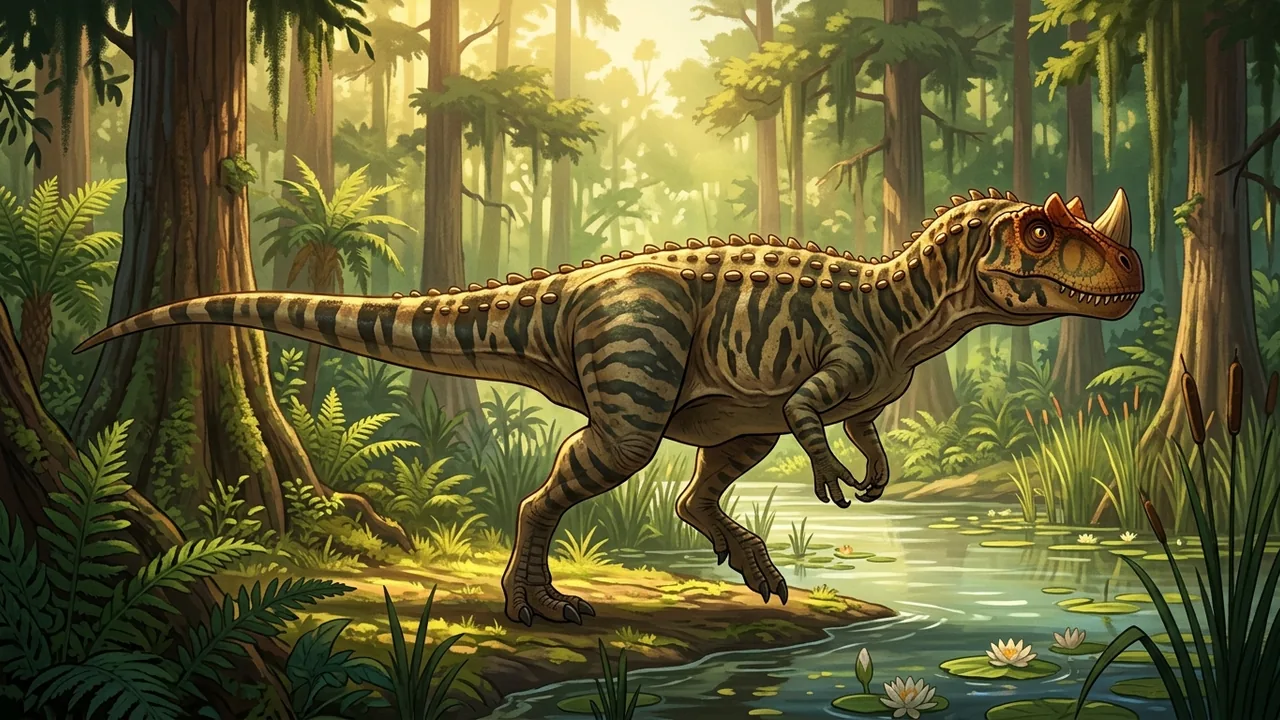
Meet the Legend: Nose-Horned Hunter!
Meet Ceratosaurus (seh-RAT-oh-SOR-us)! Its name means horned lizard. Look right on top of its snout. A bright, blade-shaped nose horn points toward the sky! Two smaller bumps sit above its eyes, and a neat row of bony pebbles runs all along its striped back.
Lost World Habitat: Shady River Reeds
Long ago in the Late Jurassic, Ceratosaurus loved shady waterways. Tall ferns, mossy logs, and green reeds lined winding rivers in North America and Portugal. While bigger hunters walked dry open plains, Ceratosaurus stayed hidden beside cool, muddy creeks and quiet pools.
What's on the Prehistoric Menu?
What did this river hunter eat? Ceratosaurus learned to slippery water meals! It waded into pools to catch giant , river turtles, and swimming crocs. On shady banks, its extra-long upper blade teeth also grabbed quick plant-eating dinosaurs stopping for a drink.
Superpowers, Senses & Anatomy
Ceratosaurus was built like a swimming champion! Its deep, bendy tail swished side to side like an alligator's tail to push through water. Bony back guarded its spine, while its colorful nose horn showed off to other Ceratosaurus without ever poking prey.
Flight vs. Fight Arena!
Uh-oh! Bigger cousin Allosaurus steps down toward the ! Instead of picking a risky fight on dry ground, smart Ceratosaurus slips into deep river water and dense trees. Sharing different spots to food let both fierce hunters live side by side in peace!
Fossil Detective Secrets
In 1884, a Colorado farmer dug up the very first Ceratosaurus in hard sandstone! Scientists were amazed by its nose horn, long fangs, and little back stones. Later fossils in Utah and Portugal proved this horned swimmer ruled Jurassic rivers across two continents!