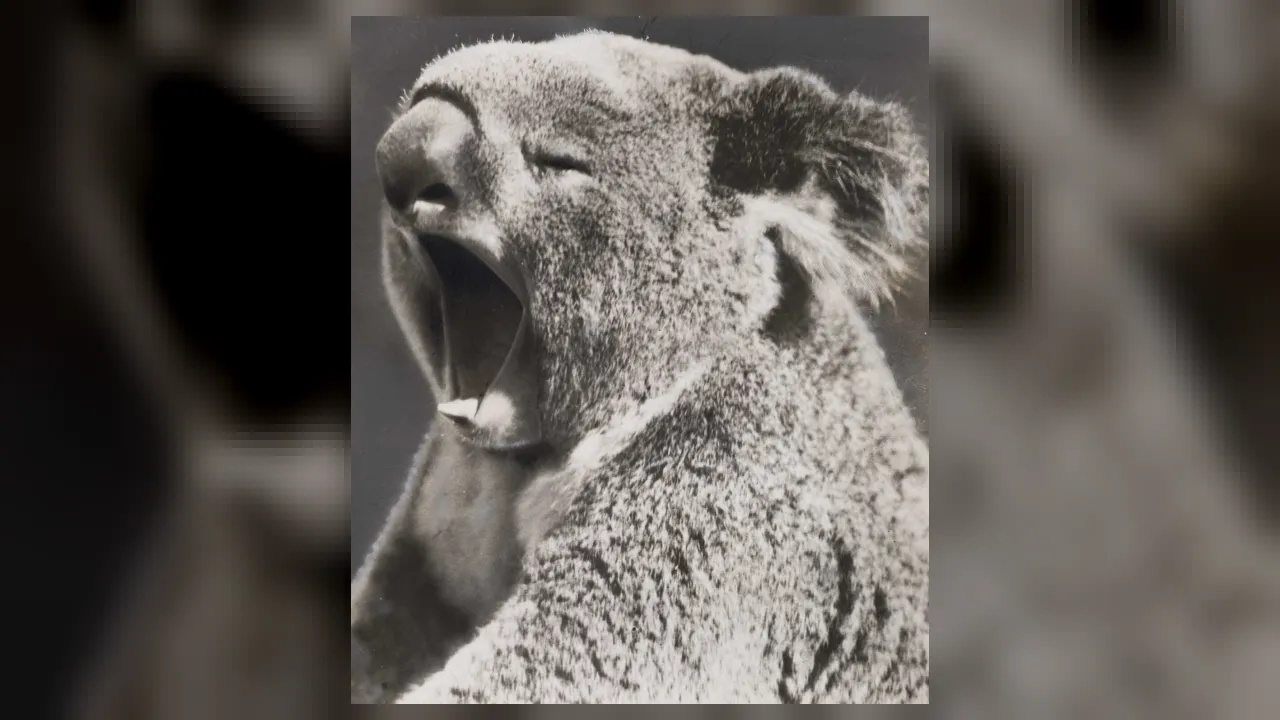
1. When do people often yawn besides sleepy bedtime?
2. What often happens right after you watch a friend or family member yawn?
🤯 Mind-Blowing Fact • Grade 2
Pet dogs often catch contagious yawns from humans they love—showing how tuned in dogs are to human faces!
✨ Word Sparks (Grade 2 Glossary)
Tap 🔊 to hear
Reflex
Automatic body action happening without planning
Eardrum
Thin ear flap balanced when yawns pop
Empathy
Understanding and sharing another person's feelings
🪝
Why do your ears pop nicely during a big yawn on an airplane or tall mountain drive?
1
Six Seconds of Stretch
Picture your pet cat waking from a sunny nap—mouth open wide, back arched, paws stretched out! An average human yawn lasts about six seconds. Your jaw drops wide, your lungs fill deeply, and tiny tubes behind your pop open to balance ear pressure!
2
Brain Air-Conditioner
For years, people guessed we yawned because blood needed extra oxygen, yet tests proved oxygen levels barely change! Instead, researchers found that stretching your jaw pumps blood faster while cool inhaled air chills warm blood heading up to your busy brain.
3
Friendly Copycat Brains
Seeing, hearing, or even reading about yawning triggers copycat yawns in more than half of watchers—especially among close friends, family, and even pet dogs watching their owners!
1. Why does yawning help uncomfortable ears feel better on an airplane flight?
2. What popular old myth about yawning did scientists test and disprove?
🤯 Mind-Blowing Fact • Grade 3
Biologists discovered that animals with bigger brains and more cortical neurons—like primates, elephants, and parrots—have noticeably longer yawns than tiny-brained animals like mice!
✨ Word Sparks (Grade 3 Glossary)
Tap 🔊 to hear
Oscitation
Official medical word for the yawning reflex
Mirror Neuron
Brain cell firing when watching others' actions
Eustachian Tube
Tiny throat-to-ear tunnel balancing ear pressure
🪝
Why do Olympic sprinters and concert violinists often yawn nervously right BEFORE a big event?
1
Not Just for Bedtime!
Watch runners at the starting blocks or musicians backstage—many let out huge yawns even when wide awake! Scientists call the yawning reflex , and it shows up whenever your brain transitions between states: sleep to wake, boredom to focus, or calm to high excitement.
2
Cooling an Overheated Computer
Think of a laptop fan whirring when the processor runs warm! Tiredness, stress, and concentration raise brain temperature slightly. Stretching jaw muscles boosts blood flow around your skull while a deep gulp of cool air chills blood in your sinuses, sharpening mental alertness!
3
Testing the Cool-Pack Clue
Researchers tested this brain-cooling idea by handing volunteers cool packs to hold on their foreheads while watching yawning videos. With cool foreheads, contagious yawning dropped almost to zero!
4
Mirror Neurons and Group Sync
Special empathy circuits called fire when you see someone yawn. In wild lion prides or wolf packs, contagious yawns may help the whole group wake up and stay alert together!
1. What happened in experiments when volunteers held cool packs against their foreheads?
2. Why might an athlete yawn right before an exciting championship race?
🤯 Mind-Blowing Fact • Grade 4
Combine a big morning yawn with a full-body stretch and you just performed 'pandiculation'—the exact wake-up reset every cat, dog, and lion uses after a nap!
✨ Word Sparks (Grade 4 Glossary)
Tap 🔊 to hear
Pandiculation
Yawning and stretching muscles together upon waking
Surfactant
Slippery coating keeping tiny lung sacs open
Spontaneous
Happening naturally from inside without outside triggers
🪝
How did one clever 1987 experiment smash a two-thousand-year-old myth about oxygen and yawning?
1
Provine's Oxygen Test
Since ancient Greece, doctors assumed yawning flushed out stale carbon dioxide and gulped extra oxygen. In 1987, neuroscientist Robert Provine put that idea to an easy lab test! Volunteers breathed air mixtures with extra-high oxygen or extra-high carbon dioxide. Breathing faster changed right on cue—yet yawning frequency did not budge at all! Even athletes huffing hard mid-sprint rarely yawn, proving lungs and yawns follow totally different rulebooks.
2
Thermoregulation in Action
Why, then, did nearly every vertebrate from jawed fish and sea turtles to owls and humans evolve yawns? Psychologist Andrew Gallup's thermoregulatory theory points to brain heat! Your brain burns twenty percent of your body's energy and grows sluggish if its temperature rises even half a degree. A six-second yawn powerfully contracts jaw muscles—squeezing warm venous blood away from the head—while inhaling cool air across moist nasal passages chills fresh arterial blood rising to the hypothalamus and cortex.
3
Pandiculation: Stretch Plus Yawn
When you wake up and combine a giant yawn with an arm-and-back stretch, physiologists call that combo ! It resets muscle tension sensors, spreads slippery fluid across tiny lung air sacs, and pops Eustachian tubes.
4
Social Contagion Develops With Age
Babies yawn spontaneously before birth, yet contagious yawning usually switches on around age four or five—right as social empathy and mirror-neuron networks mature!
1. What happened when Robert Provine gave volunteers extra-pure oxygen to breathe in 1987?
2. Around what age do children usually start catching contagious yawns from others?
🤯 Mind-Blowing Fact • Grade 5
Tiny mice finish a complete yawn in less than one second, whereas humans and African elephants yawn for over six seconds because larger brains with billions of cortical neurons take longer to flush and cool!
✨ Word Sparks (Grade 5 Glossary)
Tap 🔊 to hear
Countercurrent
Cool incoming fluid chilling warm outgoing blood
Pneumocyte
Lung cell secreting slippery surfactant fluid
Vigilance
Watchful group alertness to spot surroundings
🪝
Why can predicting an animal's yawn duration down to the second tell neuroscientists roughly how many billions of cortical neurons sit inside its skull?
1
Deconstructing an Ancient Vertebrate Reflex
Phylogenetically ancient, spontaneous oscitation—derived from Latin oscitare, 'to gape wide'—occurs across virtually all jawed vertebrates from bony fish to mammals, controlled by a central pattern generator in the hypothalamic paraventricular nucleus and brainstem! Triggered by rising levels of neurotransmitters and neuropeptides including dopamine, nitric oxide, oxytocin, and orexin, a classic yawn unfolds in three stereotyped phases: a long wide-jawed inhalation, a brief peak muscular acme (often squeezing tear-producing lacrimal glands and opening tensor tympani/Eustachian structures), and a brisk exhalation.
2
Cranial Radiator Mechanics
After Robert Provine falsified Hippocrates' centuries-old blood-gas hypothesis in 1987, evolutionary psychologists Andrew Gallup and Gary Hack demonstrated that yawning functions as a cranial radiator! Intracranial recordings in rats reveal cortical temperatures creep upward immediately before a yawn and drop sharply seconds afterward. Maximal pterygoid and masseter jaw contraction accelerates facial venous return while deep nasal-oral inhalation cools cavernous sinus blood via heat exchange—explaining why ambient temperatures near 20°C maximize yawning whereas freezing winter air or scorching >37°C heat suppresses it!
3
Yawn Length Scales With Neuron Count
Comparing dozens of mammal and bird species in 2016 and 2021, researchers uncovered a striking law: mouse yawns last barely 0.8 seconds (cooling ~12 million cortical neurons), hedgehog and cat yawns ~2–3 seconds, African elephant yawns ~6 seconds, and human yawns ~6.5 seconds to service our sixteen billion cortical neurons!
4
Pulmonary Surfactant and Vigilance
Deep alveolar stretch during oscitation and morning pandiculation also stimulates Type II to spread phospholipid surfactant, preventing microscopic lung collapse while resetting proprioceptive muscle spindles.
5
Social Contagion and Collective Vigilance
Mediated by frontoparietal mirror networks and the temporoparietal junction, contagious yawning—documented in humans, chimpanzees, bonobos, wolves, lions, budgerigars, and domesticated dogs—synchronizes group arousal and collective across social troops!