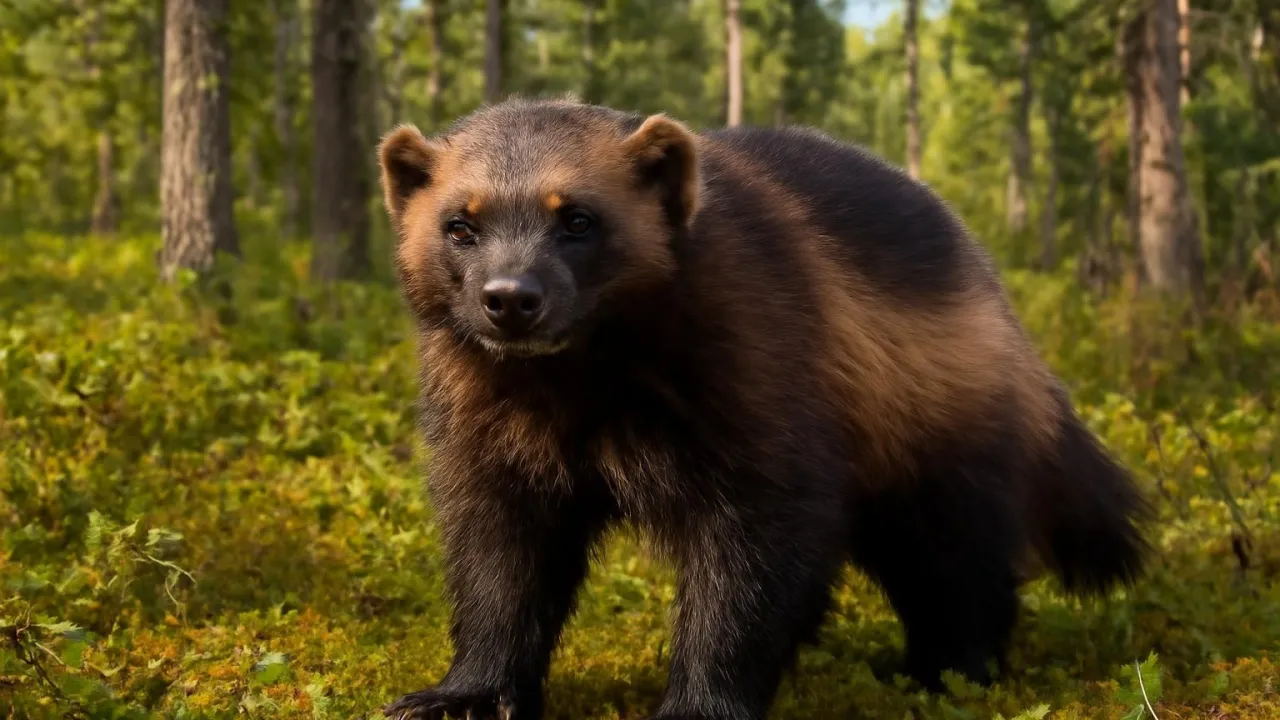
Wolverines can smell food buried under snow from over a mile away!
✨ Word Sparks (Grade 2 Glossary)
Tap 🔊 to hear
carnivore
An animal that eats meat
tundra
A cold, treeless land with snow
scavenge
To find and eat dead animals
🪝
Have you ever heard of a wolverine that roams snowy forests all alone?
1
What Does a Wolverine Look Like?
A wolverine has thick, dark brown fur and sharp claws for digging and hunting. It walks on four strong legs and has a bushy tail that helps it balance.
2
Where Do Wolverines Live?
Wolverines live in cold, snowy forests and regions across North America and Eurasia. They find shelter in caves or thick brush to stay warm during winter.
3
What Does a Wolverine Eat?
Wolverines are that hunt small animals like rabbits and rodents. They also meat from dead animals and can travel far to find food.
Wolverines can crush bones with their powerful jaws to reach marrow inside!
✨ Word Sparks (Grade 3 Glossary)
Tap 🔊 to hear
adaptation
A body change that helps survive
camouflage
Colors that help animals hide
carrion
Dead animals that animals eat
🪝
Did you know wolverines use their sharp claws to survive in snowy forests?
1
Wolverine’s Strong Body
Wolverines have thick fur that helps them stay warm in cold weather. Their sharp claws allow them to dig through snow to find food or shelter. This helps them survive harsh winters. Their strong legs let them travel long distances.
2
Where Wolverines Live
Wolverines live in boreal forests and tundra across North America and Eurasia. These habitats have cold temperatures and deep snow. Wolverines use to blend into their environment. This helps protect them from predators.
3
What Wolverines Eat
Wolverines are carnivores that hunt small animals and scavenge . They eat rodents, rabbits, and sometimes larger animals like deer. Their strong jaws can crush bones to get nutrients. This diet helps them get enough energy.
4
Wolverine’s Survival Skills
Wolverines can travel up to 20 miles a day searching for food. Their thick fur and fat keep them warm in freezing temperatures. They have a keen sense of smell to find food buried under snow. These make them fierce survivors.
2. What special skill helps wolverines find food under snow?
🤯 Mind-Blowing Fact • Grade 4
Wolverines can travel more than 12 miles in a single night to find food!
✨ Word Sparks (Grade 4 Glossary)
Tap 🔊 to hear
scavenger
An animal that eats dead animals
ecosystem
A community of plants and animals
predator
An animal that hunts other animals
🪝
How does the wolverine’s fierce nature shape its role in cold forest ecosystems?
1
Physical Adaptations for Survival
Wolverines have thick fur and a layer of fat that protect them from freezing temperatures, allowing them to survive harsh winters. Their powerful claws help them dig through deep snow to reach hidden food sources or create dens. These physical adaptations are essential for thriving in cold, snowy habitats.
2
Role in the Ecosystem
As and , wolverines play a key role in food webs by cleaning up carrion and controlling populations of small animals. Their presence helps maintain balance in boreal forest . Wolverines also compete with larger predators, influencing animal behavior and habitat use.
3
Geographic Range and Habitat
Wolverines inhabit boreal forests and tundra across northern North America, Europe, and Asia. They prefer remote, cold areas with deep snow, which provide shelter and hunting grounds. Human activities like logging and climate change threaten these habitats, impacting wolverine populations.
4
Cause and Effect of Behavior
Because wolverines can travel long distances daily, they can find scarce food in winter. Their strong jaws allow them to eat frozen meat and bones, which other animals cannot digest. This behavior helps them survive when food is limited, showing how their traits cause survival success.
1. What role do wolverines play in their ecosystem?
2. How does traveling long distances help wolverines?
🤯 Mind-Blowing Fact • Grade 5
Wolverines have home ranges larger than 200 square miles, roaming vast cold wilderness!
✨ Word Sparks (Grade 5 Glossary)
Tap 🔊 to hear
Mustelidae
Family of animals like weasels and otters
fragmentation
Breaking habitats into smaller, separated parts
apex
Top predator in an ecosystem
🪝
What makes the wolverine a unique carnivore adapted to cold northern environments?
1
Taxonomy and Scientific Context
The wolverine, scientifically named Gulo gulo, belongs to the family, which includes weasels and otters. It is the largest terrestrial member of this family and is known for its solitary and territorial behavior. Wolverines evolved traits that enable survival in cold boreal and tundra ecosystems. Their unique adaptations distinguish them from other carnivores in these harsh regions.
2
Physiological Mechanics and Adaptations
Wolverines have dense, oily fur that repels water and insulates against freezing temperatures. Their strong limbs and large paws act like snowshoes, distributing weight to prevent sinking into snow. Powerful jaw muscles allow them to crush frozen bones, extracting marrow for vital nutrients during scarce winters. These adaptations enable wolverines to thrive in extreme cold and deep snow.
3
Conservation and Human Impact
Wolverine populations face threats from habitat due to logging, mining, and climate change reducing snow cover. Conservation efforts focus on protecting large wilderness areas and corridors to maintain genetic diversity. Understanding their ecological role helps prioritize their protection in northern ecosystems. Public awareness and scientific research are key to their long-term survival.
4
Ecological Role and Behavior
As scavengers and predators, wolverines regulate prey populations and recycle nutrients by consuming carrion. Their extensive home ranges, sometimes over 200 square miles, require vast tracts of undisturbed habitat. Their ability to travel long distances allows them to exploit patchy food resources efficiently. Wolverines also influence the behavior of other predators and prey in their ecosystems.
5
Quantitative Comparisons and Unique Traits
Wolverines can travel up to 12 miles per night and weigh between 20 to 55 pounds, making them powerful for their size. Their fur temperature can withstand below-freezing conditions, and their large paws spread weight to move on snow up to 20 inches deep. These traits make them uniquely adapted northern carnivores. Their strength and endurance surpass many animals of similar size.