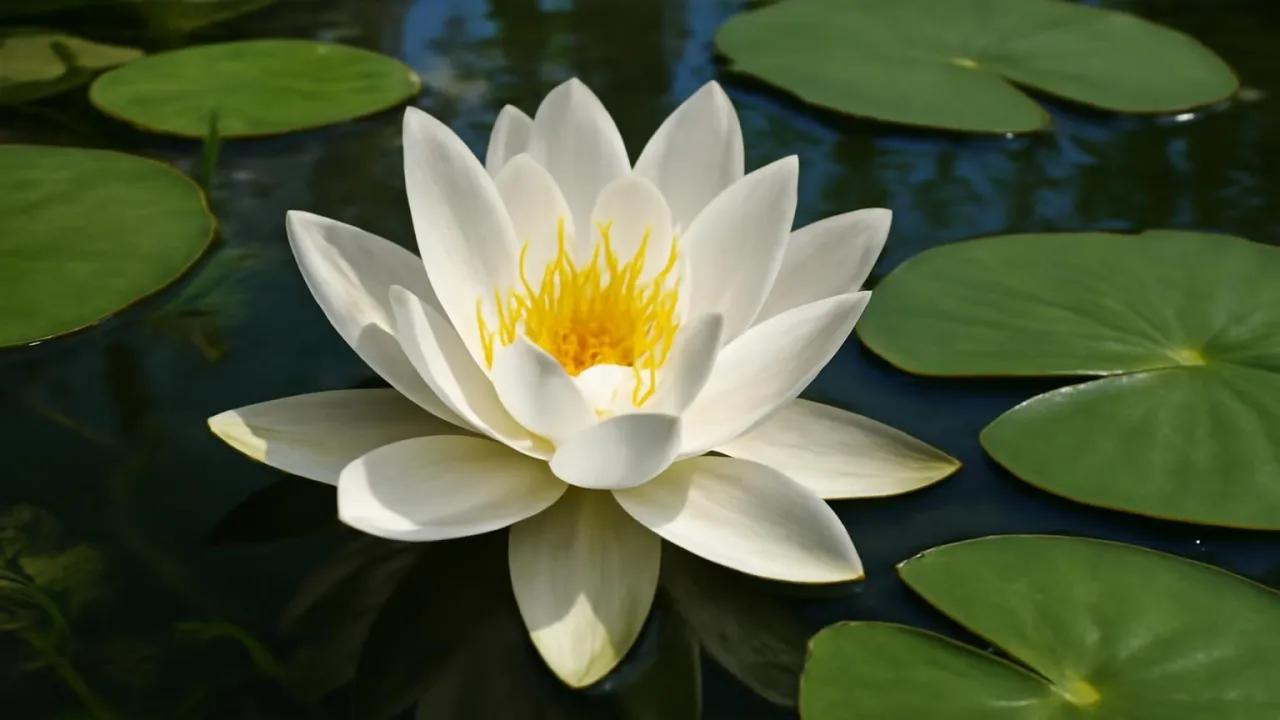
White water lily leaves can hold enough weight to support small frogs and insects!
✨ Word Sparks (Grade 2 Glossary)
Tap 🔊 to hear
pollination
When bees help flowers make seeds
wax
A smooth, shiny coating on leaves
nectar
Sweet juice inside flowers for insects
🪝
Did you know some flowers can float on water like little boats?
1
Floating on Water
The white water lily floats on calm ponds and lakes. Its large round leaves spread wide on the water. The leaves have a waxy surface that helps them stay dry and float.
2
Where It Lives
This flower grows in fresh, still water like ponds and lakes. It needs sunlight to bloom and grow healthy leaves. Fish and frogs often live nearby under the floating leaves.
3
Flower and Growth
The white water lily blooms during the day and closes at night. Bees and insects visit the flower to collect . After , the flower makes seeds that fall into the water.
White water lilies can live for many years, growing new leaves and flowers each season!
✨ Word Sparks (Grade 3 Glossary)
Tap 🔊 to hear
photosynthesis
How plants use sunlight to make food
pollination
When insects help flowers make seeds
ecosystem
A community of plants and animals living together
🪝
How does the white water lily survive floating on water all day?
1
Floating Leaves and Adaptation
White water lily leaves have a waxy coating that repels water and helps them float. Their large, flat shape spreads out to catch sunlight for . This adaptation keeps the leaves dry and alive on the water surface.
2
Pollination and Life Cycle
The white water lily relies on by insects like bees to reproduce. Its flowers open during the day to attract pollinators and close at night for protection. After pollination, seeds develop and drop into the water to grow new plants.
3
Habitat and Ecosystem Role
This flower lives in freshwater ponds and lakes where the water is calm and shallow. It provides shelter and food for many animals like fish and frogs. The lily helps keep the water clean by absorbing nutrients and reducing algae growth.
4
Physical Features and Survival
The flower’s white petals reflect sunlight, which may help attract pollinators. Its thick stems anchor it to the muddy bottom while allowing flexibility in water currents. These features help the plant survive in its watery environment.
1. Why do white water lily leaves have a waxy coating?
2. What role does the white water lily play in its ecosystem?
🤯 Mind-Blowing Fact • Grade 4
White water lilies can absorb harmful nutrients, helping keep freshwater ecosystems healthy!
✨ Word Sparks (Grade 4 Glossary)
Tap 🔊 to hear
biodiversity
Many different plants and animals living together
pollination
Insects help flowers make seeds by moving pollen
ecosystem
A community of living things and their environment
🪝
What makes the white water lily a vital part of freshwater ecosystems worldwide?
1
Adaptations for Floating and Growth
The white water lily’s waxy leaves repel water and spread wide to maximize sunlight absorption for photosynthesis. Its flexible stems anchor in muddy bottoms, allowing the plant to sway with water currents without damage. These adaptations enable survival in calm freshwater habitats. The plant’s broad leaves also shade the water, reducing evaporation and helping maintain cooler water temperatures.
2
Ecosystem Roles and Relationships
White water lilies provide shelter and breeding grounds for fish and amphibians, supporting . Their flowers attract pollinators like bees, which aid in reproduction through . Additionally, the plant helps control algae growth by absorbing excess nutrients from the water. This nutrient absorption helps prevent harmful algal blooms that can damage aquatic life.
3
Geographic Distribution and Habitat
Native to Europe and parts of Asia, white water lilies thrive in freshwater ponds, lakes, and slow-moving rivers. They prefer shallow, calm waters with plenty of sunlight. Human activities such as water pollution and habitat destruction threaten their natural habitats. Conservation efforts focus on protecting wetlands and improving water quality to support these plants.
4
Cause and Effect in Plant Life Cycle
When pollinators visit the white water lily’s flowers, occurs, leading to seed production. These seeds disperse in water and settle in mud to grow new plants. If water quality declines, the plant’s growth is affected, which disrupts the local balance. Poor water conditions can reduce pollinator visits, further impacting reproduction and survival.
1. How do white water lilies help control algae growth?
2. What happens if water quality gets worse for white water lilies?
🤯 Mind-Blowing Fact • Grade 5
White water lilies have air-filled leaf tissues that allow them to float and survive in aquatic environments!
✨ Word Sparks (Grade 5 Glossary)
Tap 🔊 to hear
buoyancy
Ability to float on water or air
eutrophication
Too many nutrients causing water problems
stomata
Tiny holes on leaves for air exchange
🪝
How does the white water lily’s biology support its survival and benefit freshwater ecosystems?
1
Taxonomy and Scientific Classification
The white water lily, scientifically named Nymphaea alba, belongs to the family Nymphaeaceae. It is classified within the order Nymphaeales, an ancient group of flowering plants adapted to aquatic environments. This species is one of several in the genus Nymphaea, known for their floating leaves and showy flowers. These plants represent some of the earliest evolved angiosperms, highlighting their unique evolutionary history.
2
Physiological Adaptations for Aquatic Life
Its large, wax-coated leaves contain air spaces that provide , allowing them to float on water surfaces. The are located on the upper leaf surface to facilitate gas exchange in air. Flexible petioles enable the plant to adjust leaf positions according to water levels and sunlight availability. Additionally, the thick waxy cuticle prevents waterlogging and protects against pathogens.
3
Ecological Role and Conservation Status
White water lilies contribute significantly to freshwater ecosystems by providing habitat and food for diverse aquatic species. They absorb excess nutrients, reducing and algal blooms. Though widespread, their populations face threats from habitat loss, pollution, and invasive species, prompting conservation efforts in some regions. Wetland restoration projects often include planting white water lilies to improve water quality and biodiversity.
4
Botanical History and Human Interaction
Historically, white water lilies have been admired in art and mythology for their beauty and symbolism. In some cultures, they are used in traditional medicine and water garden cultivation. Human activities affecting water quality and wetland drainage impact their natural distribution and health. Conservation awareness has increased to protect these iconic aquatic plants and their habitats.
5
Quantitative Comparisons and Growth Patterns
Leaves can reach up to 30 centimeters in diameter, supporting weights up to several hundred grams. Flowers bloom during daylight hours, opening at sunrise and closing by sunset. The plant thrives in water temperatures between 15 and 25 degrees Celsius, commonly found at depths of 0.5 to 2 meters. Growth rates vary seasonally, with peak growth in late spring and early summer, adapting to local climate conditions.