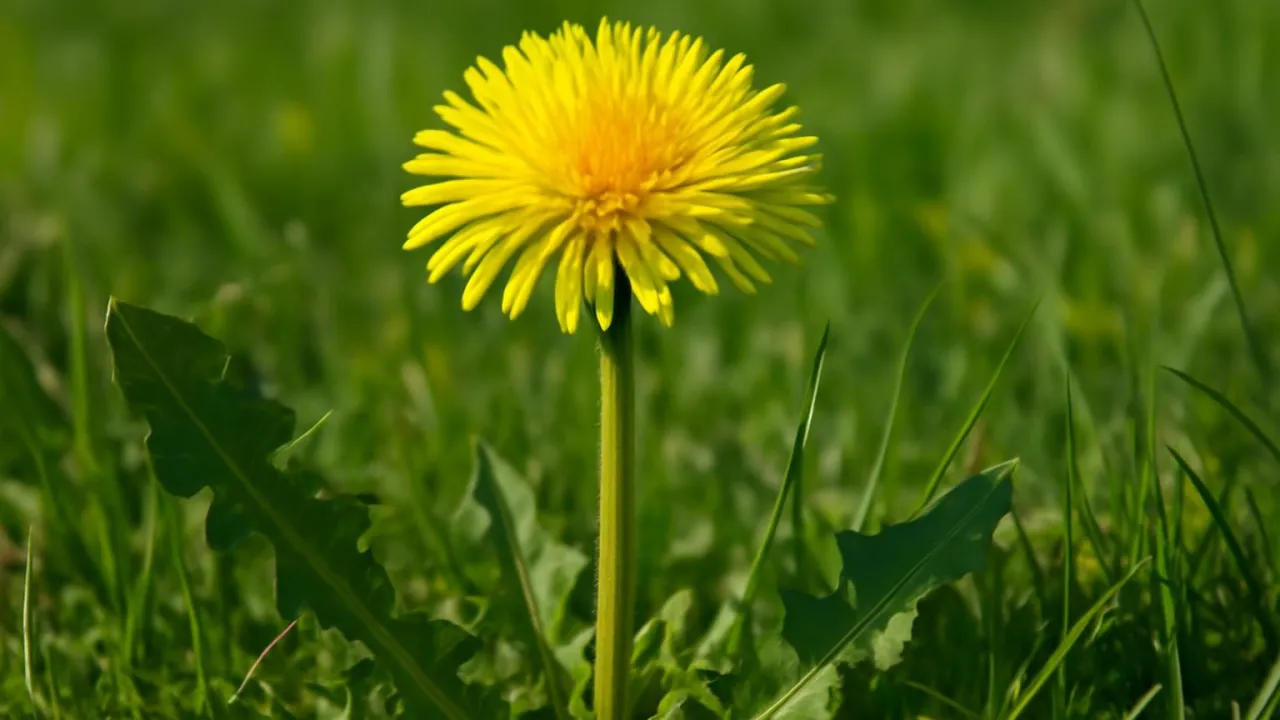
Dandelion seeds can travel over a mile on the wind before landing to grow!
✨ Word Sparks (Grade 2 Glossary)
Tap 🔊 to hear
petals
Colorful parts of a flower
moist
A little wet or damp
parachute
A fluffy part that helps seeds float
🪝
Have you ever seen a flower puff float in the air like a tiny cloud?
1
Growing in Sunny Places
Dandelions grow in sunny fields and lawns where the soil is and soft. They need sunlight and water to grow strong. Their bright yellow flowers open in the morning and close at night.
2
From Flower to Fluffy Puff
After the yellow fall, the flower turns into a white puffball. This puffball is made of many tiny seeds with . The wind carries these seeds far away to new places.
3
A Special Seed Journey
Each seed floats gently on the wind until it lands in the soil. When the seed finds good soil, it starts to grow roots and leaves. Soon, a new dandelion flower appears.
Dandelions are one of the first flowers to bloom in spring and provide early food for pollinators.
✨ Word Sparks (Grade 3 Glossary)
Tap 🔊 to hear
pollination
When pollen moves to make seeds
pappi
Fluffy parachutes on dandelion seeds
taproot
A big root that stores food
🪝
Did you know dandelions use tiny parachutes to spread their seeds far and wide?
1
Dandelion’s Bright Yellow Flower
Dandelions have bright yellow petals that attract pollinators like bees and butterflies. These insects help with by moving pollen from one flower to another. Pollination is important for the plant’s reproduction and survival. The flower grows close to the ground in grassy areas.
2
From Flower to Seed Head
After , the yellow petals fall off and the flower changes into a white seed head. This seed head is made of many tiny seeds attached to fluffy parachutes called . The pappi help the seeds float in the wind to find new places to grow.
3
Adaptations for Survival
Dandelions have deep that store nutrients and water to survive tough conditions. Their leaves grow close to the ground to avoid being eaten by predators. These adaptations help dandelions thrive in many environments.
4
Life Cycle and Growth
Once the seeds land in soil, they germinate and grow into new dandelion plants. The life cycle repeats as new flowers bloom and produce seeds. This cycle helps dandelions spread quickly and colonize new habitats.
Dandelions can produce up to 5,000 seeds from a single plant in one growing season, spreading widely!
✨ Word Sparks (Grade 4 Glossary)
Tap 🔊 to hear
pollinators
Animals that help plants make seeds
dispersal
Spreading seeds far from the plant
taproot
A big root that stores food and water
🪝
Have you ever wondered how dandelions spread so quickly across fields and lawns?
1
Dandelion’s Role in Ecosystems
Dandelions provide early nectar and pollen for bees and other in spring, supporting the food web and helping many plants reproduce. Their flowers attract a wide variety of insects that contribute to pollination of nearby plants. Because they bloom so early, dandelions are crucial for pollinator survival after winter ends and before other flowers appear.
2
Seed Dispersal and Growth
The dandelion’s seed head acts like a natural parachute, allowing seeds to travel long distances by wind. This cause-and-effect relationship helps dandelions colonize new areas quickly and effectively. Seeds that land in suitable soil germinate and grow into new plants, continuing the plant’s life cycle and expanding its range.
3
Adaptations and Human Impact
Dandelions have adapted to many environments with their deep and low-growing leaves that resist being eaten by animals. Humans often remove dandelions from lawns and gardens, but these plants are hardy and regrow easily after being cut or pulled. Some people even harvest dandelions for food, tea, and natural medicine.
4
Geographic Distribution
Originally native to Europe and Asia, dandelions now grow worldwide in temperate climates, thriving in disturbed soils like lawns, roadsides, and fields. Their ability to spread rapidly through wind-dispersed seeds makes them one of the most common and widespread wildflowers on Earth today.
1. Why are dandelions important for pollinators in spring?
2. What helps dandelion seeds travel far from the plant?
🤯 Mind-Blowing Fact • Grade 5
Dandelions produce thousands of seeds each year that can travel over a mile, making them global travelers.
✨ Word Sparks (Grade 5 Glossary)
Tap 🔊 to hear
apomixis
Plants making seeds without fertilization
pappus
Fluffy parachute on a dandelion seed
basal rosette
Leaves growing close to the ground
🪝
How do dandelions use science and nature to become one of the most widespread flowers on Earth?
1
Scientific Classification and Botany
Dandelions belong to the family Asteraceae and the genus Taraxacum, with the scientific name Taraxacum officinale. They are perennial herbaceous plants with composite flower heads made of many small florets. Botanically, dandelions are true flowers that produce seeds through sexual reproduction and . Their ability to reproduce both ways helps them spread effectively.
2
Seed Dispersal Mechanism and Physiology
Each dandelion seed is attached to a , a parachute-like structure made of fine hairs that increases air resistance. This adaptation allows seeds to travel long distances by wind, sometimes over a mile. The lightweight seeds maximize dispersal efficiency, helping colonize diverse habitats rapidly. This wind dispersal is a key evolutionary trait for survival.
3
Ecological Role and Human Interaction
Dandelions provide critical early-season resources for pollinators such as bees and butterflies, supporting biodiversity. Humans have historically used dandelions for food, medicine, and dye. Despite being considered weeds, they play a valuable role in soil health and ecosystem balance. Their deep roots help prevent soil erosion and recycle nutrients.
4
Growth Cycle and Environmental Adaptations
Dandelions grow from a deep taproot that stores carbohydrates, enabling survival during droughts and cold seasons. Their leaves form a close to the ground, reducing herbivory risk. This growth pattern and reproductive strategy allow dandelions to thrive in disturbed and urban environments. Their fast growth cycle helps them take advantage of short growing seasons.
5
Quantitative Comparisons and Distribution
A single mature dandelion plant can produce up to 5,000 seeds annually, each weighing about 0.002 grams. Seeds can disperse over distances exceeding one mile depending on wind speed. Dandelions are native to Eurasia but now inhabit temperate regions worldwide, making them among the most widespread flowering plants. Their global spread shows remarkable ecological success.