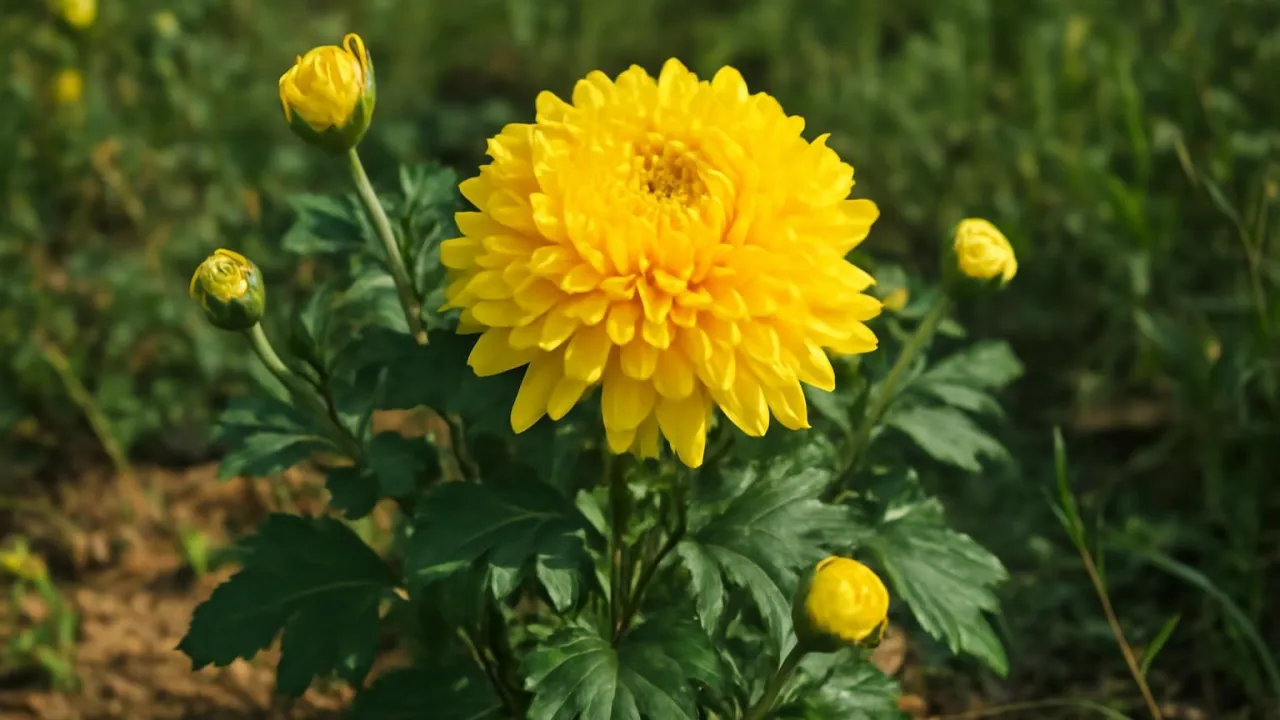
Chrysanthemums bloom in fall to enjoy cooler weather and fewer hungry bugs.
✨ Word Sparks (Grade 2 Glossary)
Tap 🔊 to hear
petals
The colorful parts of a flower
autumn
The cool season after summer
nectar
Sweet juice flowers make for bees
🪝
Have you seen flowers that bloom when the air feels cool?
1
Colors and Shapes
Chrysanthemums have many colors, like red, yellow, and white. Their look like tiny suns, and they grow in round shapes that catch your eye. These bright colors help attract bees and butterflies to the flowers.
2
Where They Live
These flowers grow best in gardens with full sun and well-drained soil. They need water every day to stay healthy and strong. Chrysanthemums bloom during the cool months when many other flowers stop growing.
3
Special Flower Traits
Chrysanthemums have a nice smell that bees love to visit. Their protect the flower’s center from wind and rain. These flowers can survive cooler weather better than many summer plants.
Chrysanthemums bloom in autumn to avoid many summer predators and thrive in cooler weather.
✨ Word Sparks (Grade 3 Glossary)
Tap 🔊 to hear
pollination
When pollen moves to make seeds
adaptation
A change that helps living things survive
nectar
Sweet juice flowers make for bees
🪝
Did you know chrysanthemums use their petals to protect themselves?
1
Colorful Petals and Shapes
Chrysanthemums have brightly colored petals that attract pollinators like bees. Their petals form round, layered shapes that help protect the flower’s center. This shape also helps the flower collect sunlight for energy. Their colors can range from white to deep red.
2
Where Chrysanthemums Grow
These flowers grow mainly in East Asia and parts of Europe. They prefer full sun and well-drained soil to get enough nutrients. Chrysanthemums bloom in autumn, which helps them avoid many summer predators. Their growth cycle matches cooler temperatures.
3
How Chrysanthemums Survive
The petals act like a shield to protect the flower’s pollen from wind and rain. Their bright colors help attract pollinators needed for reproduction. Chrysanthemums also have thick leaves that reduce water loss. These help them survive cooler, drier weather.
4
Pollination and Growth
Bees collect from chrysanthemums, helping spread pollen. This process allows the plant to produce seeds for new flowers. Chrysanthemums’ structure supports this important role in their ecosystem. They provide food for insects and add beauty to gardens.
Chrysanthemums bloom in autumn, supporting pollinators when few other flowers do.
✨ Word Sparks (Grade 4 Glossary)
Tap 🔊 to hear
symbiotic
Two living things helping each other
herbivores
Animals that eat plants
pollinators
Animals that help flowers make seeds
🪝
How does blooming in autumn help chrysanthemums survive in nature?
1
Seasonal Blooming and Survival
Chrysanthemums bloom in autumn when temperatures cool, which reduces competition for . This timing helps them avoid many summer that feed on flowers. Cooler weather slows down pests and diseases, increasing chrysanthemum survival rates. Their autumn bloom also ensures they get enough sunlight before winter.
2
Ecosystem Roles and Pollination
Chrysanthemums provide nectar and pollen for bees and butterflies during fall when few other flowers bloom. This relationship supports pollinator populations and helps plants reproduce. The flower’s bright colors attract insects, playing a key role in local food webs. They also add beauty to gardens and parks, benefiting humans.
3
Geographic Distribution and Growth
Native to East Asia and parts of Europe, chrysanthemums prefer temperate climates with distinct seasons. They grow best in full sun and well-drained soils rich in nutrients. Gardeners cultivate many chrysanthemum varieties worldwide, adapting them to different environments. Their growth cycle is tightly linked to seasonal changes in temperature and daylight.
4
Human Impact and Cultivation
Humans have cultivated chrysanthemums for thousands of years for decoration and traditional medicine. Selective breeding has created many flower colors and shapes. However, habitat loss and climate change can affect wild chrysanthemum populations. Sustainable gardening practices help protect these flowers and their ecosystems.
1. What helps chrysanthemums survive pests in autumn?
2. How do chrysanthemums help pollinators?
🤯 Mind-Blowing Fact • Grade 5
Chrysanthemums have been cultivated for over 2,500 years and bloom when most flowers rest.
✨ Word Sparks (Grade 5 Glossary)
Tap 🔊 to hear
photoperiodism
How plants use light to time blooming
perennial
A plant that lives for many years
nectar
Sweet juice flowers make for pollinators
🪝
What makes chrysanthemums a vital autumn flower in ecosystems and human culture?
1
Scientific Classification and Origins
Chrysanthemums belong to the Asteraceae family and the genus Chrysanthemum indicum. They are native to East Asia, especially China and Japan, where they have been cultivated for over 2,500 years. These plants thrive in temperate climates with distinct seasonal changes. Their evolutionary adaptations allow them to bloom in cooler autumn months.
2
Physiological Adaptations and Blooming
Chrysanthemums’ petals are arranged in dense, layered formations that protect reproductive organs from harsh weather. Their thick, waxy leaves reduce water loss during dry autumn conditions. The plants use to detect shorter daylight and trigger blooming. This physiological mechanism ensures flowering occurs when pollinator activity remains sufficient.
3
Ecological Importance and Food Webs
By blooming in autumn, chrysanthemums provide critical and pollen resources for late-season pollinators such as bees and butterflies. This timing supports biodiversity and maintains food web stability during a period of floral scarcity. Chrysanthemums also contribute to soil health by cycling nutrients through leaf litter decomposition. Their presence benefits both wild ecosystems and cultivated gardens.
4
Cultural Significance and Conservation
Chrysanthemums hold symbolic value in many cultures, representing longevity and happiness in East Asia. They are used in traditional medicine and art, reflecting their cultural importance. However, habitat loss and climate change threaten wild chrysanthemum populations in native regions. Conservation efforts focus on sustainable cultivation and protecting natural habitats.
5
Quantitative Comparisons and Growth
Chrysanthemums typically grow between 1 and 3 feet tall, with some varieties reaching 4 feet under ideal conditions. They bloom at temperatures ranging from 50 to 70 degrees Fahrenheit (10 to 21 degrees Celsius). Their sugar concentration averages about 30 percent, attracting diverse pollinators. Compared to summer flowers, chrysanthemums bloom later and longer into the fall season.