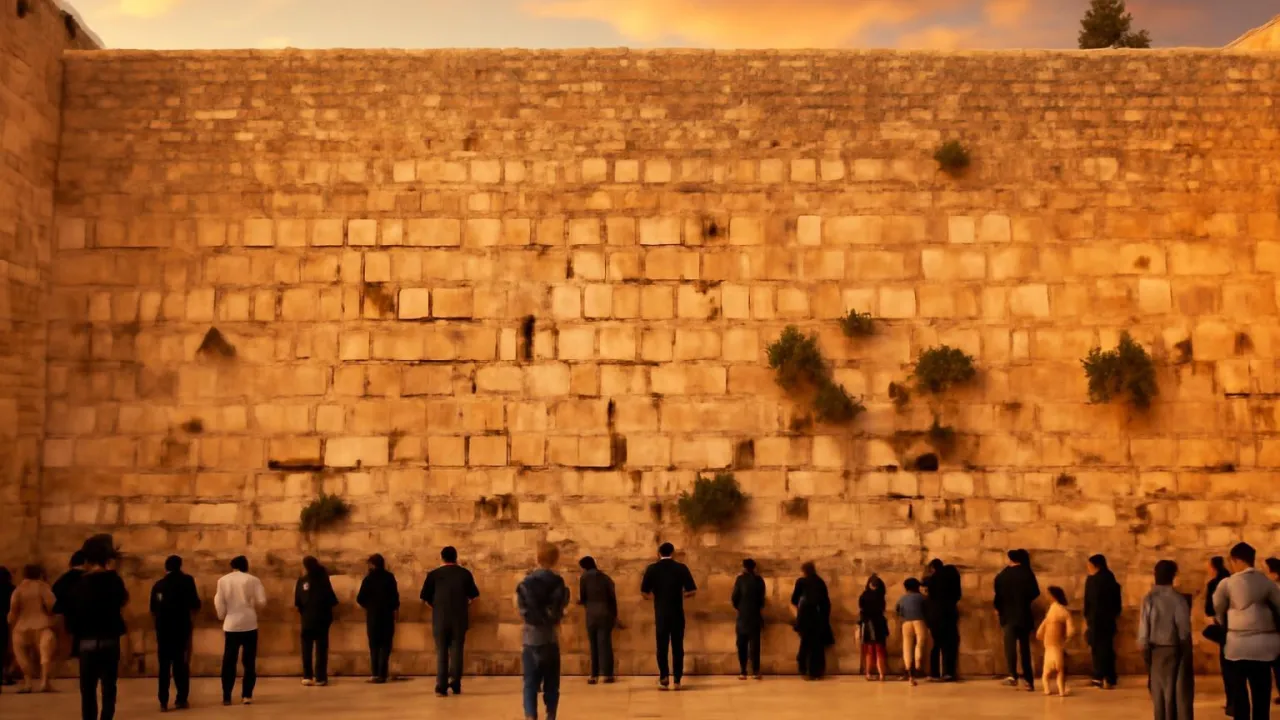
The Western Wall is over 2,000 years old and still stands strong.
✨ Word Sparks (Grade 2 Glossary)
Tap 🔊 to hear
visitor
Someone who comes to see a place
ancient
Very, very old
cracks
Tiny lines or spaces in something
🪝
What if your wishes could hide in ancient stones?
1
A Wall of History
The Western Wall is made of huge, old stones. People visit from all around the world to see it. They feel amazed by the wall’s size and age.
2
Secret Notes and Prayers
write prayers or wishes on small pieces of paper. They gently tuck these notes into between the stones. Many believe their wishes will be heard.
3
A Place for Everyone
Families, children, and travelers come to the wall every day. Some people sing or pray together while others just look quietly. The wall welcomes people from every country.
The largest stone in the wall weighs about 570 tons—heavier than 80 elephants!
✨ Word Sparks (Grade 3 Glossary)
Tap 🔊 to hear
limestone
A pale, soft rock used for building
masonry
The way stones are stacked to build
monument
A special place that honors history
🪝
What stories might the ancient stones of the Western Wall remember?
1
A Wall from Long Ago
The Western Wall stands in Jerusalem’s Old City, built from giant blocks. It is a remnant of the Second Temple, which was destroyed long ago. Some stones are so large, they weigh as much as a school bus. People have visited this wall for thousands of years.
2
Prayers in the Cracks
Visitors slip folded notes into the tiny cracks between the stones. These notes often contain prayers, hopes, or wishes. The wall is sometimes called the 'Wailing Wall,' because people once cried here for lost history. Today, it is a place for peaceful reflection.
3
How Does the Wall Stand?
The wall’s stones are stacked in rows without any glue or cement. Their massive weight and careful placement keep them steady. This engineering method is called dry stone . Even earthquakes have not toppled the wall.
4
A Landmark for Many
Millions of people from different cultures visit the Western Wall each year. Some come to pray, while others come to learn about its history. The wall is a symbol of hope and endurance. It is one of the world’s most important .
Archaeologists have found hidden tunnels and ancient streets beneath the Western Wall.
✨ Word Sparks (Grade 4 Glossary)
Tap 🔊 to hear
Herod
A king who built the wall long ago
resilience
The strength to keep going through hard times
archaeologist
A scientist who studies old places and things
🪝
If you pressed your ear to the Western Wall, what ancient voices might you hear?
1
A Monument of Memory
The Western Wall, also known as the Kotel, is the last remaining part of the Second Temple complex in Jerusalem. Built from massive limestone blocks during the reign of King around 19 BCE, it has witnessed thousands of years of history. The wall’s visible section stretches about 187 feet long and 62 feet high, but much more lies hidden underground. Its stones have been touched by countless hands over centuries of prayers and gatherings.
2
Engineering That Lasts
The Western Wall was constructed using a technique called dry stone masonry, where stones are placed without mortar. Each huge limestone block fits tightly with the next, and their combined weight keeps the wall stable. Some of the largest stones weigh hundreds of tons, requiring ingenious ramps and levers for placement. Despite earthquakes and wars, the wall’s design has allowed it to endure for over two thousand years.
3
A Place of Gathering and Prayer
People of many backgrounds visit the Western Wall to pray, reflect, or learn about its history. It is a deeply important site for Jewish people, who believe prayers offered here are especially meaningful. Visitors often write prayers or wishes on slips of paper and tuck them into the wall’s cracks, continuing a tradition that spans generations. The wall’s plaza is filled with quiet voices, songs, and the gentle sounds of footsteps on ancient stone.
4
Global Significance
The Western Wall is not just a religious site, but also a symbol of and hope for people worldwide. It is recognized as a UNESCO World Heritage site and draws millions of visitors each year. The wall inspires artists, leaders, and travelers from many cultures. Its enduring presence reminds us of the power of memory and the importance of preserving history for future generations.
2. Why is the Western Wall important to people today?
🤯 Mind-Blowing Fact • Grade 5
The largest stone in the Western Wall, called the Western Stone, measures 44.6 feet long and weighs about 570 tons.
✨ Word Sparks (Grade 5 Glossary)
Tap 🔊 to hear
friction
The force that holds things together when they touch
erosion
Slow wearing away by wind or water
legacy
Something important passed down through time
🪝
What secrets of ancient engineering and faith are hidden in the Western Wall’s stones?
1
A Living Relic of Jerusalem
Imagine standing before a wall that has witnessed empires rise and fall, its stones echoing with the prayers of millions. The Western Wall, or Kotel, is the last visible remnant of Jerusalem’s Second Temple, constructed during the reign of Herod the Great around 19 BCE. The exposed section measures about 187 feet (57 meters) long and 62 feet (19 meters) high, but the original wall extended much farther and deeper beneath today’s ground level. Its enduring presence makes it one of the world’s most significant religious and historical landmarks.
2
Masterful Ancient Engineering
The wall’s construction showcases advanced Herodian engineering, using massive limestone blocks—some weighing up to 570 tons—placed with extreme precision. Builders used dry stone masonry, fitting stones so tightly that no mortar was needed, relying on gravity and for stability. Ancient workers employed levers, wooden rollers, and earth ramps to maneuver and position these colossal stones. Despite centuries of earthquakes, , and human conflict, the wall has remained remarkably stable, demonstrating the ingenuity of its creators.
3
Tradition and Spiritual Significance
For Jewish people worldwide, the Western Wall is a sacred site, believed to be the closest accessible place to the ancient Holy of Holies. Visitors of all backgrounds write prayers or wishes on slips of paper and insert them into the wall’s cracks, a tradition that connects generations. The plaza surrounding the wall is filled with the sounds of prayer, song, and quiet reflection, especially during important holidays and ceremonies. The wall’s enduring role as a place of gathering and remembrance makes it a living symbol of faith and hope.
4
Archaeological Discoveries and Preservation
Beneath the Western Wall, archaeologists have uncovered ancient streets, cisterns, and tunnels, revealing layers of Jerusalem’s complex history. The Western Wall Tunnels allow visitors to explore hidden sections of the original structure and witness architectural features usually buried underground. Ongoing preservation efforts protect the wall from weathering, , and the effects of millions of annual visitors. These initiatives ensure that the wall’s will endure for future generations.
5
Global Impact and Cultural Legacy
Recognized as a UNESCO World Heritage site, the Western Wall draws over 10 million visitors each year, fostering intercultural dialogue and understanding. Its image appears in art, literature, and global media, symbolizing resilience and the endurance of memory. The site has played a role in major historical events, peace gatherings, and international diplomacy. By connecting people across faiths and cultures, the Western Wall continues to shape the story of Jerusalem and inspire hope around the world.