2. Which word means wind or water carrying loose dirt away?
🤯 Mind-Blowing Fact • Grade 2
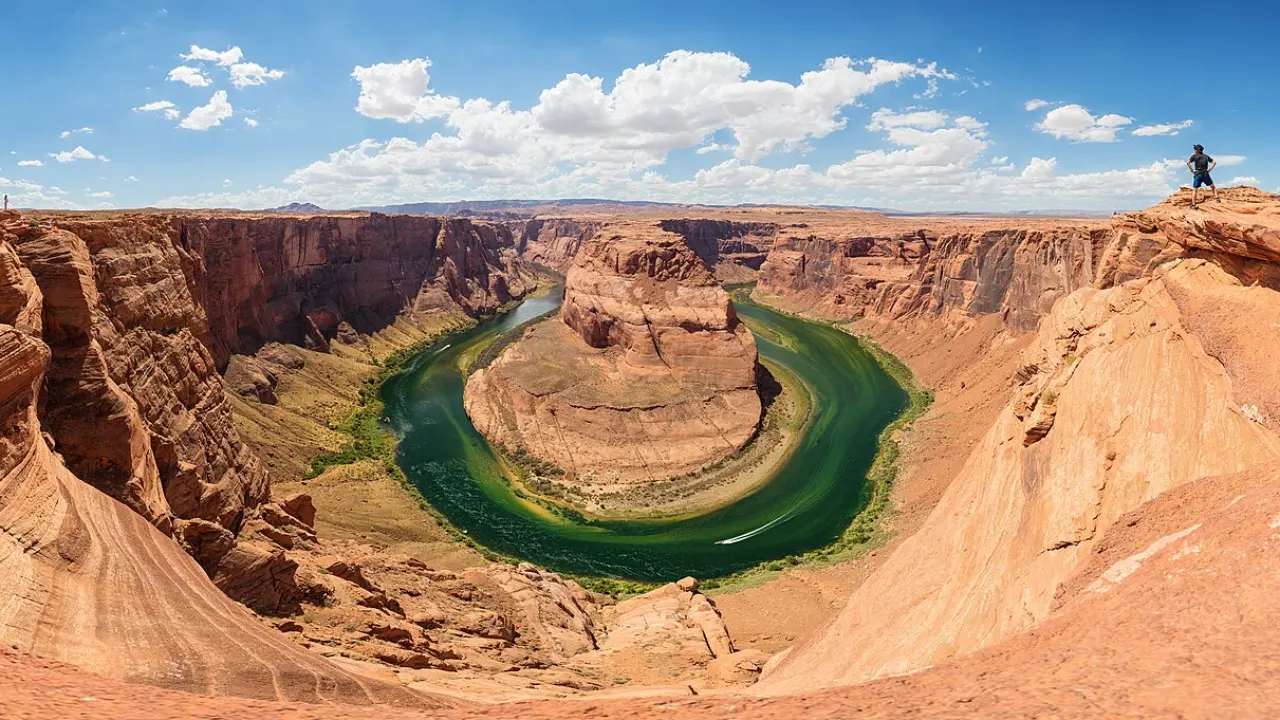
It took the Colorado River about five to six million years of weathering and erosion to carve the Grand Canyon!
✨ Word Sparks (Grade 2 Glossary)
Tap 🔊 to hear
Glacier
Huge slow river of ice that scrapes land
Canyon
Deep valley with steep rocky sides carved by water
Pebble
Small stone worn smooth by tumbling in water
🪝
How did a tiny stream carve a canyon deeper than a skyscraper?
1
The Two-Step Earth Shapers
Touch a smooth river in your hand! Long ago, that little stone was part of a jagged mountain cliff. Two partner forces—weathering and erosion—teamed up to shape it.
2
Weathering Breaks It Down
First comes weathering, which breaks rock without moving it. Water sneaks into cracks, freezes into ice, and pushes the stone apart. Plant roots and weak rainwater acids crumble rocks into sand and mud too.
3
Erosion Carries It Off
Second comes erosion, the great mover! Rushing streams, ocean waves, blowing wind, and sliding pick up those loose crumbs and carry them miles away.
1. How does freezing water cause weathering inside a rock?
2. Which of these is an example of erosion instead of weathering?
🤯 Mind-Blowing Fact • Grade 3
Water expands by about nine percent when it freezes, creating enough force to shatter solid granite cliffs!
✨ Word Sparks (Grade 3 Glossary)
Tap 🔊 to hear
Sediment
Loose bits of broken rock, sand, and mud
Frost Wedging
Ice expanding inside rock cracks to split stone
Deposition
Dropping carried sediment in a brand-new resting spot
🪝
What is the secret difference between nature's hammer and nature's dump truck?
1
Nature's Hammer vs. Nature's Truck
Imagine building a statue out of sandcastles on a breezy beach. Soon, wind and waves change your sculpture! Geologists group Earth's surface shapers into tools that break rock and tools that haul .
2
Physical and Chemical Weathering
Weathering acts like nature's hammer, breaking rock right where it stands. Physical weathering cracks stone through , crashing waves, or prying roots. Chemical weathering changes the rock itself, like weakly acidic rain dissolving limestone caves.
3
Erosion on the Move
Once weathering creates loose —boulders, gravel, sand, and silt—erosion acts like nature's dump truck. Flowing rivers, coastal waves, howling desert winds, glacial ice, and downhill gravity transport sediment to brand-new locations.
4
Deposition Finishes the Trip
Every journey must end! When wind slows down or a river enters a calm lake, eroded drops and settles in a third step called .
1. When slightly acidic rainwater dissolves underground limestone to form a cave, what is happening?
2. What happens during deposition at the end of erosion's journey?
🤯 Mind-Blowing Fact • Grade 4
Virginia's Appalachian Mountains have lost thousands of vertical feet of rock over 300 million years, sending enough eroded sand eastward to build the entire Atlantic Coastal Plain!
✨ Word Sparks (Grade 4 Glossary)
Tap 🔊 to hear
Abrasion
Scraping and wearing rock smooth by rubbing particles
Carbonic Acid
Weak natural acid formed when rain absorbs carbon
Agents of Erosion
Water, wind, ice, and gravity moving loose sediment
🪝
Why are Virginia's Blue Ridge Mountains smooth and rounded while the Rocky Mountains are tall and jagged?
1
A Million-Year Makeover
Gaze across Shenandoah National Park in Virginia, and you will see gentle, tree-covered peaks softened by mist. Hundreds of millions of years ago, those ancient Blue Ridge peaks stood as jagged and towering as the Himalayas! Relentless partnership between weathering and erosion gradually sculpted those sky-piercing summits into rounded ridges.
2
Mechanical vs. Chemical Breakdown
Weathering always works in place without transporting rock. Mechanical weathering shatters stone into smaller pieces of the exact same mineral—through ice wedging, thermal expansion, , or root pry. Chemical weathering alters a rock's molecular makeup: oxygen rusts iron-bearing minerals into red clay, while in rainwater dissolves marble gravestones and carves Virginia's famous Luray Caverns.
3
The Four Great Agents of Erosion
Once rock fragments loosen into sediment, four primary —liquid water, wind, glaciers, and gravity—sweep them away. Gravity triggers sudden landslides and slow hillside creep, while rivers carry millions of tons of silt from mountain streams toward the Chesapeake Bay.
4
Slowing Runoff With Living Roots
Although erosion naturally builds fertile floodplains and sandy barrier islands, human clearing of forests or farmland can accelerate soil loss dangerously fast. Planting native grasses and riverside buffer trees anchors loose soil, keeping mud out of clean waterways.
1. Why are Virginia's Blue Ridge Mountains smoother and lower than the younger Rocky Mountains?
2. How do riverside buffer trees help protect waterways like the Chesapeake Bay?
🤯 Mind-Blowing Fact • Grade 5
Cleopatra's Needle, a 3,500-year-old granite obelisk that stayed crisp in dry Egypt, suffered more chemical weathering in just a century of humid New York City rain than in three millennia in the Sahara!
✨ Word Sparks (Grade 5 Glossary)
Tap 🔊 to hear
Exfoliation
Curved outer sheets peeling off massive granite domes
Hydrolysis
Chemical reaction with water turning rock minerals into clay
Mass Wasting
Downhill movement of rock and soil pulled by gravity
🪝
How do Earth's internal tectonic uplift and external weathering-erosion engines battle for control of every landscape?
1
Earth's Tug-of-War on the Crust
Stand beside a roaring waterfall where boulders crash in foaming spray, and you are witnessing half of a planetary tug-of-war. Deep underground, plate tectonics and volcanism push fresh crust skyward; at the surface, solar energy and gravity power weathering and erosion to plane mountains back toward sea level. Although people often swap the two words casually, geologists draw a strict boundary: weathering is in-situ disintegration and alteration, whereas erosion requires kinetic transport.
2
Mechanical Disintegration Amplifies Surface Area
Physical, or mechanical, weathering fractures bedrock without altering its chemical formula. Frost wedging inside alpine joints, salt-crystal growth along arid cliffs, and pressure-release —where overlying rock erodes and granite domes peel like onion skins—split massive outcrops into angular talus. Each fracture multiplies exposed surface area, giving water and atmospheric gases far more room to attack.
3
Chemical Alteration and Climate Controls
Chemical weathering transforms unstable primary minerals into stable surface clays and dissolved ions. converts feldspar in granite into soft kaolinite clay, oxidation rusts iron-rich basalt, and carbonation dissolves calcium carbonate karst terrain. Because chemical reactions speed up in heat and moisture, tropical rainforests weather bedrock tens of meters deep, whereas cold, dry polar deserts rely mainly on slow mechanical shattering.
4
Fluid Dynamics and Mass Wasting
Erosion mobilizes weathered regolith whenever fluid velocity or gravitational shear exceeds particle resistance. Rivers transport sediment as dissolved load, suspended silt, and bouncing bedload; wind saltates sand grains across deserts; valley glaciers pluck and abrade U-shaped troughs; and gravity drives from slow soil creep to catastrophic rockslides.
5
Closing the Rock Cycle Loop
Globally, rivers deliver roughly twenty billion metric tons of eroded sediment and dissolved minerals to Earth's oceans every year. Deposited in thick marine basins and compacted over millions of years, yesterday's weathered mountains become tomorrow's sandstone, shale, and limestone—fueling the endless rock cycle.