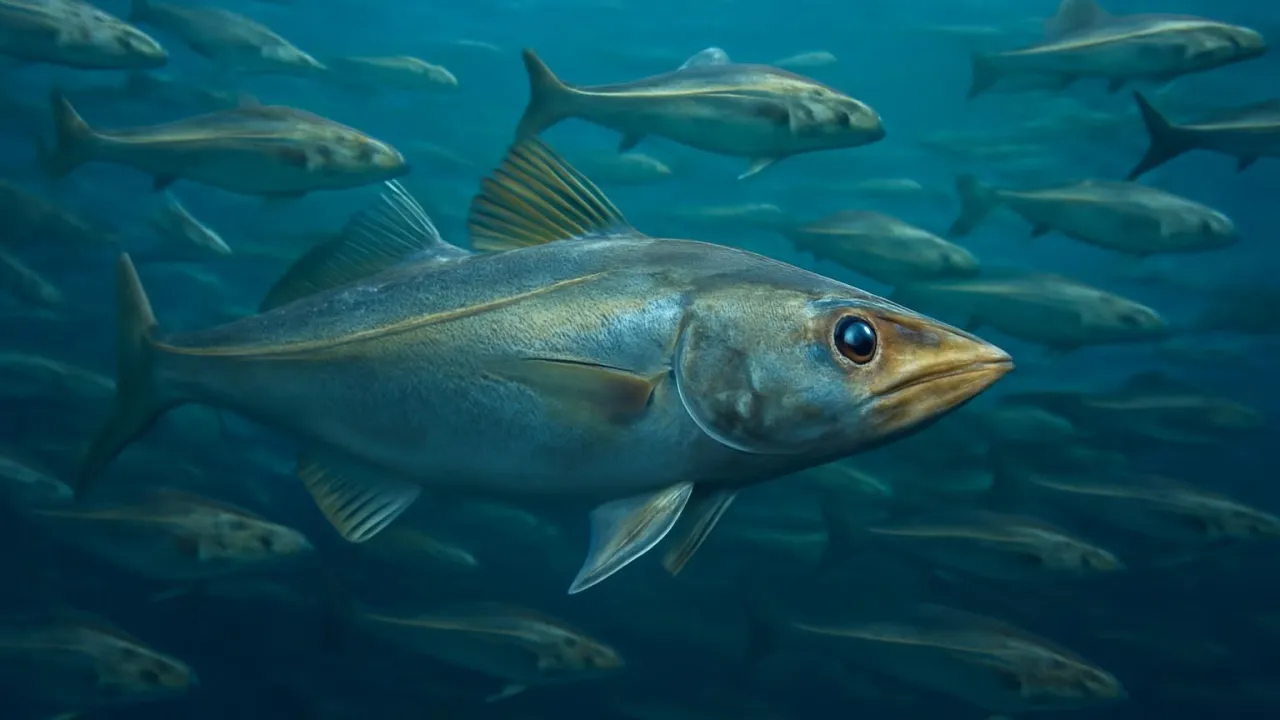
Walleye pollock are used to make fish sticks and imitation crab!
✨ Word Sparks (Grade 2 Glossary)
Tap 🔊 to hear
school
A group of fish swimming together
plankton
Tiny living things in water
egg
A shell where a baby animal grows
🪝
Did you know some fish swim in groups as big as a city?
1
Meet the Walleye Pollock
Walleye pollock are shiny, silver fish with big eyes and spotted bodies. They swim together in huge groups called , which help keep them safe from bigger fish. These schools can have thousands or even millions of pollock swimming together.
2
Life in the Cold Seas
Walleye pollock live in the chilly waters near Alaska and Russia. They like to stay in deep, cold parts of the ocean where they can find lots of food. In spring, the fish lay that float in the water until they hatch.
3
What Pollock Eat
Walleye pollock eat tiny animals called and shrimp, as well as small fish. They use their sharp eyes to spot food in the dark water. Pollock must eat a lot to grow big and strong.
Walleye pollock can lay up to 1.2 million eggs in a single season!
✨ Word Sparks (Grade 3 Glossary)
Tap 🔊 to hear
camouflage
Blending in so others can't see you
predator
An animal that hunts other animals
nutrients
Things in food that help you grow
🪝
Can you imagine a fish so important it helps feed millions of people?
1
Super-Sized Schools
Walleye pollock swim in massive schools that can stretch for miles. These schools help protect them from like seals and whales. The fish work together, turning and darting as one big group. This teamwork confuses hunters and keeps more pollock safe.
2
Life in the North Pacific
Walleye pollock live mostly in the cold waters of the North Pacific Ocean. They are found near Alaska, Russia, and Japan, where the water is chilly and full of . Pollock swim in deep water during the day and move up to feed at night. They lay thousands of eggs that drift with the ocean currents.
3
A Fish With a Job
Walleye pollock are a key part of the ocean food web. They eat plankton and tiny shrimp, but they are also food for bigger animals like sea lions, whales, and seabirds. Humans catch more pollock than almost any other fish, using them to make fish sticks, imitation crab, and even pet food.
4
Body Built for Survival
Walleye pollock have silvery scales that help them blend into the shimmering water, a trick called . Their large eyes help them see in the dim ocean light. A long, slim body lets them swim quickly to escape danger and catch food.
Pollock fishing is one of the largest and most carefully managed fisheries on Earth!
✨ Word Sparks (Grade 4 Glossary)
Tap 🔊 to hear
spawn
When fish lay eggs in water
larvae
Baby animals that hatch from eggs
ecosystem
A community of living things and their home
🪝
What if one kind of fish could connect ocean life and your lunch plate?
1
Masters of the Chilly Deep
Walleye pollock thrive in the cold, nutrient-rich waters of the North Pacific, especially near Alaska and Russia. They form enormous schools that can stretch for miles, swirling together in synchronized movements. This behavior helps them avoid predators such as whales, sea lions, and larger fish. Their ability to swim in such large groups is a key adaptation for survival in the wild.
2
The Pollock Life Cycle
Each spring, adult walleye pollock migrate to shallow waters to , releasing millions of eggs into the ocean. These eggs float with the currents until they hatch into tiny , which drift and feed on plankton. As they grow, young pollock move deeper and become part of the massive schools. This life cycle ensures that new generations can survive in changing ocean conditions.
3
A Keystone in the Food Web
Walleye pollock play a critical role in the ocean , acting as both predator and prey. They feed on plankton, shrimp, and small fish, helping control those populations. At the same time, they are a major food source for animals like seabirds, whales, and seals. Their presence keeps the food web balanced and supports countless other species.
4
From Ocean to Table
Walleye pollock are one of the most heavily fished species in the world, with millions of tons caught every year. They are used to make popular foods like fish sticks, imitation crab, and even some fast-food sandwiches. Careful management is needed to make sure pollock populations stay healthy, so people and wildlife can continue to depend on them.
Walleye pollock schools can be so massive that they are visible from aircraft flying overhead!
✨ Word Sparks (Grade 5 Glossary)
Tap 🔊 to hear
keystone species
A species that is crucial for its ecosystem
surimi
Fish paste used to make imitation crab
quota
A set limit on how much can be caught
🪝
What fish is so abundant that it shapes both ocean ecosystems and global food markets?
1
Walleye Pollock: A Scientific Standout
Walleye pollock, scientifically named Gadus chalcogrammus, belong to the cod family and are among the most abundant fish species in the world. They are primarily found in the frigid waters of the North Pacific Ocean, especially the Bering Sea and Gulf of Alaska. Adult pollock can reach lengths of up to 3.5 feet (1.1 meters) and weigh as much as 4.5 pounds (2 kilograms). Their silvery bodies and dark mottled spots provide effective camouflage in the shimmering ocean water. Taxonomically, walleye pollock were once grouped with Atlantic pollock but are now recognized as a distinct species.
2
Physiology and Survival Strategies
Walleye pollock possess large eyes adapted for detecting prey in low-light conditions typical of deep, cold waters. Their streamlined bodies and forked tails enable rapid bursts of speed, allowing them to evade predators and chase small prey. These fish are opportunistic feeders, consuming plankton, krill, and juvenile fish, and can adjust their diet based on seasonal availability. During spawning, females release up to 1.2 million eggs, which float freely and are fertilized externally. High egg production increases the chances of survival in a challenging ocean environment.
3
Role in the Ocean Ecosystem
Ecologically, walleye pollock are a , serving as both a major predator of small marine organisms and a vital prey item for larger animals. They support populations of marine mammals like Steller sea lions and northern fur seals, as well as seabirds such as puffins and murres. Pollock help regulate populations of plankton and small fish, maintaining balance within the marine food web. Their migration patterns and school formations influence the movement and behavior of other species in the ecosystem. Without pollock, many ocean animals would struggle to find enough food.
4
From Ocean Harvest to Human Table
Walleye pollock are crucial to global fisheries, with annual harvests sometimes exceeding three million metric tons. They are the main ingredient in products like (imitation crab), fish sticks, and popular fast-food sandwiches. The United States and Russia manage the largest pollock fisheries, using scientific surveys and strict to prevent overfishing. Sustainable fishing practices are vital to ensure pollock populations remain healthy and ocean ecosystems stay balanced. Compared to other fish, pollock are harvested in much greater numbers, making them one of the world’s most important food fish.
5
Conservation and Future Challenges
Although walleye pollock populations are currently stable, they face threats from climate change, ocean warming, and changing food availability. Warmer water temperatures can affect spawning success and the distribution of plankton, their main food source. Scientists and fishery managers closely monitor pollock numbers and habitat conditions to adapt regulations as needed. Conservation efforts focus on maintaining healthy populations for both wildlife and people who depend on pollock. Protecting this species ensures that future generations can continue to benefit from its ecological and economic importance.