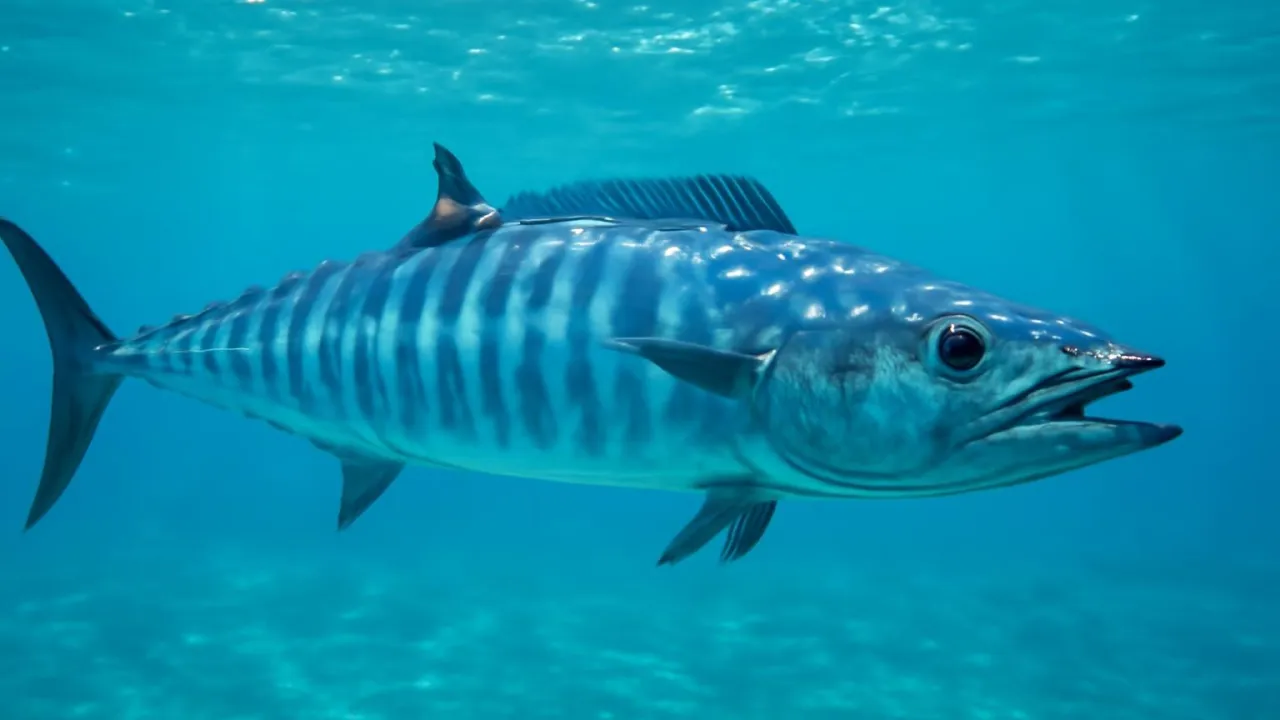
Wahoo can swim as fast as some racecars for short bursts!
✨ Word Sparks (Grade 2 Glossary)
Tap 🔊 to hear
carnivore
An animal that eats other animals
reef
A place in the ocean with many rocks and corals
surface
The very top part of the water
🪝
What animal in the sea can race faster than your bike?
1
The Sea’s Speedster
Imagine a fish that zooms through water like a rocket, leaving bubbles behind. The wahoo’s shiny blue stripes flash as it swims, making it look like a lightning bolt. Its long, skinny body helps it move super fast to chase food or escape danger.
2
Where Wahoo Like to Swim
Wahoo live in warm, tropical oceans all around the world, where the water is bright and clear. They often swim near the and sometimes near coral or boats. Wahoo may swim alone or with a few friends when food is easy to find.
3
Hungry Hunters
Wahoo have sharp teeth that let them catch slippery fish and squid for meals. Their teeth help them bite quickly and hold on tight to their food. Because they eat other animals, wahoo are called .
Wahoo can leap out of the water when chasing prey or escaping danger!
✨ Word Sparks (Grade 3 Glossary)
Tap 🔊 to hear
camouflage
Colors or patterns that help hide
predator
An animal that hunts other animals
ecosystem
A place where living things interact
🪝
What fish can outswim a dolphin and even surprise fishermen with its speed?
1
Built for Speed
The wahoo’s long, thin body and pointed snout help it slice through the water. Its blue and silver stripes act as , making it hard for and prey to see. Wahoo can reach speeds of up to 60 miles per hour. This incredible speed helps them chase down fast fish and escape danger.
2
Life in the Warm Seas
Wahoo live in tropical and subtropical oceans around the world. They prefer clear, warm waters and are often found near the surface or around coral reefs. Sometimes, wahoo travel alone, but they can also form small groups called schools. Their habitat is full of other fast fish and hungry .
3
Teeth Made for Hunting
Wahoo have razor-sharp, triangular teeth that are perfect for catching slippery prey. Their teeth can slice through fish and squid with ease. As carnivores, wahoo eat smaller fish like mackerel and flying fish. Their powerful jaws and sharp teeth make them excellent hunters.
4
How Wahoo Help the Ocean
Wahoo are important in their , helping keep fish populations balanced. They are also a favorite catch for sport fishers because of their speed and strength. By eating smaller fish, wahoo help keep coral reefs healthy. Their presence shows that the ocean is full of life.
Wahoo’s speed rivals that of the fastest Olympic swimmers—by more than 10 times!
✨ Word Sparks (Grade 4 Glossary)
Tap 🔊 to hear
camouflage
Colors or patterns that help animals hide
subtropical
Warm areas just outside the tropics
adaptation
A body part or behavior that helps survival
🪝
Could you spot a fish that dashes through the sea faster than almost any other?
1
Streamlined for Speed
Wahoo are built for speed, with sleek, torpedo-shaped bodies and a pointed snout that reduces water resistance. Their blue vertical stripes provide by breaking up their outline, making it harder for both prey and predators to spot them. Wahoo can swim up to 60 miles per hour, which is faster than most ocean fish. This incredible speed allows them to chase down agile prey and avoid becoming someone else’s meal.
2
Ocean Hunters and Their Habitat
Wahoo live in tropical and oceans worldwide, often near the surface where sunlight penetrates the water. They are commonly found around coral reefs, floating debris, or even following boats, since these areas attract smaller fish. Wahoo may travel alone or form small schools, especially when food is plentiful. Their presence in different regions helps keep local fish populations balanced.
3
Teeth and Tactics
Wahoo have sharp, triangular teeth and powerful jaws, which are perfect for catching and cutting through slippery fish and squid. As carnivores, they feed on a variety of smaller fish, including mackerel and flying fish, and sometimes squid. Their hunting style is fast and direct, often striking quickly before prey can escape. These make the wahoo a top predator in its environment.
4
Wahoo’s Role in the Ocean
Wahoo play an important role in the ocean ecosystem by keeping smaller fish populations in check. They are also popular targets for sport fishers, which can affect their numbers if not managed responsibly. In healthy numbers, wahoo help maintain the balance of coral reef communities by controlling the species they prey upon. Their presence is a sign of a thriving, healthy ocean environment.
1. Why is the wahoo’s speed important for survival?
2. How do humans impact wahoo populations?
🤯 Mind-Blowing Fact • Grade 5
A wahoo’s burst of speed can outpace a speeding boat for a short distance!
✨ Word Sparks (Grade 5 Glossary)
Tap 🔊 to hear
pelagic
Living in the open ocean, away from shore
hydrodynamic
Shaped to move easily through water
apex predator
A top hunter with few natural enemies
🪝
What if you could outswim a cheetah—underwater? Meet the wahoo, the ocean’s speed champion.
1
Taxonomy and Physical Adaptations
The wahoo, Acanthocybium solandri, belongs to the Scombridae family, which includes mackerels and tunas. Its streamlined, torpedo-shaped body, deeply forked tail, and narrow, pointed snout are all evolutionary adaptations for rapid swimming. Wahoo possess a unique system of finlets behind the dorsal and anal fins, reducing turbulence and increasing efficiency. Their iridescent blue vertical stripes provide disruptive camouflage, helping them avoid detection by both predators and prey. These physical characteristics enable the wahoo to reach burst speeds up to 60 miles per hour, making it one of the fastest fish in the world.
2
Habitat and Geographic Range
Wahoo inhabit tropical and subtropical zones in the Atlantic, Pacific, and Indian Oceans, typically between 40°N and 35°S latitude. They are most commonly found near the surface, from 0 to 50 meters deep, where water temperatures range from 70 to 86°F (21 to 30°C). Wahoo often associate with floating debris, sargassum mats, and reefs, which attract schools of smaller fish and squid—their primary prey. These fish are highly migratory, traveling long distances to follow seasonal changes in water temperature and food availability. Their global distribution makes them an important predator in many marine ecosystems.
3
Diet, Hunting Behavior, and Physiology
Wahoo are obligate carnivores, feeding mainly on fishes such as mackerel, flying fish, and small tunas, as well as cephalopods like squid. Their jaws are lined with razor-sharp, triangular teeth capable of slicing through tough scales and flesh. When hunting, wahoo rely on their exceptional speed and sudden bursts of acceleration to ambush prey, often striking from below. Their muscular bodies and high metabolic rate require them to eat frequently, supporting their active lifestyle. Wahoo’s speed and agility also make them difficult targets for larger predators such as sharks and marlins.
4
Ecological Role and Human Impact
Wahoo play a crucial role as apex mesopredators, regulating populations of smaller fish and maintaining the balance of food webs. They are highly prized by recreational and commercial fishers for their fighting ability and delicious meat, which can lead to localized overfishing if not managed sustainably. Although wahoo are not currently considered threatened, their populations are monitored by fisheries organizations to prevent decline. Responsible fishing practices, such as catch limits and seasonal closures, help protect wahoo and ensure healthy ocean ecosystems for the future.
5
Mind-Blowing Comparisons and Conservation
A wahoo’s top speed of 60 miles per hour is nearly twice as fast as an Olympic swimmer and even faster than a cheetah’s sprint—if the cheetah could swim! Adult wahoos can grow up to 8 feet (2.4 meters) long and weigh over 180 pounds (82 kilograms), making them one of the largest fast-swimming predatory fish. Their rapid growth rate and wide range help protect them from extinction, but climate change and overfishing could threaten their populations in the future. Conservation groups encourage sustainable fishing and ocean protection to keep wahoo populations strong. The presence of healthy wahoo is a sign of a thriving, balanced marine environment.