1. What special kind of seeing does vitamin A help your eyes do?
2. Which colorful foods give your body lots of vitamin A builders?
🤯 Mind-Blowing Fact • Grade 2
One medium baked sweet potato holds more than enough beta-carotene to supply a kid's vitamin A for two whole days!
✨ Word Sparks (Grade 2 Glossary)
Tap 🔊 to hear
Beta-carotene
Orange plant pigment turned into vitamin A
Pigment
Natural coloring substance in plants or animals
Liver
Large organ that stores extra vitamin A
🪝
How can dark green spinach hide an orange vitamin builder inside its leaves?
1
Two Ways to Get It
Turn off the bedroom lamp and wait a few moments as fuzzy shadows sharpen into shapes! Your eyes thank vitamin A for that trick. You can eat ready-made vitamin A in eggs, cheese, and milk, or let your gut build it from colorful plants.
2
Hidden Under Green
Orange foods like carrots and sweet potatoes glow with a called . Surprise—spinach, kale, and broccoli have tons of beta-carotene too, hidden underneath their bright green chlorophyll!
3
Healthy Shields and Storage
Because vitamin A dissolves in healthy fats, eating veggies with a drizzle of olive oil or avocado helps your tummy absorb it. Extra vitamin A stays safely stored in your while keeping skin and lung linings strong.
1. Why don't spinach leaves look orange even though they contain lots of beta-carotene?
2. What helps your digestive system absorb vitamin A from colorful vegetables?
🤯 Mind-Blowing Fact • Grade 3
Arctic polar bears store so much concentrated vitamin A in their livers from eating seals that even a tiny bite of polar bear liver is toxic to humans!
✨ Word Sparks (Grade 3 Glossary)
Tap 🔊 to hear
Retina
Light-sensing layer lining the back of eyes
Rhodopsin
Vitamin A pigment helping eyes see dimly
Fat-soluble
Dissolving in fats and stored in liver
🪝
What actually happens at the back of your eyeball when a single beam of moonlight enters?
1
Catching Starlight in the Retina
Line the back of your eyeball like a movie screen sits a tissue layer called the . Packed inside are millions of dim-light sensor cells called rods! Each rod uses vitamin A to build a purple light-catching molecule named .
2
Snap Goes the Switch!
When even a tiny speck of starlight hits , its vitamin A piece flips shape like a light switch! That flip sends an instant electrical signal up the optic nerve so your brain sees shapes in the dark.
3
Fat-Soluble Team Player
Nutrition scientists classify vitamin A as a vitamin alongside vitamins D, E, and K. Unlike water-soluble vitamins that wash out quickly, spare vitamin A parks inside your liver until cells call for supplies.
4
Guarding Body Linings
Beyond vision, vitamin A guides growing cells in your cornea—the clear front window of your eye—and keeps moist mucus linings inside your nose, throat, and intestines healthy so invading germs bounce right off!
1. What is the light-catching molecule in eye rod cells built from vitamin A?
2. Which three other vitamins belong to the fat-soluble family with vitamin A?
🤯 Mind-Blowing Fact • Grade 4
During World War II, British Royal Air Force flyers spread a cover story that eating carrots gave their pilots superhuman night vision—hiding their top-secret airborne radar invention!
✨ Word Sparks (Grade 4 Glossary)
Tap 🔊 to hear
Retinoid
Active vitamin A form in animal foods
Carotenoid
Colorful plant pigment converted into vitamin A
Epithelial
Protective surface cells covering skin and organs
🪝
Why can eating tons of carrots safely tint your palms slightly orange, while taking way too many vitamin A pills is risky?
1
Retinoids vs. Carotenoids
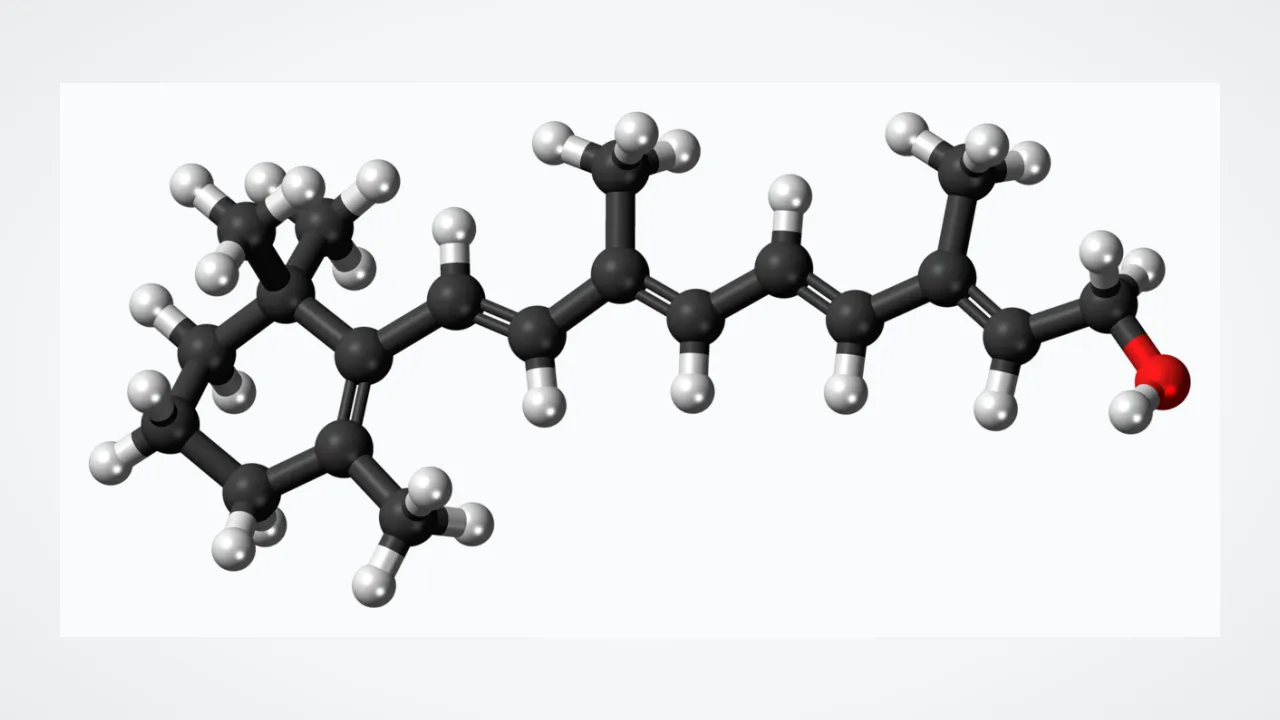
Nutritionists use 'vitamin A' as a family name for two related groups of compounds. Animal foods such as eggs, dairy, and fish supply preformed —ready for cells to use immediately. Colorful plants like carrots, mangoes, apricots, and kale supply provitamin A , especially beta-carotene, which intestinal enzymes snip in half to make active vitamin A.
2
Smart Built-In Safety Brakes
Because preformed vitamin A is fat-soluble and accumulates in liver cells, swallowing megadose supplements far above daily needs can overload the liver. Plant beta-carotene, however, comes with a clever biological safety brake: your intestine only converts beta-carotene into vitamin A when levels run low! Eating mountains of carrots might harmlessly tint your palms yellowish-orange for a few weeks, without causing vitamin A toxicity.
3
Inside the Visual Cycle
In the retina, vitamin A takes a form called retinal and partners with opsin protein to form rhodopsin inside rod cells. Every flash of dim light straightens the bent retinal molecule, firing a nerve signal before enzymes bend it back to catch the next photon. If vitamin A runs low, rhodopsin refills sluggishly, causing night blindness.
4
Epithelial Armor and T-Cells
In another form called retinoic acid, vitamin A switches on genes that keep barrier cells—your skin, clear eye corneas, lungs, and gut wall—regenerating smoothly while training white blood cells to spot germs.
1. How does your body prevent vitamin A overload when you eat lots of orange carrots?
2. What happens physically to the retinal molecule in rhodopsin when a photon of dim light strikes it?
🤯 Mind-Blowing Fact • Grade 5
When a photon of light strikes vitamin A inside an eye rod cell, the molecule snaps straight in just two hundred femtoseconds—five trillion times faster than the blink of an eye!
✨ Word Sparks (Grade 5 Glossary)
Tap 🔊 to hear
Retinal
Light-switching vitamin A form inside eye rods
Micelle
Tiny fat droplet helping gut absorb vitamins
Biofortified
Crops bred naturally to pack extra nutrients
🪝
How does a single vitamin molecule switch shapes in trillionths of a second to catch starlight AND regulate hundreds of genes across your body?
1
Discovery of the First 'Fat-Soluble A'
In 1913, biochemists Elmer McCollum and Marguerite Davis at the University of Wisconsin discovered an essential growth factor hidden in butterfat and egg yolks that was absent from lard or olive oil, naming it 'fat-soluble A'—the compound that launched modern alphabetical vitamin naming! Today we recognize vitamin A as a versatile trio of active retinoids—retinol, , and retinoic acid—absorbed alongside dietary lipids via bile and stored chiefly as retinyl esters inside hepatic stellate cells of the liver.
2
George Wald and Picosecond Vision
Harvard biochemist George Wald won the 1967 Nobel Prize for mapping vitamin A's role in the visual cycle. Inside rod cells—roughly one hundred twenty million per human eye—11-cis-retinal nestles in a bent conformation inside opsin protein to form rhodopsin. When a single photon strikes, 11-cis-retinal snaps straight into all-trans-retinal within two hundred femtoseconds—one of the fastest molecular switches in nature—triggering a cascade that alerts the visual cortex before retinal enzymes bend it back.
3
Retinoic Acid as a Gene Regulator
Outside the eye, cells oxidize retinol into retinoic acid, which behaves like a steroid hormone! Entering the cell nucleus, retinoic acid binds nuclear receptors controlling over five hundred genes essential for embryonic limb patterning, bone remodeling, cornea moisture, and mucus-secreting goblet cells along respiratory and digestive tracts.
4
Provitamin Cleavage and Bioavailability
Plant foods provide beta-carotene—essentially two vitamin A rings joined end-to-end—which intestinal beta-carotene dioxygenase cleaves on demand, regulated by feedback so dietary plants cannot cause hypervitaminosis A.
5
Protecting Sight Worldwide
Because severe vitamin A deficiency impairs cornea lubrication and mucosal immunity in regions relying solely on white rice, global public-health programs and orange-fleshed sweet potatoes now protect millions of young children's eyesight every year.