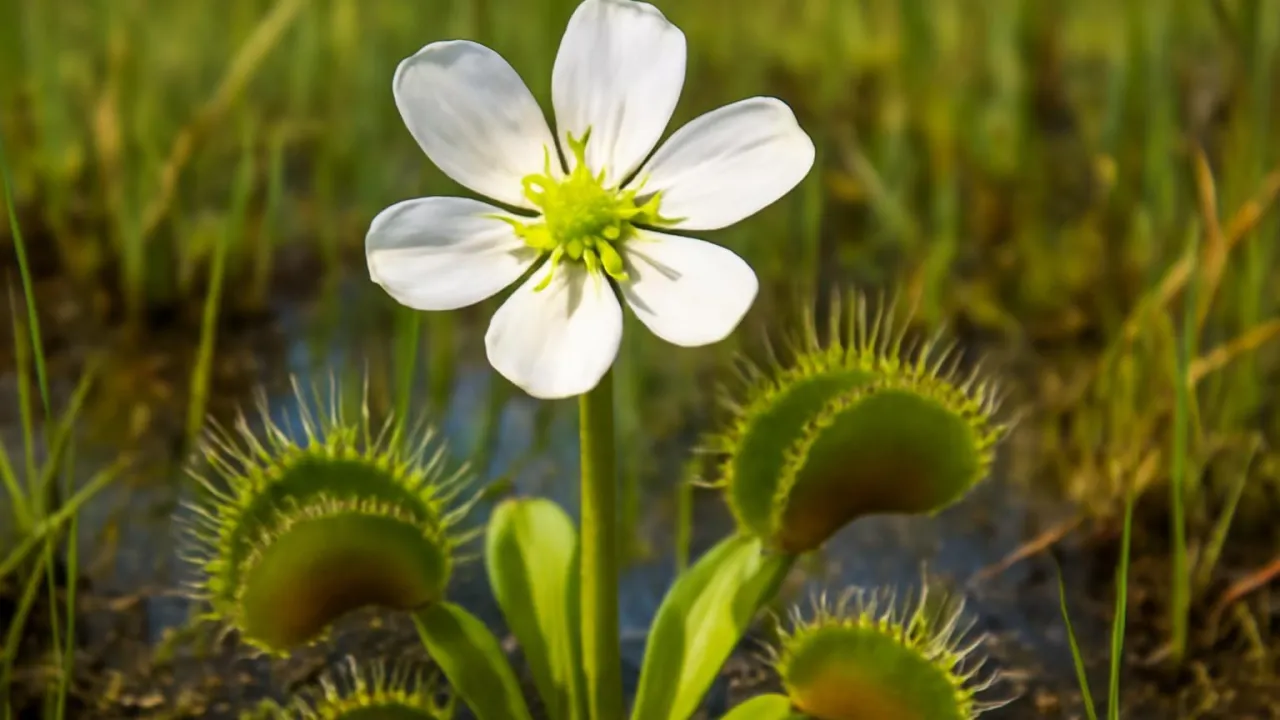
The Venus Flytrap can close its leaves in less than half a second to catch prey!
✨ Word Sparks (Grade 2 Glossary)
Tap 🔊 to hear
insect
A small animal with six legs and wings
habitat
The natural home where a plant or animal lives
nutrients
Food or minerals that help plants grow
🪝
Have you ever seen a flower that can snap shut like a trap?
1
A Flower That Snaps Shut
The Venus Flytrap has special leaves that snap shut quickly. It uses these leaves to catch that land on it. When an insect touches tiny hairs, the leaves close fast to trap it.
2
Where It Grows and Lives
This flower grows in wet, sunny places in the southeastern United States. It likes soil that is poor in and gets water from rain. The wet helps it survive.
3
How It Gets Food
The Venus Flytrap gets from it catches. It uses its leaves to digest bugs slowly. This helps the plant grow strong even in poor soil.
1. What makes the Venus Flytrap’s leaves snap shut?
2. Why does the Venus Flytrap eat insects?
🤯 Mind-Blowing Fact • Grade 3
The Venus Flytrap’s trap can snap shut in about 0.3 seconds, one of the fastest plant movements!
✨ Word Sparks (Grade 3 Glossary)
Tap 🔊 to hear
adaptation
A change that helps a plant survive better
pollination
When pollen moves to make new seeds
enzyme
A natural chemical that helps break down food
🪝
Did you know the Venus Flytrap uses a clever trap to catch its food?
1
How the Venus Flytrap Traps Prey
The Venus Flytrap has two hinged leaves that snap shut when triggered. Tiny hairs on the leaves sense when an insect touches them. This quick action helps the plant catch prey for nutrients. This is an to poor soil conditions.
2
Its Habitat and Growth
This carnivorous plant grows in nutrient-poor wetlands in the southeastern United States. It thrives in sunny, moist environments with acidic soil. The plant’s roots absorb water but few nutrients, so it relies on insects. This habitat helps it avoid many predators.
3
Pollination and Flowering
The Venus Flytrap produces small white flowers on tall stalks above the leaves. This keeps pollinators safe from being trapped by the leaves. helps the plant reproduce and spread seeds. Flowers bloom mainly in spring and early summer.
4
How It Digests Food
Once the leaves snap shut, the plant secretes digestive to break down prey. Nutrients like nitrogen and phosphorus are absorbed to support growth. This process can take several days to complete. The trap reopens after digestion to catch more insects.
1. Why does the Venus Flytrap have flowers on tall stalks?
2. What helps the Venus Flytrap digest insects?
🤯 Mind-Blowing Fact • Grade 4
Seasonal fires help keep the Venus Flytrap’s habitat healthy by reducing competing plants and promoting growth.
✨ Word Sparks (Grade 4 Glossary)
Tap 🔊 to hear
symbiosis
A helpful relationship between two living things
acidic
Soil that is sour and low in nutrients
conservation
Protecting nature and plants from harm
🪝
How does the Venus Flytrap’s snap-trap help it survive in tough wetlands?
1
Snap-Trap Adaptation and Survival
The Venus Flytrap’s snap-trap evolved as an adaptation to nutrient-poor, wetlands. This quick leaf movement helps it capture insects that provide essential nitrogen and phosphorus. Without this trap, the plant would struggle to get enough nutrients from the soil. This adaptation allows it to thrive where other plants cannot.
2
Role in the Ecosystem
In its wetland ecosystem, the Venus Flytrap helps control insect populations by catching prey. It also provides nectar to pollinators, creating a symbiotic relationship. Human activity threatens its habitat, making important. Protecting wetlands helps preserve this unique carnivorous plant.
3
Geographic Distribution and Habitat
The Venus Flytrap is native to the coastal plains of North and South Carolina in the United States. It grows in sunny, moist, and soils found in bogs and swamps. Seasonal fires help maintain its habitat by clearing competing plants. These environmental factors are vital for the plant’s survival and reproduction.
4
Flowering and Reproduction
The Venus Flytrap produces white flowers on tall stalks during spring and early summer to attract pollinators safely. This separation prevents pollinators from becoming prey. After pollination, the plant produces seeds that disperse to grow new plants. This reproductive strategy ensures the species continues despite habitat challenges.
1. Why is the Venus Flytrap’s snap-trap important for survival?
2. What role do seasonal fires play in the Venus Flytrap’s habitat?
🤯 Mind-Blowing Fact • Grade 5
The Venus Flytrap’s trap closes in 0.3 seconds, making it one of the fastest movements in the plant kingdom.
✨ Word Sparks (Grade 5 Glossary)
Tap 🔊 to hear
turgor pressure
Water pressure inside plant cells that helps them move
enzyme
A chemical that breaks down food for the plant
conservation
Protecting plants and habitats from harm
🪝
What makes the Venus Flytrap’s rapid trap mechanism a marvel of plant evolution?
1
Scientific Classification and Evolution
The Venus Flytrap, Dionaea muscipula, belongs to the family Droseraceae and is a carnivorous plant native to the southeastern United States. Its snap-trap mechanism evolved as a specialized adaptation to nutrient-poor, acidic wetland soils. This evolutionary trait allows it to supplement its nutrient intake by digesting insects, a rare ability among flowering plants.
2
Physiological Mechanics of the Snap Trap
The trap consists of two lobes hinged along the midrib, with sensitive trigger hairs that detect prey movement. When an insect touches these hairs twice within 20 seconds, rapid changes in cell cause the lobes to snap shut in approximately 0.3 seconds. This fast movement is one of the quickest in the plant kingdom and prevents prey escape.
3
Digestion and Nutrient Absorption
After trapping prey, the Venus Flytrap secretes digestive that break down soft tissues, releasing nitrogen, phosphorus, and other minerals. These nutrients are absorbed through the leaf surfaces, compensating for the poor mineral content of its native soils. The digestion process can last 5 to 12 days, after which the trap reopens for new prey capture.
4
Conservation and Habitat Challenges
Venus Flytrap populations face threats from habitat loss, illegal collection, and fire suppression in their native range. efforts include habitat protection, controlled burns to maintain open wetlands, and cultivation programs. Understanding its ecological role helps promote sustainable preservation of this unique carnivorous species.
5
Quantitative Comparisons and Growth
The Venus Flytrap grows to about 6 inches (15 centimeters) tall and produces flowers on stalks reaching 12 inches (30 centimeters). Its trap closes in roughly 0.3 seconds, faster than the blink of an eye. Each trap can catch multiple insects during its lifespan, which lasts several weeks before dying back and regrowing.