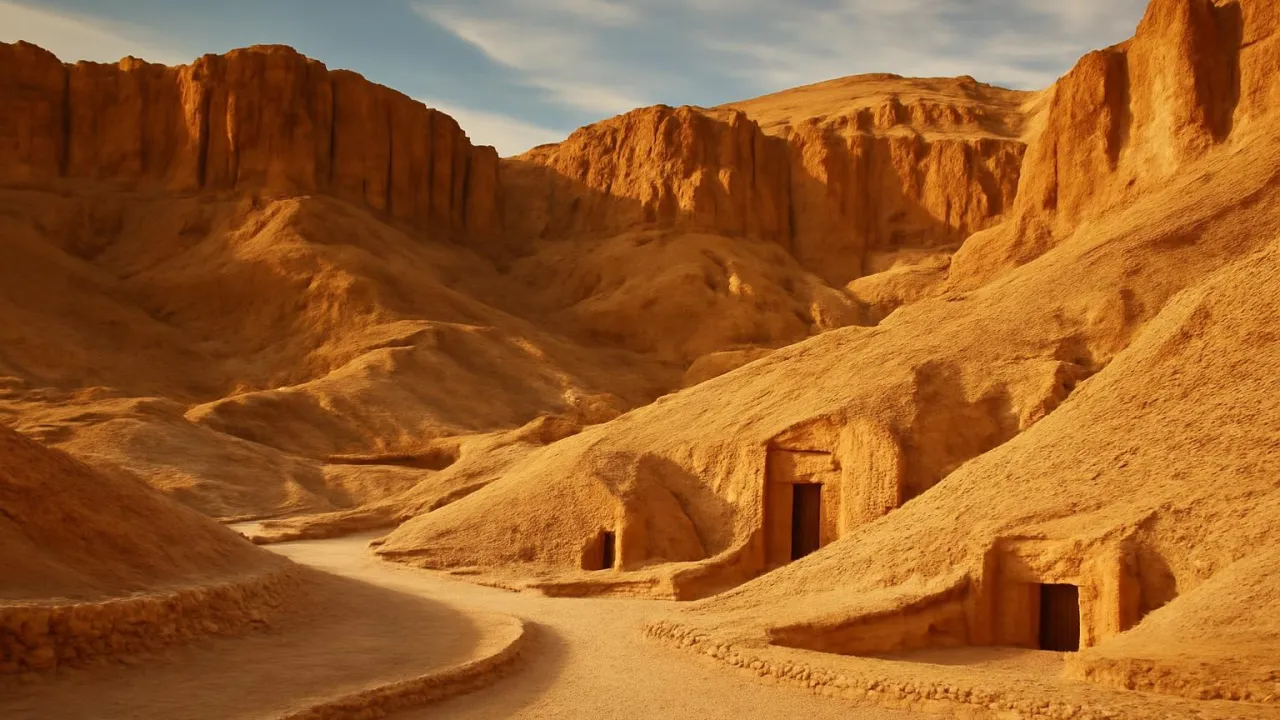
The famous tomb of King Tutankhamun was found here in 1922!
✨ Word Sparks (Grade 2 Glossary)
Tap 🔊 to hear
noble
A rich or important person
treasure
Gold, jewels, or special things
hieroglyph
Picture writing from ancient Egypt
🪝
Can you imagine walking into a secret royal tunnel?
1
Hidden Under Sand
The Valley of the Kings hides under the hot desert sun. People dug deep tunnels into the hills for the pharaohs. These tunnels lead to rooms filled with and art.
2
A Place for Pharaohs
Long ago, only kings and were buried here. Walls inside the tombs show colorful stories of their lives. Some tombs even have secret doors and hidden rooms.
3
Exploring Ancient Tombs
Today, visitors can walk down stone steps into the tombs. Guides explain how the tombs were made and why they are important. Exploring feels like being a real-life hunter.
Over 60 tombs have been found, but some may still be hidden!
✨ Word Sparks (Grade 3 Glossary)
Tap 🔊 to hear
limestone
A soft, light-colored rock
archaeologist
A scientist who studies old things
erosion
Wind or water wearing things away
🪝
What mysteries would you uncover in a king’s hidden grave?
1
A Desert of Secrets
The Valley of the Kings sits beneath steep, rocky cliffs in Egypt’s desert. Ancient workers carved deep tunnels into the hills. These tombs were meant to hide the pharaohs’ bodies from grave robbers. The dry desert air helped preserve the painted walls and treasures inside.
2
Tombs Full of Stories
Inside each tomb, bright paintings and hieroglyphs cover the walls. These show scenes from the king’s life and the journey to the afterlife. Many tombs have secret passages and hidden chambers. use special tools to search for new rooms and artifacts.
3
Building for Eternity
The tomb builders used simple tools to carve long corridors and burial chambers. They created strong stone doors and traps to protect the tombs from thieves. The valley’s soft made it easier to dig deep underground. from wind and rare rain sometimes reveals new entrances.
4
A World Wonder to Explore
Today, people from all over the world visit the Valley of the Kings. Guides explain the meaning of the art and symbols in each tomb. Scientists carefully study the tombs to learn about ancient Egypt. Every discovery helps us understand how these monuments were made and why they matter.
2. What do archaeologists hope to find in the valley?
🤯 Mind-Blowing Fact • Grade 4
Some tombs have over 100 painted scenes showing magical spells for the afterlife!
✨ Word Sparks (Grade 4 Glossary)
Tap 🔊 to hear
necropolis
A large, ancient cemetery
hieroglyph
A picture symbol used for writing
afterlife
Life believed to happen after death
🪝
What secrets would you discover if you followed a torchlight into the desert cliffs?
1
A Hidden City for the Dead
Nestled beneath rugged cliffs on Egypt’s Nile west bank, the Valley of the Kings became the final resting place for pharaohs of the New Kingdom. Ancient Egyptians believed the journey to the needed protection, so they carved tombs deep into the limestone hills. The valley’s dry climate and remote location helped preserve these hidden burial sites for thousands of years. Each tomb was carefully sealed to guard the treasures and mummies inside.
2
Engineering Ancient Tombs
Teams of skilled workers and artists spent years carving long corridors and painting walls with scenes of gods and daily life. Builders used copper tools to cut through the soft limestone, creating chambers and tunnels that could stretch for hundreds of feet. Some tombs featured false doors, secret passages, and heavy stone blocks to foil grave robbers. Over time, erosion and rare flash floods have revealed new entrances and helped archaeologists find lost tombs.
3
Art, Symbols, and Stories
The tomb walls are covered with and colorful paintings showing the pharaoh’s journey to the . These images include gods, magical spells, and scenes of the king’s greatest victories. Hieroglyphs acted as both art and a written record, helping modern scientists decode ancient Egyptian beliefs. Every new discovery in the valley adds to our understanding of this incredible civilization.
4
A World of Discovery
Today, the Valley of the Kings is a UNESCO World Heritage Site visited by thousands each year. Archaeologists use advanced technology to scan for hidden chambers and protect the fragile tombs. The discovery of King Tutankhamun’s tomb in 1922 amazed the world and sparked new interest in ancient Egypt. The valley remains a place of mystery, with secrets still waiting to be found beneath the desert sands.
1. Why did builders add false doors and secret passages?
2. What helped preserve the tombs for so long?
🤯 Mind-Blowing Fact • Grade 5
The deepest tomb, KV62 (Tutankhamun), was hidden beneath debris for over 3,000 years before its discovery.
✨ Word Sparks (Grade 5 Glossary)
Tap 🔊 to hear
sarcophagus
A stone coffin for a mummy
iconography
Pictures and symbols used in art
conservation
Protecting something from harm or damage
🪝
If you could peer behind a sealed stone door, what ancient secrets might you reveal?
1
The Valley’s Hidden Legacy
Beneath the arid cliffs west of Luxor, the Valley of the Kings formed the royal necropolis for Egypt’s New Kingdom pharaohs and elite nobles. This secluded valley, chosen for its symbolic geography and defensible terrain, became the burial ground for over 60 rulers between the 16th and 11th centuries BCE. The site’s isolation and the surrounding desert’s dryness proved ideal for preserving tombs and their contents across millennia. Each tomb was carefully oriented to align with religious beliefs about the journey to the afterlife.
2
Engineering Marvels Beneath the Sand
Ancient Egyptian engineers and artisans used copper chisels, wooden mallets, and stone hammers to carve elaborate tomb complexes into soft limestone bedrock. Some burial chambers reach depths of over 300 feet, with corridors twisting through the hills to confuse potential grave robbers. Builders incorporated architectural features such as corbelled ceilings, false shafts, and massive granite chambers to enhance both security and spiritual symbolism. The valley’s geology, with its layers of marl and limestone, allowed for both intricate carving and natural preservation.
3
Art, Belief, and Hieroglyphic Records
Walls within the tombs are adorned with vivid polychrome murals and thousands of hieroglyphic inscriptions. These images depict the pharaoh’s divine journey through the underworld, guided by gods like Osiris and Ra, and protected by magical spells from the Book of the Dead. The complex and funerary texts provided both religious instructions and a historical record, enabling modern archaeologists to reconstruct ancient Egyptian beliefs and daily life. Some tombs, such as that of Ramses VI, contain over 100 decorated scenes spanning hundreds of feet.
4
Discovery and Preservation
The Valley of the Kings has been a focus of archaeological exploration since antiquity, but systematic excavations began in the 19th century. Howard Carter’s discovery of Tutankhamun’s nearly intact tomb in 1922 revealed over 5,000 artifacts, including the iconic golden mask and chariots, sparking a global fascination with Egyptology. Today, researchers use advanced technologies like ground-penetrating radar and 3D scanning to locate undiscovered chambers and monitor tomb stability. Ongoing efforts aim to protect delicate wall paintings from humidity, tourism, and environmental change.
5
A Lasting Impact on World Heritage
The Valley of the Kings is recognized as a UNESCO World Heritage Site, symbolizing the architectural, artistic, and spiritual achievements of ancient Egypt. Its influence extends beyond archaeology, inspiring art, literature, and scientific inquiry worldwide. The site’s ongoing discoveries continue to reshape our understanding of ancient societies, funerary practices, and engineering ingenuity. As new tombs and artifacts are unearthed, the valley remains a living laboratory for historians, scientists, and explorers eager to unlock the secrets of the past.