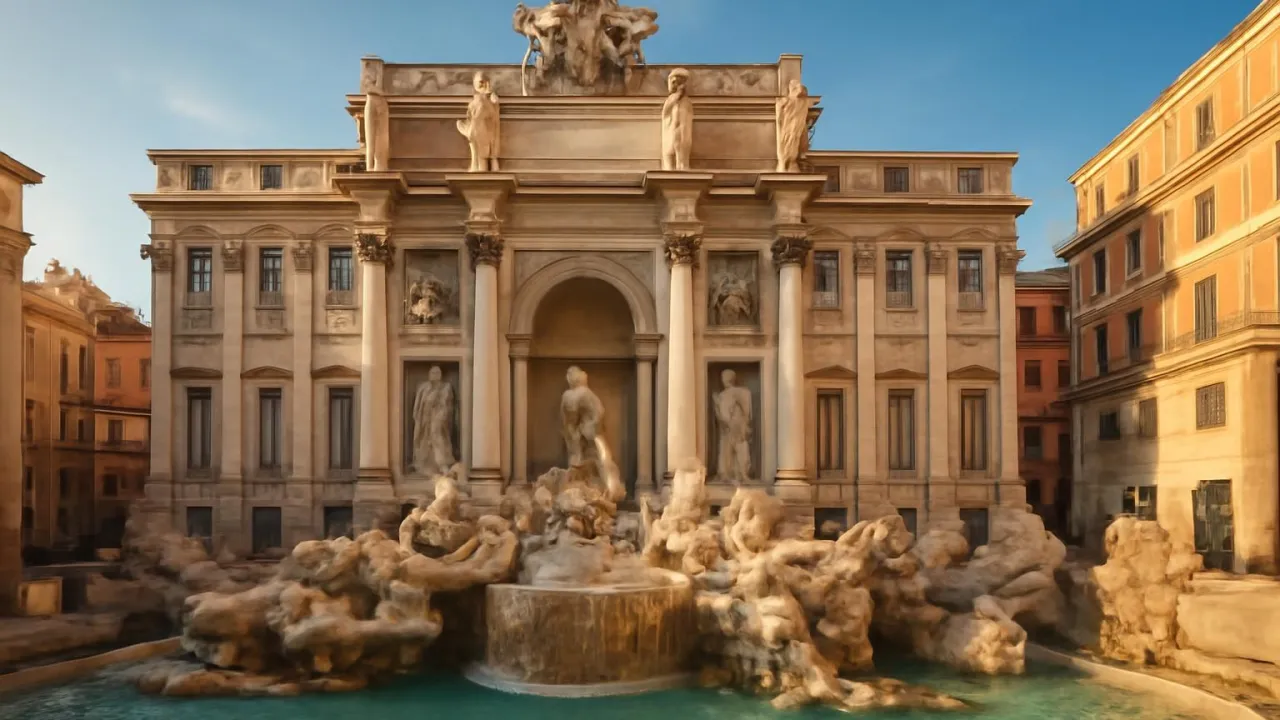
Trevi Fountain’s water once powered Rome’s first public baths nearly 2,000 years ago!
✨ Word Sparks (Grade 3 Glossary)
Tap 🔊 to hear
aqueduct
A channel that carries water to a city
gravity
The force that pulls things down
myth
An old story about gods or heroes
🪝
What secrets hide behind the roar of Trevi Fountain’s water?
1
A Roaring River in the City
Trevi Fountain fills the air with the sound of tumbling water. Its splashing echoes off the stone walls of Rome. People gather around to watch the water dance and shine. The fountain is always busy with visitors and laughter.
2
Statues of Myths and Legends
The fountain is decorated with statues of Neptune, horses, and sea creatures. Each marble figure is carved with amazing detail and lifelike shapes. These statues tell stories from ancient Roman and legends. Their smooth surfaces feel cool when touched.
3
How the Fountain Works
Water flows from underground into the fountain’s giant basin. The design uses to make the water cascade over rocks and steps. Engineers built special channels to keep the water moving all day. This clever system creates the fountain’s famous roar and sparkle.
4
Wishes and Coins
Visitors toss coins over their left shoulder to make a wish. The fountain collects thousands of coins every day from all around the world. The money is used to help people in need in Rome. Making a wish at Trevi Fountain is a tradition that brings hope and happiness.
The original aqueduct supplying Trevi Fountain was built in 19 BCE by Roman engineers!
✨ Word Sparks (Grade 4 Glossary)
Tap 🔊 to hear
Baroque
A fancy, dramatic art style from history
aqueduct
A bridge or channel for moving water
basin
A big bowl that holds water
🪝
Imagine hearing the thunder of water echoing through ancient Roman streets—what story does Trevi Fountain tell?
1
A Baroque Wonder in Rome
Trevi Fountain stands as a masterpiece of art and engineering in the heart of Rome. Its marble statues and flowing water create a dramatic scene that draws people from around the world. The fountain was completed in 1762 after decades of careful planning and construction. Its location marks the end of the Aqua Virgo , which has supplied water to Rome since ancient times.
2
Engineering Marvel: Water in Motion
The fountain’s water comes from underground , using gravity to flow into the massive . Engineers designed channels and slopes so water tumbles over rocks, creating a continuous, thunderous cascade. The marble sculptures are positioned to direct the water’s path, enhancing both the sound and the visual spectacle. This clever system means the fountain never needs electric pumps to keep the water moving.
3
Stories in Stone: Neptune and Friends
At the center stands Neptune, the Roman god of the sea, riding a chariot pulled by spirited horses. Surrounding him are tritons and sea creatures, each carved with lifelike detail and expressive motion. These figures represent the power and unpredictability of water, a vital force in Roman life. The entire scene is designed to look like Neptune is taming the wild sea right in the city.
4
Tradition, Wishes, and Giving Back
Tossing a coin over your left shoulder is said to ensure your return to Rome. Every year, about 1.5 million Euros are collected from the fountain’s . This money is used by local charities to help people in need, turning wishes into real acts of kindness. Trevi Fountain is not just a monument; it’s a living part of Rome’s culture, history, and community spirit.
1. Why doesn’t Trevi Fountain need electric pumps?
2. What do the coins in the fountain help support?
🤯 Mind-Blowing Fact • Grade 5
The Trevi Fountain’s water is changed every day to keep it sparkling clean for visitors and wishes!
✨ Word Sparks (Grade 5 Glossary)
Tap 🔊 to hear
travertine
A strong, pale stone from Italy
hydraulic
Powered or moved by flowing water
erosion
Slow wearing away by wind or water
🪝
If you stood by Trevi Fountain at dawn, would you notice the thunder of water, the shimmer of marble, or the secrets of ancient Roman engineering first?
1
A Sensory Marvel: Sights, Sounds, and Stories
Before the city wakes, the Trevi Fountain roars with the sound of thousands of gallons tumbling over marble ledges. Sunlight glitters on the water, casting shimmering patterns on Neptune’s chariot and the wild sea horses. If you listen closely, the echoes of history seem to whisper from every carved detail. The fountain’s dramatic scene is meant to dazzle both eyes and ears, inviting visitors to step into a living story of art and myth.
2
Baroque Brilliance: Art and Architecture
Designed by Nicola Salvi and completed by Giuseppe Pannini in 1762, the fountain occupies the junction of three ancient roads, or 'tre vie,' which gave the landmark its name. The entire structure is crafted from and Carrara marble, materials chosen for their durability, brilliance, and ability to be intricately carved. The fountain’s sweeping curves and towering figures showcase the Baroque style’s love of drama and movement. Every statue and ripple is designed to lead your gaze toward Neptune, ruler of the sea.
3
Hydraulic Genius: The Aqua Virgo Aqueduct
Water for the Trevi Fountain travels over 13 miles (21 kilometers) from the Salone Springs through the ancient Aqua Virgo aqueduct, built in 19 BCE by Marcus Agrippa. This engineering marvel uses only gravity to deliver fresh water to the heart of Rome, filling the fountain’s enormous basin with about 264,000 gallons (one million liters). Ingenious slopes and hidden channels keep the water flowing and sparkling without any need for electric pumps. The constant movement creates both a cooling mist and the fountain’s famous, thunderous sound.
4
Sculpted Stories: Neptune and the Sea
At the center, Neptune commands a shell-shaped chariot drawn by two horses—one wild, one calm—symbolizing the unpredictable nature of the ocean. Tritons, sea gods, and allegorical figures of abundance and health surround him, each carved with astonishing detail and dynamic motion. The entire marble tableau is a lesson in perspective, drawing the viewer’s eye to the drama at the fountain’s heart. These figures celebrate both the power of water and the skill of Roman artists.
5
Tradition, Impact, and Preservation
Tossing a coin over your left shoulder into the fountain is believed to guarantee a return to Rome, and more than 1.5 million Euros in coins are collected each year. This money is donated to charities like Caritas, supporting food programs for people in need across the city. The fountain attracts over 10 million visitors annually, making it a symbol of Rome’s artistic legacy and generosity. Major restorations, including a careful cleaning in 2015, protect the marble from and pollution, ensuring Trevi Fountain’s beauty and stories will last for generations.